Thirteen days, three bases, and a country seen properly rather than at a run. Five nights in Cairo, three aboard a Nile cruise ship from Aswan to Luxor, four on the Red Sea at Hurghada — this 13 day Egypt tour with Nile cruise covers the pyramids, the Greco-Roman coast, the temples of Upper Egypt, and a beach at the end of it.
You travel in a group of no more than sixteen, with a licensed Egyptologist at every site and domestic flights already included.
Cairo comes first: the pyramids of Khufu, Khafre and Menkaure, the Sphinx, and the Grand Egyptian Museum, where the complete Tutankhamun collection is on display together for the first time since Carter cleared the tomb. Then a day on the Mediterranean in Alexandria — the catacombs of Kom el-Shoqafa, Pompey’s Pillar, and the Citadel of Qaitbay, built from the rubble of the Pharos lighthouse on the spot where it stood. A fourth day covers Coptic Cairo, the Citadel of Saladin and the Khan el-Khalili.
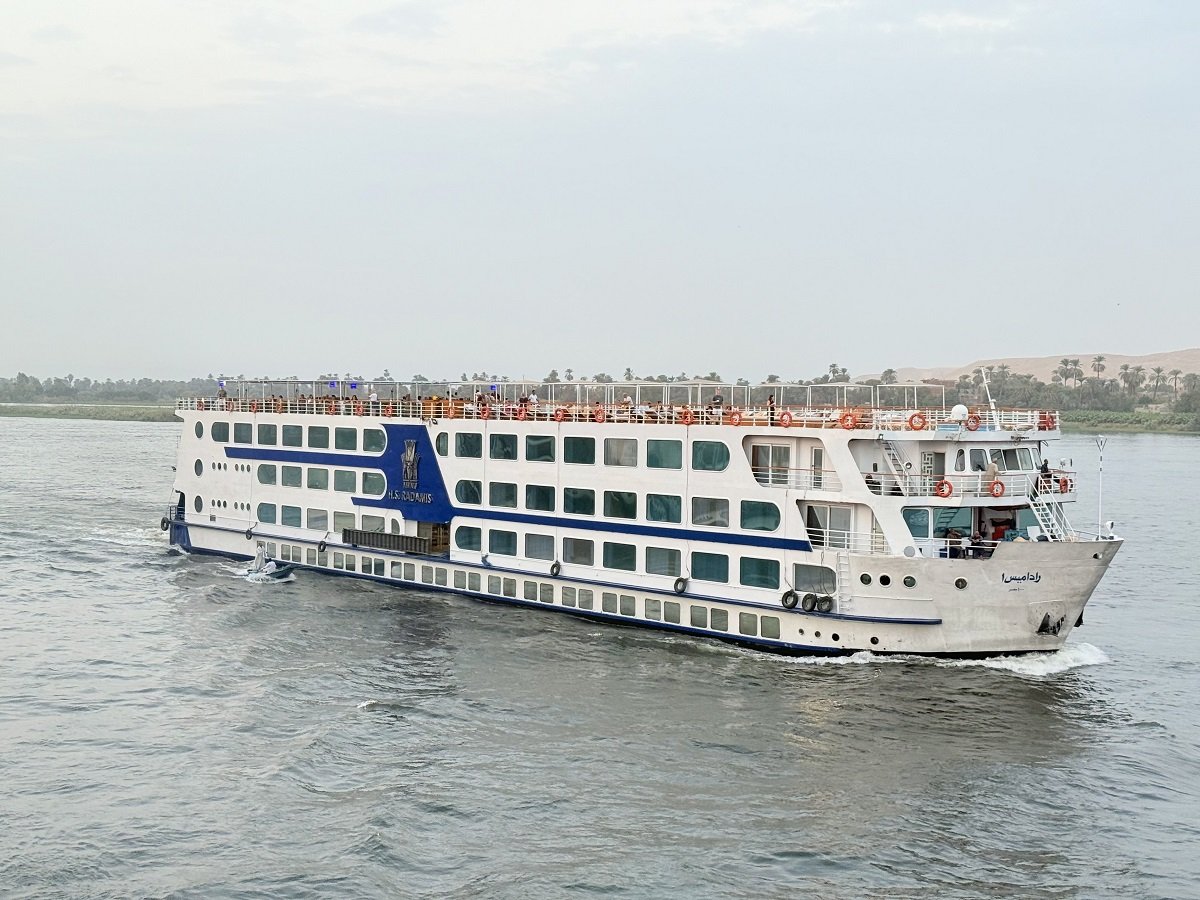
Then you fly south to Aswan and board your Nile cruise. Philae, the High Dam and the Unfinished Obelisk on the first afternoon; Kom Ombo and its crocodile museum; Edfu by horse and carriage before breakfast; through the Esna Lock to Luxor for Karnak and Luxor Temple; and the Valley of the Kings, Hatshepsut’s terraces and the Colossi of Memnon on the morning you disembark.
Hurghada closes the trip. Four nights all-inclusive on the Red Sea, with the reef close enough to reach on a half-day boat, and enough unscheduled time to do nothing at all if that is what you want by then.
Prices start at $1,910 per person sharing a triple room in low season, and twin and double rooms start at $1,980. Single rooms, high-season dates and the Platinum upgrade are all in the price table below.
Short on time? The 12 day Egypt tour with Nile cruise follows the same route with three nights in Hurghada instead of four, and our 14 day tour gives you one more day. Travelling on a tighter budget? See the 13 day budget tour with Nile cruise.
Your representative meets you inside Cairo airport, before passport control, and stays with you through the visa desk and the baggage hall — the one part of an Egyptian arrival that rewards having someone who knows the building. From there it is a private transfer to your hotel.
Nothing is scheduled today, so a late landing costs you nothing. If you arrive early enough to want dinner, the hotel restaurants run late and your representative will point you at the best of them; room service is available at every property on both tiers. Get some sleep — tomorrow starts at the pyramids.
Meals: none
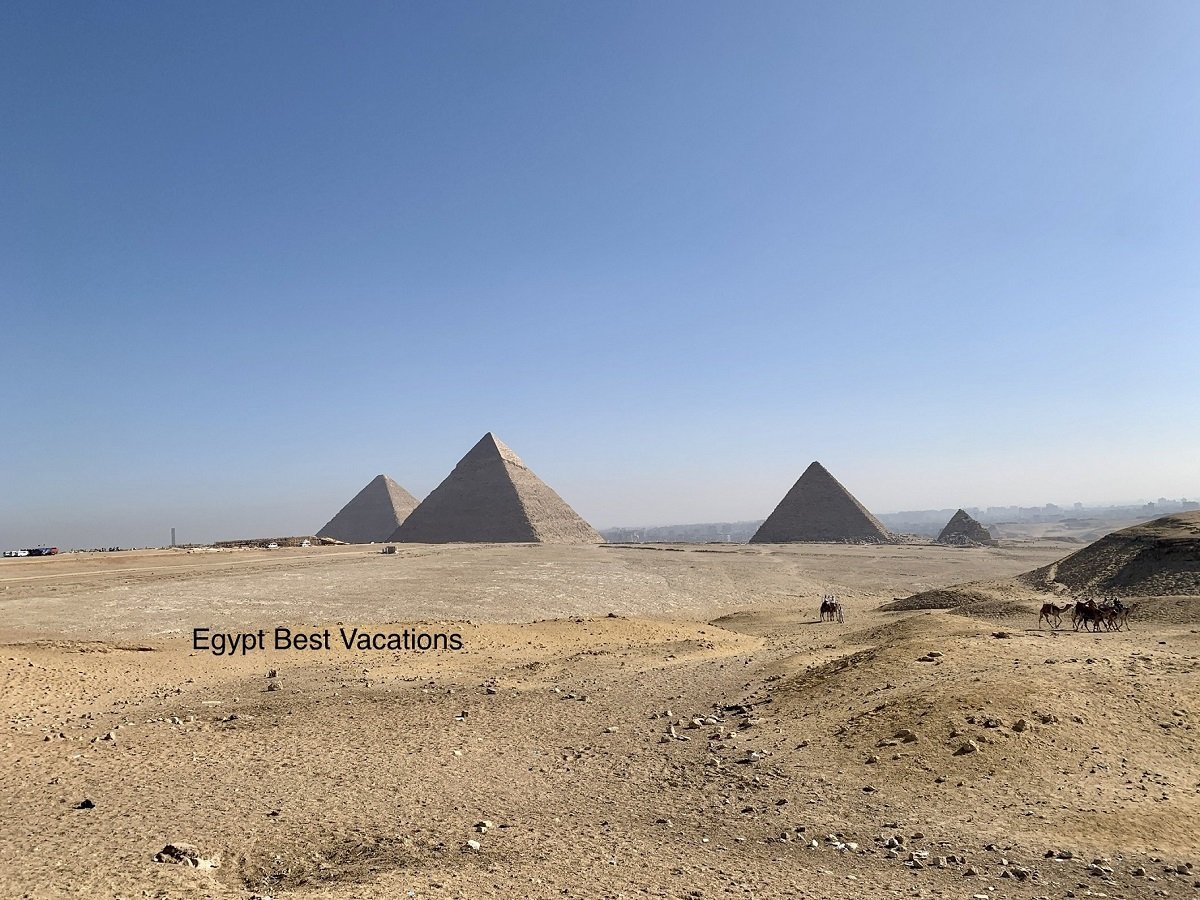
The Giza plateau in the morning, while the light is still low and the heat has not arrived. Three pyramids, built in three generations: Khufu’s, the only surviving wonder of the ancient world and for nearly four thousand years the tallest structure on earth; his son Khafre’s, which looks the taller of the two because it stands on higher bedrock, and still wears a cap of its original casing stone; and Menkaure’s, less than half their size, which raises a question about the dynasty that your guide will be glad you asked.
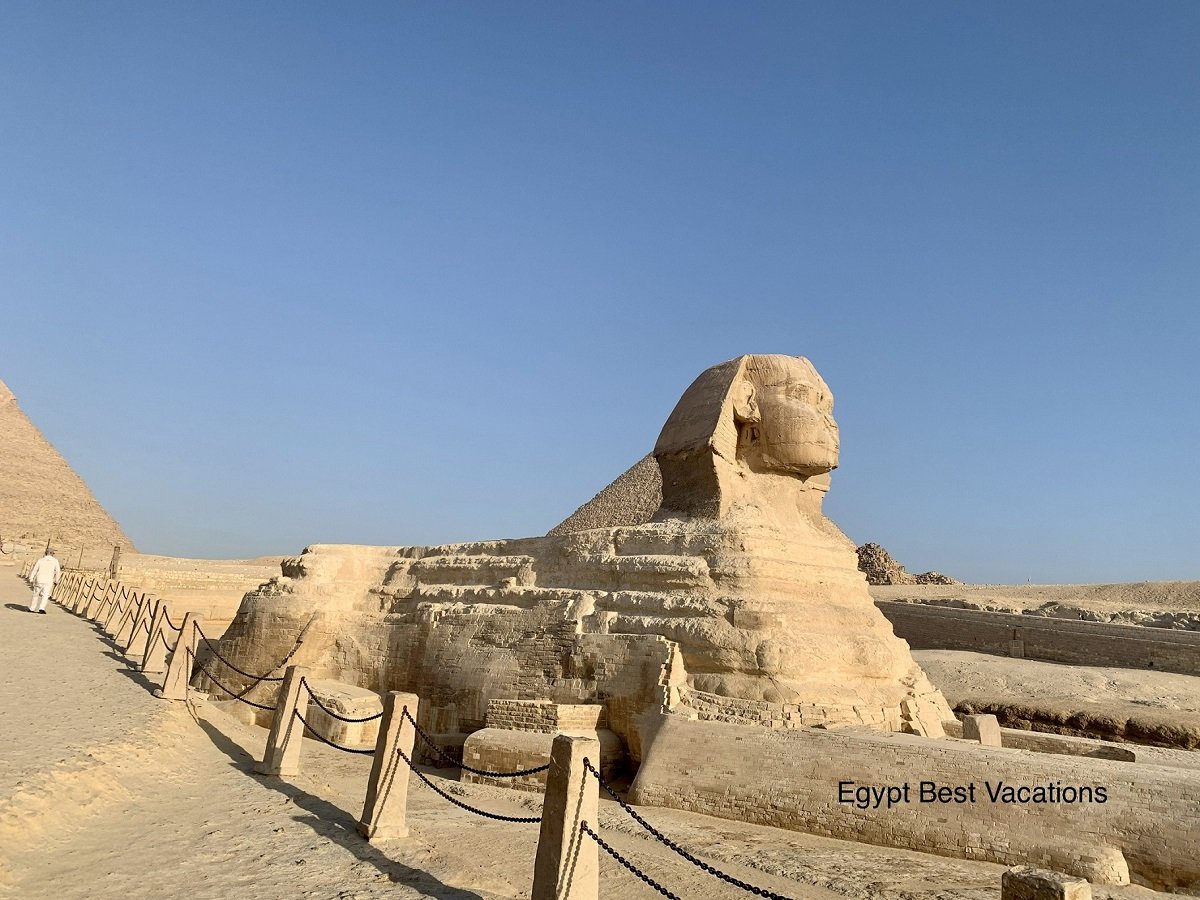
The Sphinx sits below them, carved from a single ridge of limestone left standing in the quarry that supplied Khufu’s blocks. Between its paws is a granite slab put there by Thutmose IV some eleven centuries later, recording a dream in which the Sphinx — buried to the neck in sand by then — promised him the throne if he would dig it out.
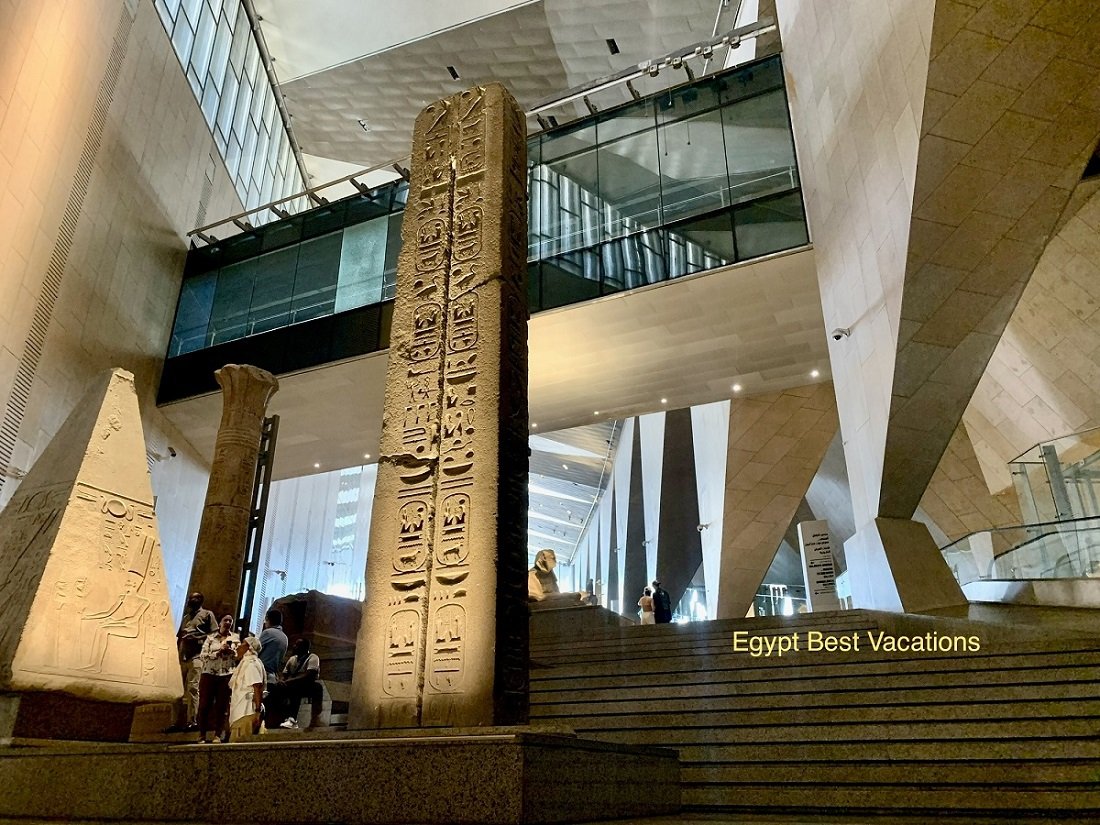
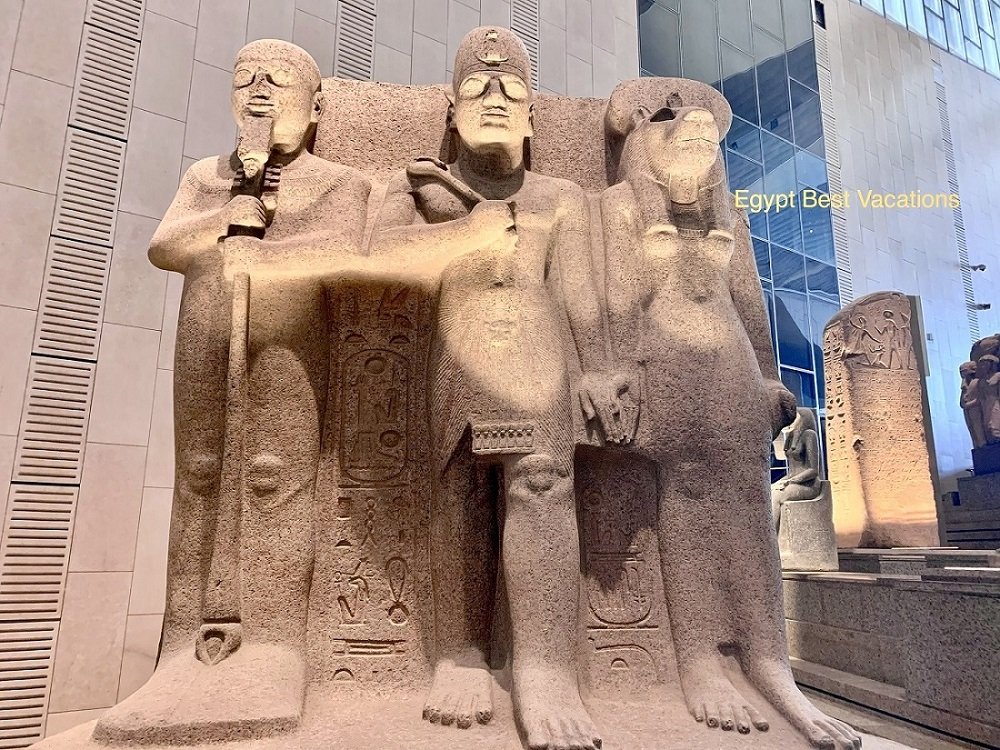
Lunch at a local restaurant, then the Grand Egyptian Museum on the road back. The Tutankhamun galleries hold all five thousand-odd objects from the tomb together for the first time since Howard Carter emptied it, including pieces that spent a century in storage. Leave time for the grand staircase: the statuary climbs it in chronological order, and the window at the top frames the pyramids you were standing under that morning.
Meals: breakfast and lunch
A day on the Mediterranean, two and a half hours north through the Delta.
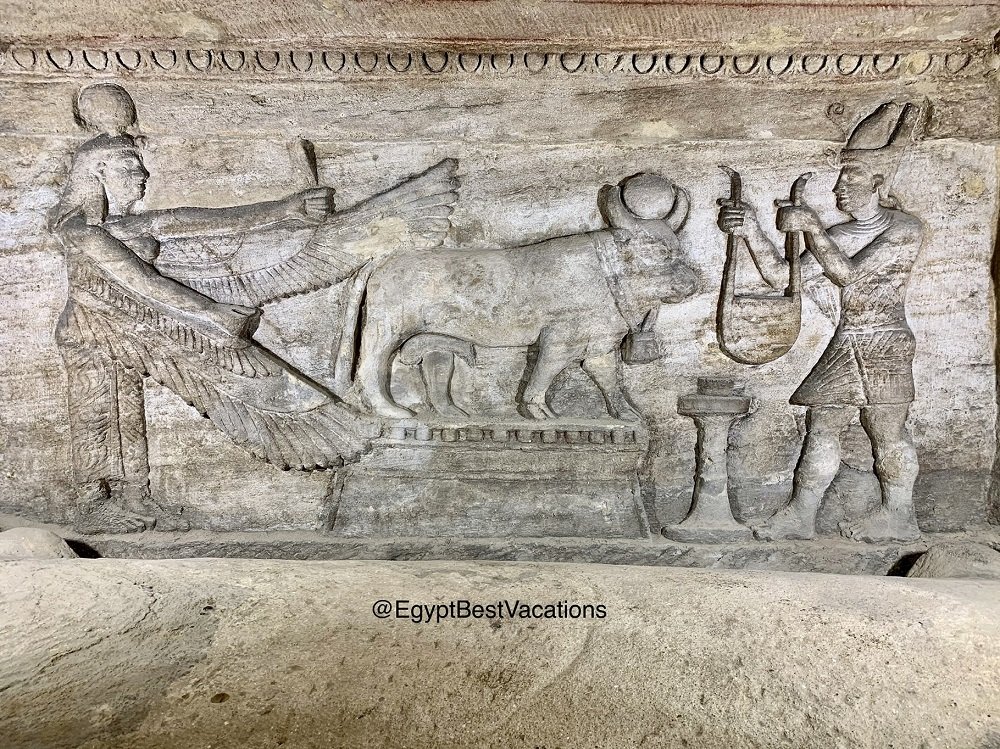
The catacombs of Kom el-Shoqafa are the reason to come. Cut three storeys into the rock in the second century AD, and found in 1900 when a donkey fell through the roof, they are the clearest surviving picture of what happened when Egyptian funerary religion met Rome: Anubis in a legionary’s armor, Greek garlands and Egyptian cobras carved on the same wall. A spiral staircase winds around the shaft the bodies were lowered down.
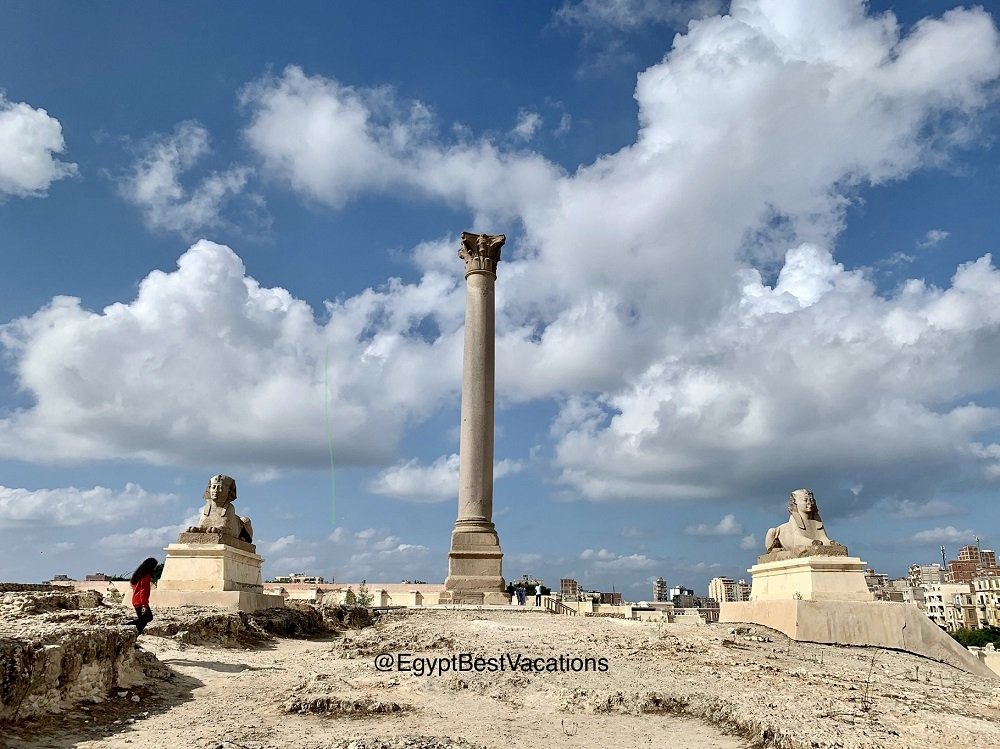
Pompey’s Pillar next, which has nothing to do with Pompey. It is a victory column raised for Diocletian in 297 AD, misnamed by crusaders and never renamed since, standing on the ruins of the Serapeum — the temple that held Alexandria’s daughter library.
Then the Citadel of Qaitbay, built in 1477 on the exact footprint of the Pharos lighthouse and partly out of its fallen stone. Divers have since mapped the rest of the lighthouse on the harbour floor below it.
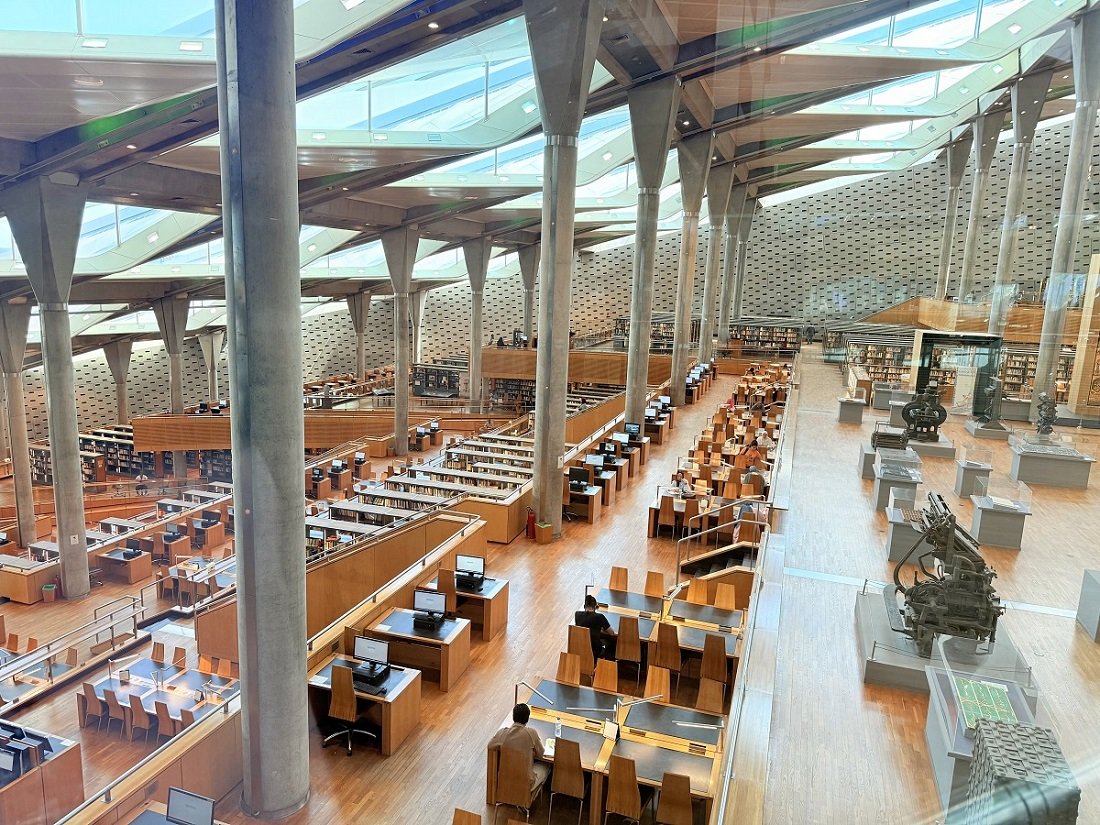
You finish at the Bibliotheca Alexandrina — not the ancient library, which is gone, but the building raised in its memory in 2002: a disc of granite tilted towards the sea, its outer wall carved with characters from every writing system in the world. Lunch, then the road back to Cairo.
Meals: breakfast and lunch
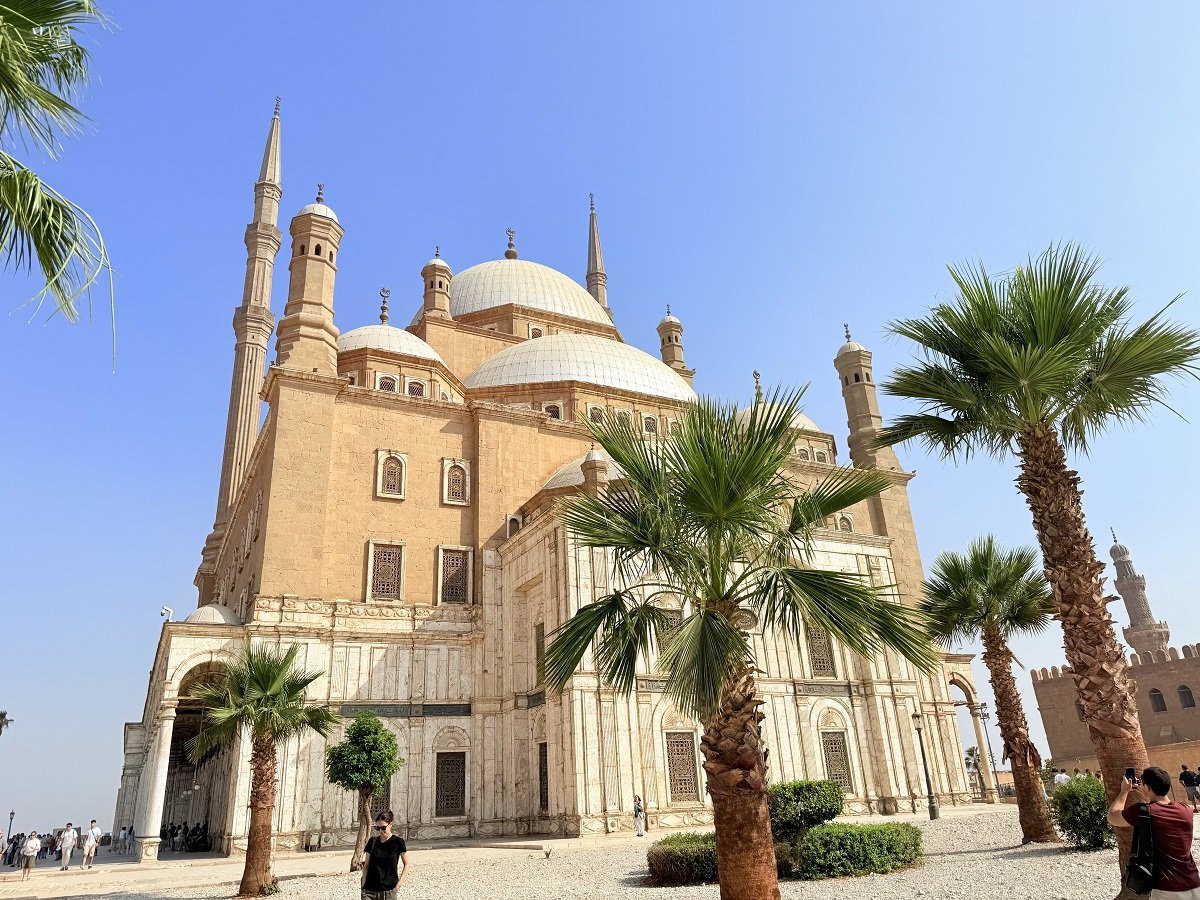
The Citadel first, on the spur of the Muqattam hills that Saladin fortified from 1176 to hold Cairo against the crusaders. It remained the seat of Egyptian government for the next seven hundred years. Inside it stands the Alabaster Mosque, built by Muhammad Ali in the 1830s in deliberate imitation of the great Ottoman mosques of Istanbul — a political statement in stone from a ruler who had just made Egypt effectively independent of them.
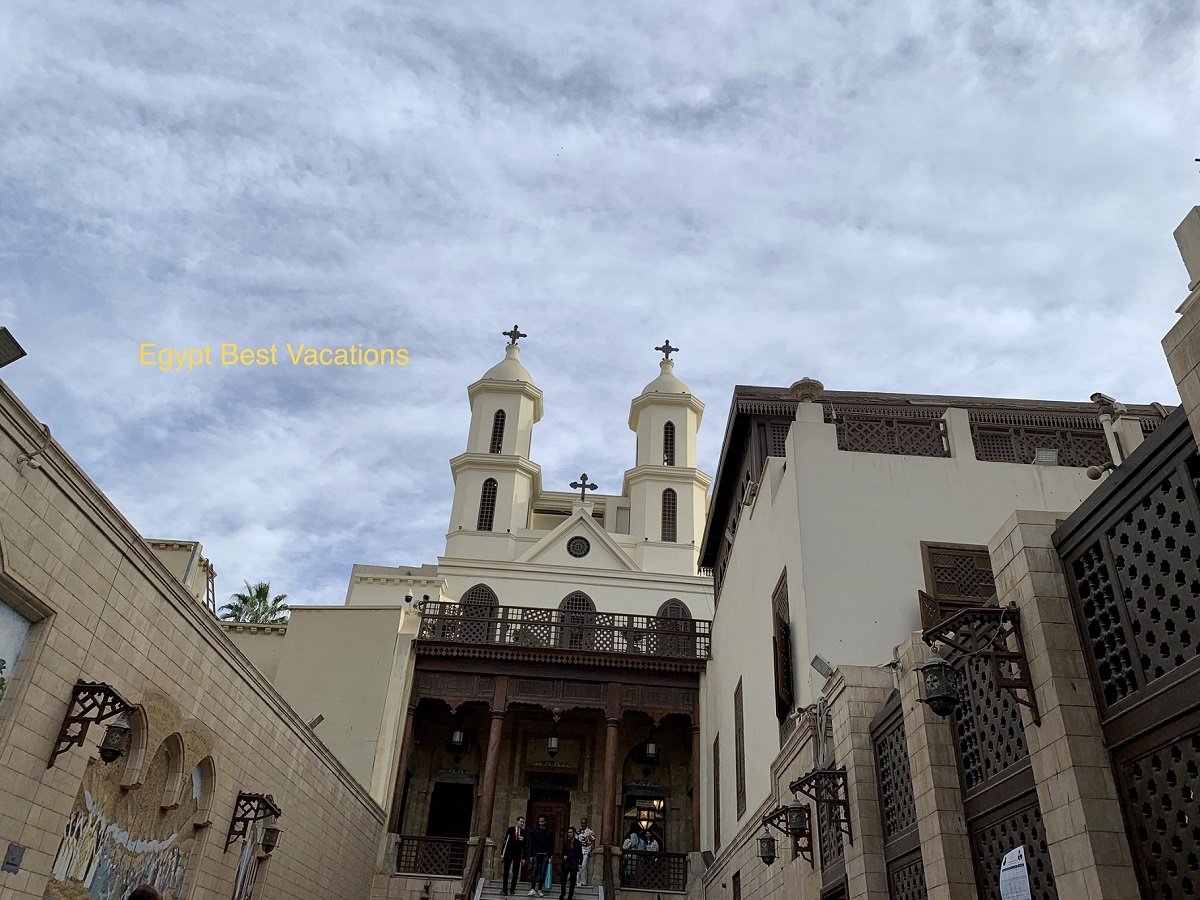
Down into Coptic Cairo, inside the walls of the Roman fortress of Babylon. The Hanging Church is named for its position: it is built across the old gatehouse with its nave suspended over the passage below, and a panel of glass floor to prove it. Nearby, Abu Serga stands above a crypt where the Holy Family is said to have sheltered. And the Ben Ezra Synagogue, where in 1896 a sealed storeroom was opened and found to hold some three hundred thousand discarded manuscripts — the Cairo Geniza, nine centuries of contracts, letters and shopping lists that rewrote what historians knew about ordinary life in the medieval Mediterranean.
The day ends at Khan el-Khalili, a market on the same ground since the fourteenth century. Haggling is expected rather than rude. If you want a break from it, El Fishawy has been serving mint tea in the same alley for around two hundred years.
Meals: breakfast
A transfer to Cairo airport and a short flight south. Your guide meets you outside arrivals at Aswan.
The High Dam first. Completed in 1970, it did what it was built to do — ended the annual flood, and still generates a significant share of the country’s electricity — and several things it was not built to do. It drowned Nubia, displacing more than a hundred thousand people, and it stopped the silt that had fertilised Egyptian fields every summer for five thousand years. Egyptian farmers have bought fertiliser ever since. It is worth standing on for both reasons.
Philae next, which is no longer where it was built. The temple of Isis spent half of each year underwater after the first Aswan dam went up in 1902, and the High Dam would have drowned it outright, so between 1972 and 1980 it was cut into some forty thousand blocks and rebuilt on the neighbouring island of Agilkia, which was reshaped to match the original ground. Isis was worshipped here longer than anywhere else in Egypt: the last hieroglyphic inscription known anywhere, dated 394 AD, is carved on a gateway in this complex.
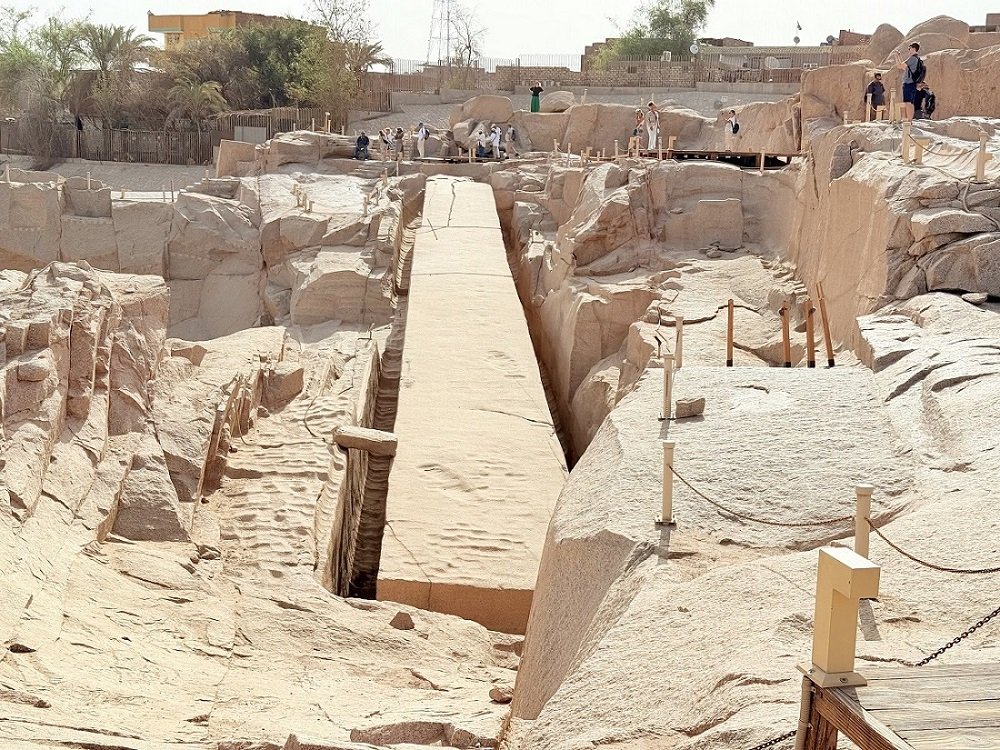
You finish at the northern granite quarry, where an obelisk lies in the trench it was being cut from. Had it been raised it would have stood around 42 meters and weighed something near eleven hundred tonnes, larger than any obelisk ever erected. A flaw opened in the stone and the work stopped; the dolerite pounding balls used to shape it are still lying beside it.
Transfer to your Nile cruise ship. Overnight moored at Aswan.
Optional: Nubian village tour.
Meals: breakfast, lunch and dinner
A free morning while the ship stays at Aswan — or the road to Abu Simbel if you would rather have the long day. It leaves before dawn and is back before the ship sails.
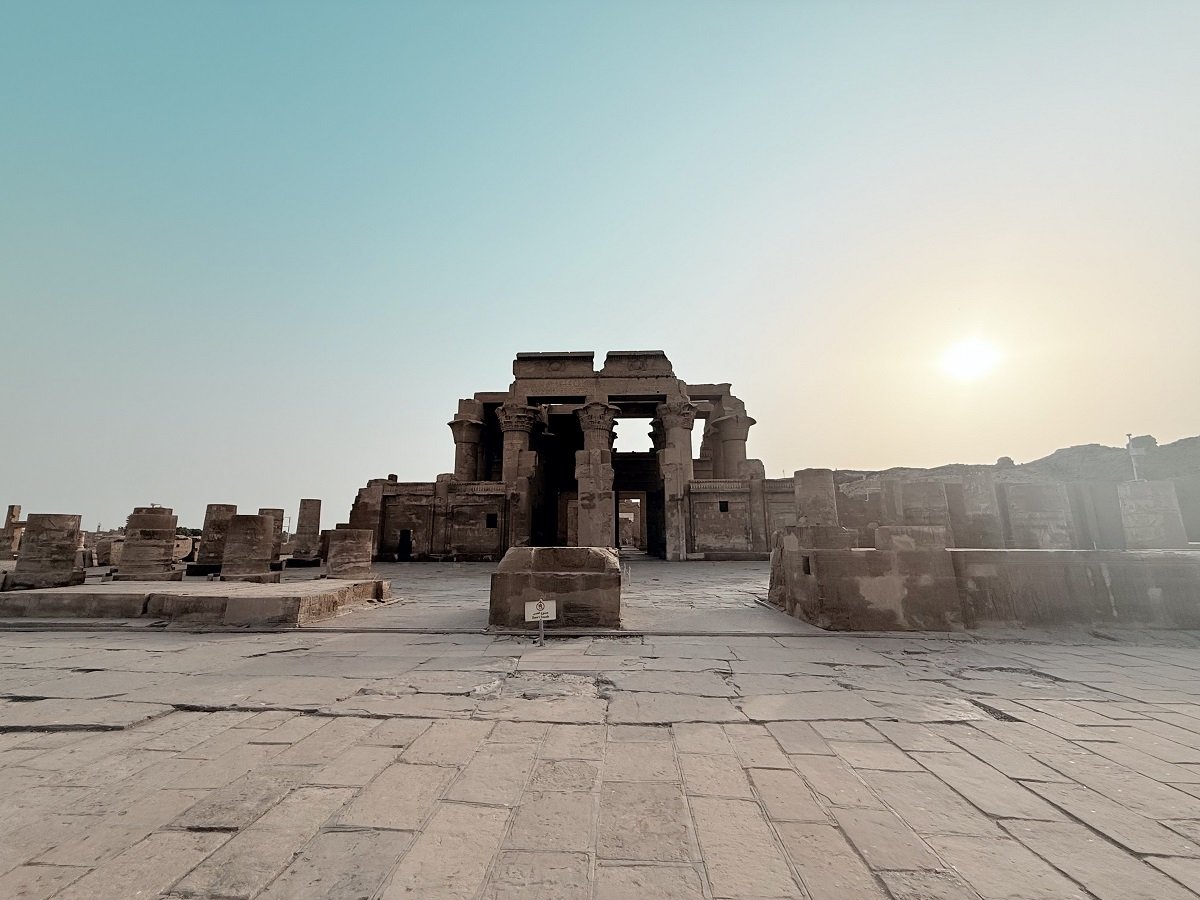
You cast off around lunchtime. Kom Ombo comes up in the afternoon, standing directly on a bend of the river where crocodiles once basked in numbers. The temple is split down its axis: everything on the southern side belongs to Sobek, the crocodile god, and everything on the northern side to Haroeris, the elder Horus. Twin gateways, twin halls, twin sanctuaries, a mirror line down the middle. It went up over roughly four centuries, begun under Ptolemy VI and still being decorated under the Roman emperors.
Two things on the walls repay a slow look. One is a relief of what appear to be surgical instruments — forceps, scalpels, cupping vessels. The other is a calendar setting out the offerings due at each festival through the year. The museum beside the temple holds around thirty mummified crocodiles from a nearby cemetery, several of them with hatchlings arranged along their backs.
Back aboard and on to Edfu, where you moor for the night.
Meals: breakfast, lunch and dinner
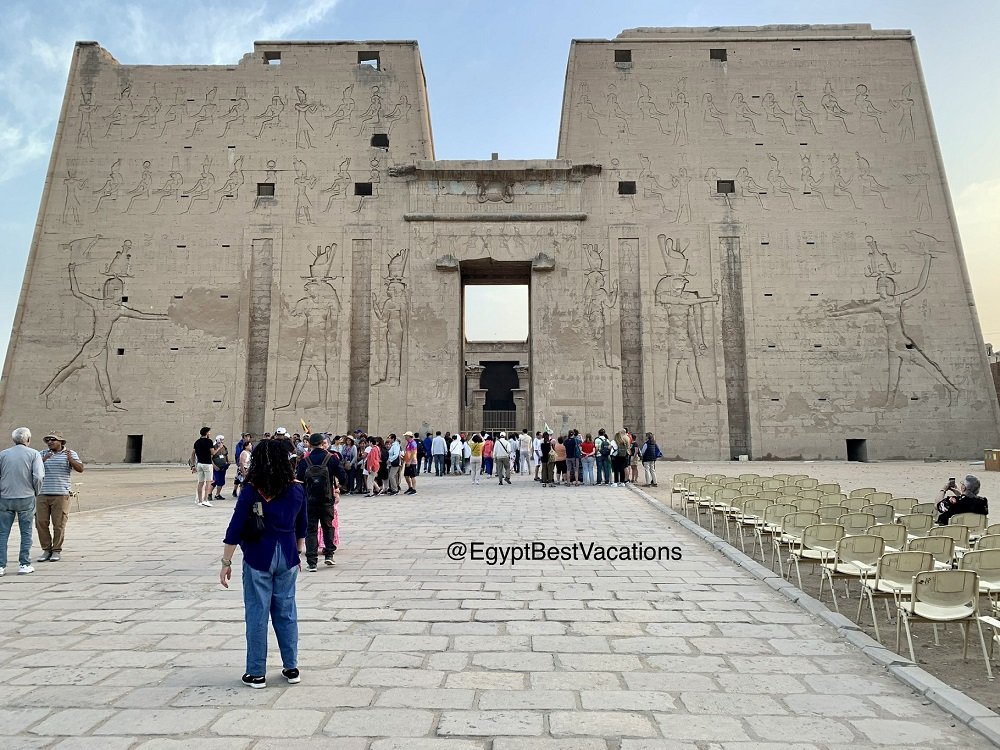
Before breakfast, a horse and carriage through the streets of Edfu to the temple of Horus. It is the most complete temple standing in Egypt, and the reason is unglamorous: the town buried it. Silt and houses covered the building to the top of its walls, and it was dug out of them from 1860. The roof is on, the inner rooms are intact, and the reliefs run unbroken from the outer walls to the sanctuary — among them the Contendings of Horus and Seth, a mythological feud carved as a narrative strip, and the record of the Festival of the Beautiful Meeting, when the goddess Hathor sailed upstream from Dendera each year to spend a fortnight here with Horus. A black granite falcon still stands at the gate.
Carriage back to the ship, then north through the lock at Esna to Luxor.
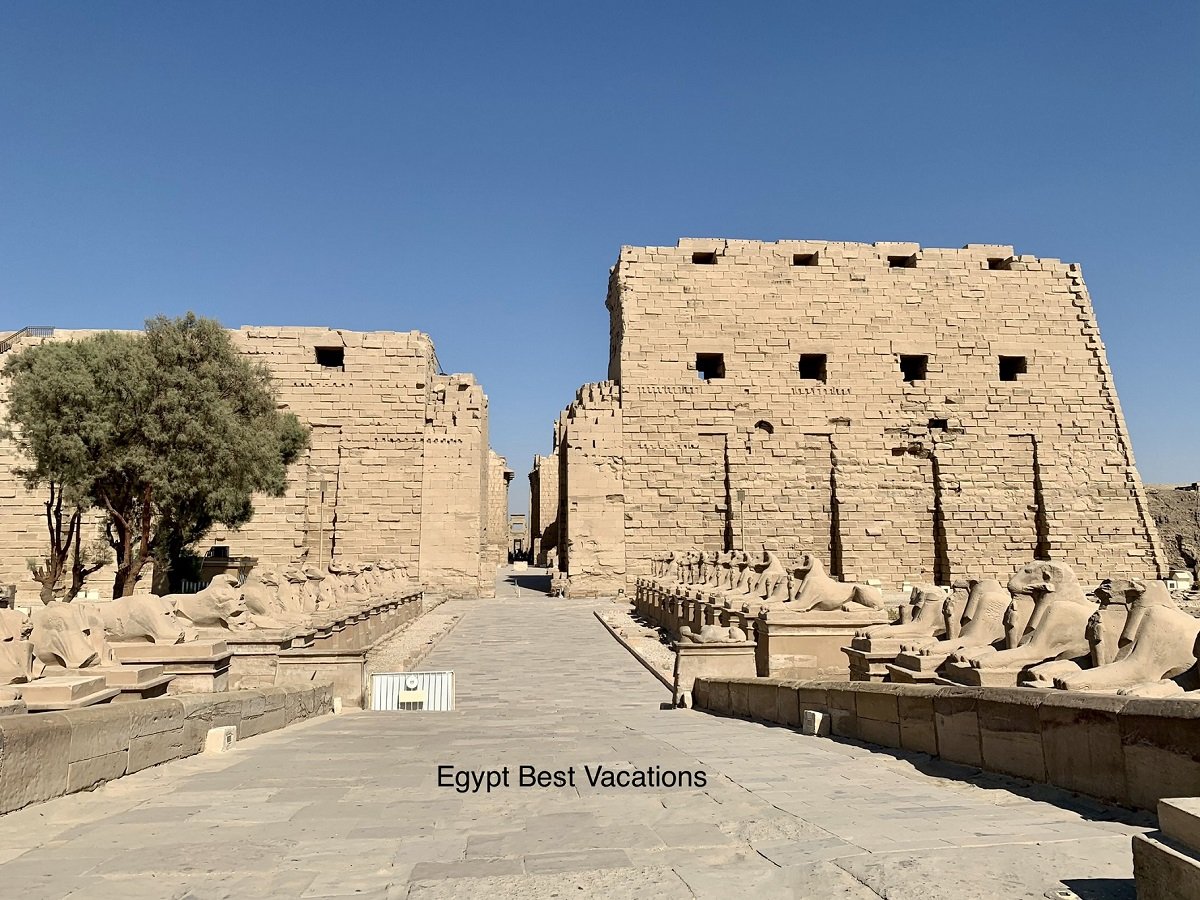
Karnak in the afternoon. It is less a temple than a building site that ran for two thousand years, with something like thirty rulers adding to it. The Hypostyle Hall is the part nobody is quite prepared for: 134 sandstone columns in sixteen rows, the tallest of them twenty-one metres, set close enough together that you lose the sky.
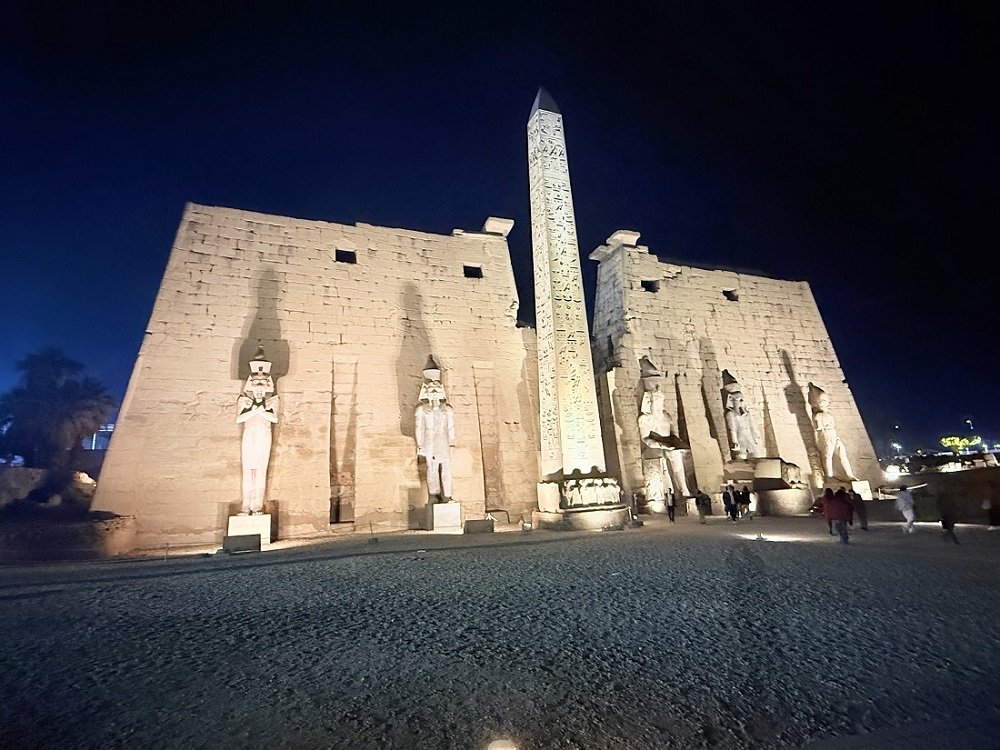
Then Luxor Temple, three kilometres south, once joined to Karnak by an avenue of sphinxes that has now been cleared along its whole length. Luxor Temple has never really gone out of use — a Roman legionary chapel, then a church, and since the thirteenth century the mosque of Abu el-Haggag, still in service today, sitting high on the buried pylon at a level that shows how deep the debris once stood.
Meals: breakfast, lunch and dinner
Disembark after breakfast and cross to the west bank.
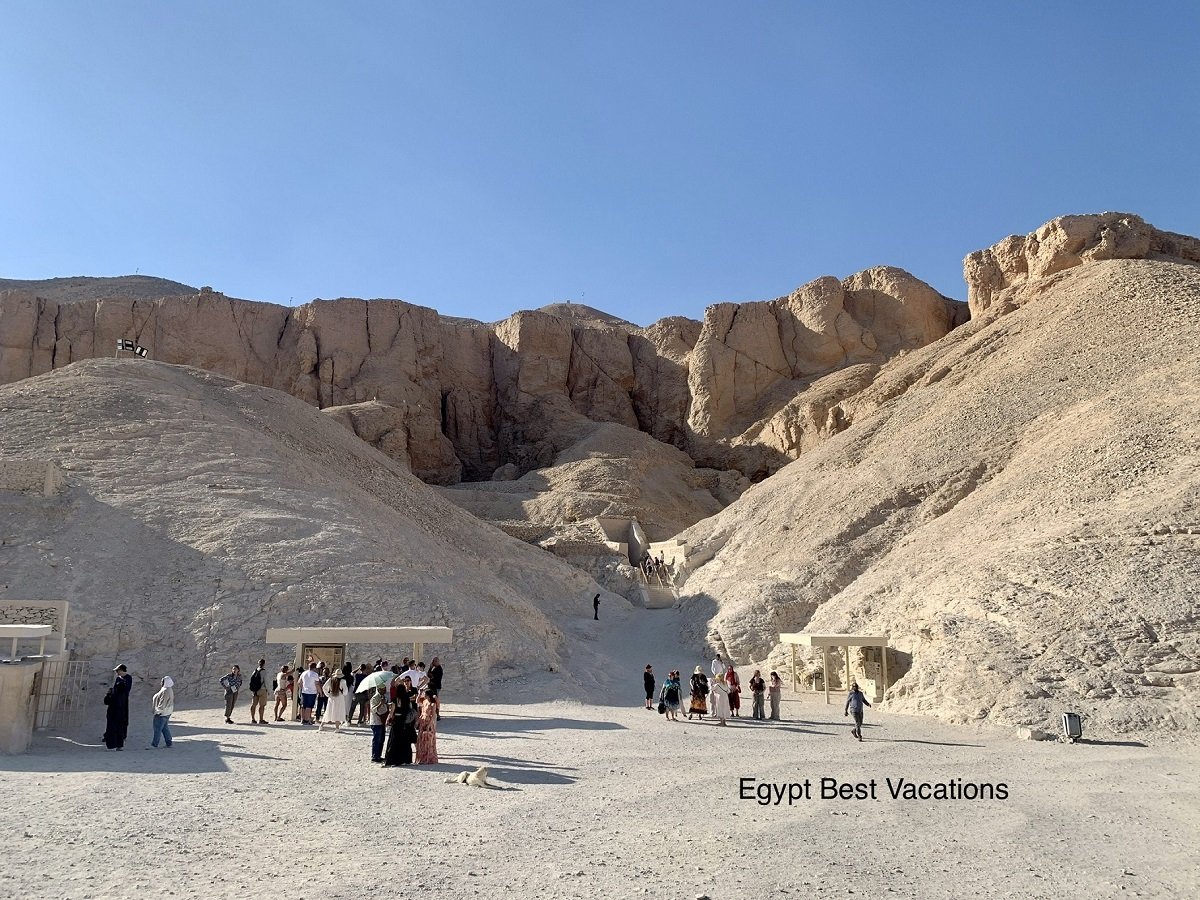
The Valley of the Kings is less a cemetery than a security measure. After a thousand years of pyramids advertising exactly where the treasure lay, Thutmose I’s generation gave up on monuments and began cutting tombs into a dry valley behind the cliffs — out of sight, guarded, with the workmen housed in their own closed village at Deir el-Medina. It worked no better in the end, since all but one were robbed in antiquity, but it left more than sixty painted corridors driven into the rock. Three are included with the standard ticket; which three are open changes as conservation work rotates, and your guide will pick the strongest of them on the day.
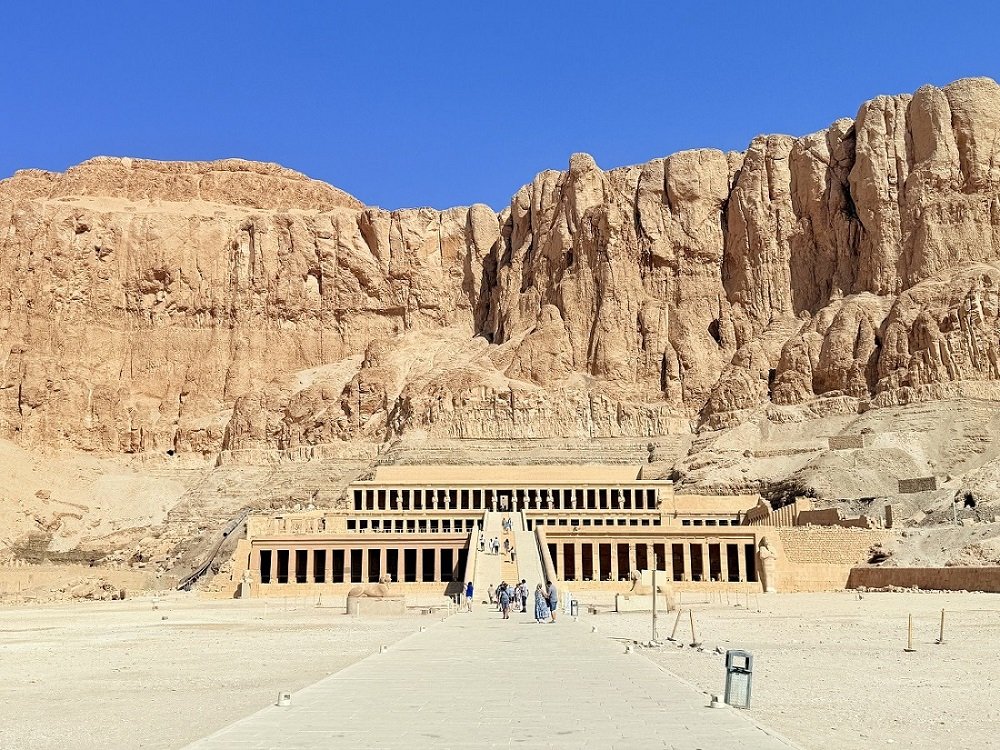
Hatshepsut’s temple next, terraced into the cliff at Deir el-Bahari and designed by Senenmut, her steward and probably a good deal more. Its colonnades carry a reportage of her trading expedition to Punt — the ships, the cargo, the incense trees dug up and carried home in baskets, the famously large queen of Punt herself. Look for her erased cartouches too. Thutmose III had her name chiselled off decades after her death, and the chisel marks are still perfectly legible.
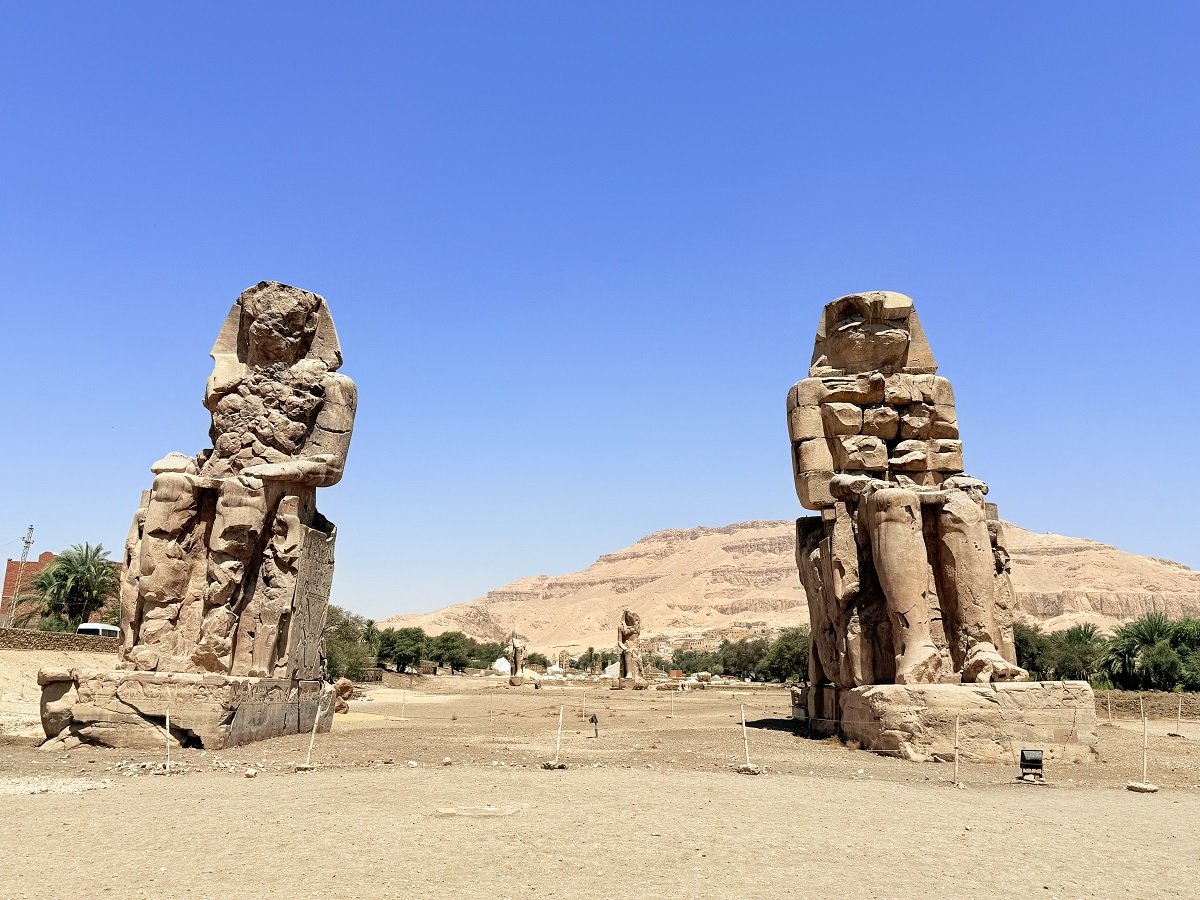
The Colossi of Memnon on the way out: all that still stands of a mortuary temple that was the largest in Egypt until an earthquake brought it down. That same earthquake cracked the northern statue in 27 BC, after which it began to sound at dawn — a note like a plucked string, heard and written up by Strabo, Pausanias and a long queue of Roman tourists who carved their names on its feet. Septimius Severus had it repaired around 199 AD and it has been silent ever since.
Lunch, then the road east to Hurghada. It is about 300 kilometres and takes four to four and a half hours across the Eastern Desert, with a stop on the way. You will reach your Red Sea hotel in time for dinner.
Optional: sunrise hot air balloon over the west bank, before disembarkation.
Meals: breakfast, lunch and dinner
Your first full day on the coast, and it is yours to use. The reef here starts close in, so the standard first outing is a boat to Giftun Island — an hour out, two or three snorkeling stops, lunch aboard. If you would rather stay dry, a glass-bottom boat or the submarine trip covers the same water without getting into it. Or you can stay at the hotel and do nothing, which after eight days of temples is a legitimate choice.
Meals: breakfast, lunch and dinner
The other side of Hurghada is the Eastern Desert, which starts about twenty minutes inland. Quad bikes and 4×4 safaris run most afternoons, usually finishing with dinner at a Bedouin camp under a sky with no light pollution in it. On the water, this is the day for a diving trip if you are certified, or an introductory dive if you are not.
Meals: breakfast, lunch and dinner
Orange Bay and Mahmya are the two island trips worth the boat ride, both with proper sand rather than pontoons. Dolphin watching at Sha’ab El Erg is the other option, though the dolphins are wild and nobody can promise them. Otherwise: the marina in the evening, the old town at El Dahar for the market, or the sun lounger. Tell us at any point across the four days and we will book any of it for you.
Meals: breakfast, lunch and dinner
A last morning on the coast, then a transfer to Hurghada airport for the short flight to Cairo, and on to your hotel.
The afternoon and evening are free. If there is something in Cairo you missed — the Egyptian Museum on Tahrir, the Manial Palace, or Al-Muizz street after dark when the whole length of it is lit — this is when to do it, and we can arrange a guide and car at short notice. Otherwise the hotel, and a quiet last night.
Meals: breakfast
Breakfast, then a transfer to Cairo airport timed to your flight, with assistance through check-in and departure formalities.
Thirteen days is long enough to see that Egypt is not one country but several laid on top of one another — pharaonic, Greek, Roman, Coptic, Islamic, and the one that gets up and goes to work in Cairo every morning. If you want to come back for the parts you missed, ask your guide before you leave. Abu Simbel, the Western Desert oases, Sinai and the tombs at Saqqara are the usual answers.
Meals: breakfast