Most Egypt itineraries treat the coast as a rest stop — two nights tacked on so the brochure can say “and beach.” This one does not. The final five nights of this 15 day Egypt tour with Nile cruise and beach holiday are a holiday in their own right, long enough to learn a reef, take a diving course, or do nothing at all with real commitment.
What comes before them is not thin either. Six nights in Cairo covers the Giza plateau and the Grand Egyptian Museum, the Roman fortress and medieval quarters of the old city, and a full day south at Saqqara, Memphis and Dahshur — the sites where the pyramid was invented before anyone attempted Giza. A seventh day runs north to Alexandria for the Greco-Roman city, which almost no fortnight in Egypt includes.
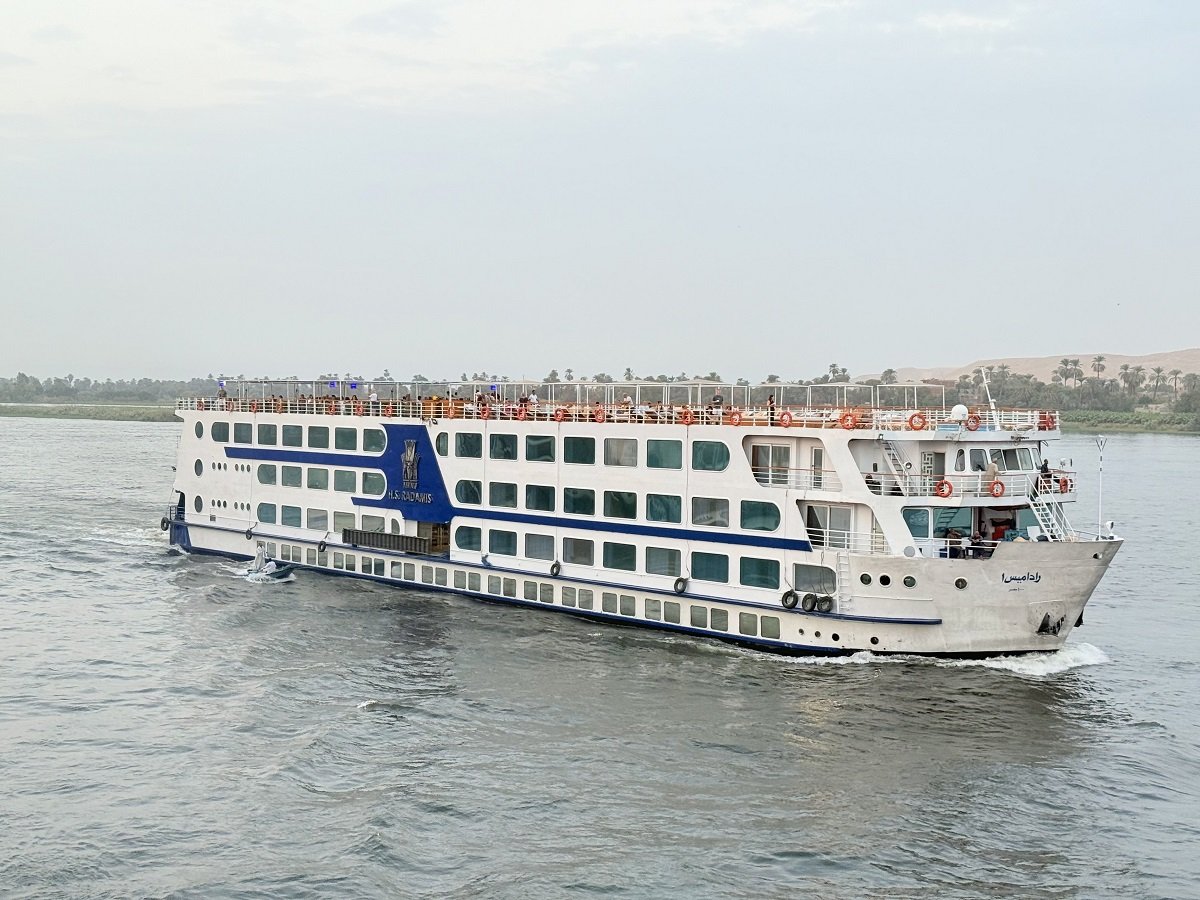
Then you fly to Aswan and board ship for three nights on the river. Philae, Kom Ombo and Edfu come off the mooring at walking distance; Karnak, Luxor Temple and the Theban west bank close the sailing in Luxor. The road east to Hurghada takes four to five hours, and after that nothing is scheduled.
Fourteen nights, both domestic flights, every transfer and 32 meals are inside the price. Groups are capped at sixteen and every site is led by a licensed Egyptologist.
If four nights on the coast is enough for you, our 14 day Egypt tour runs the same route with a shorter finish. This is the version for travellers who want the Red Sea to be half the trip rather than the epilogue.
Your representative meets you inside the terminal at Cairo International, before passport control, and stays with you through the visa desk and the baggage hall. A private air-conditioned car takes you to your hotel.
The rest of the day is yours, and it is meant to be. Day 2 starts early. Your guide will confirm the pick-up time when you check in.
Meals Plan: No Meals Included
Your Egyptologist collects you after breakfast for the short drive west to Giza.
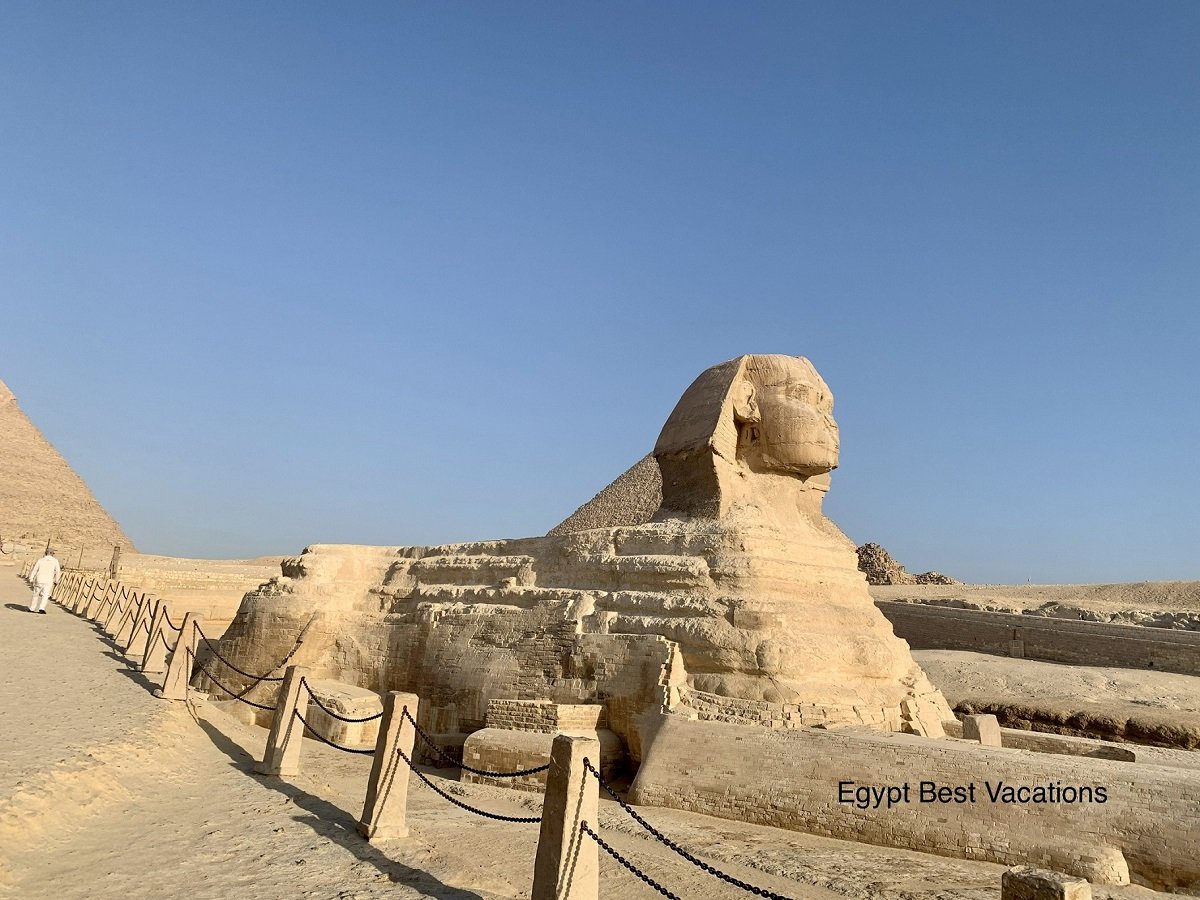
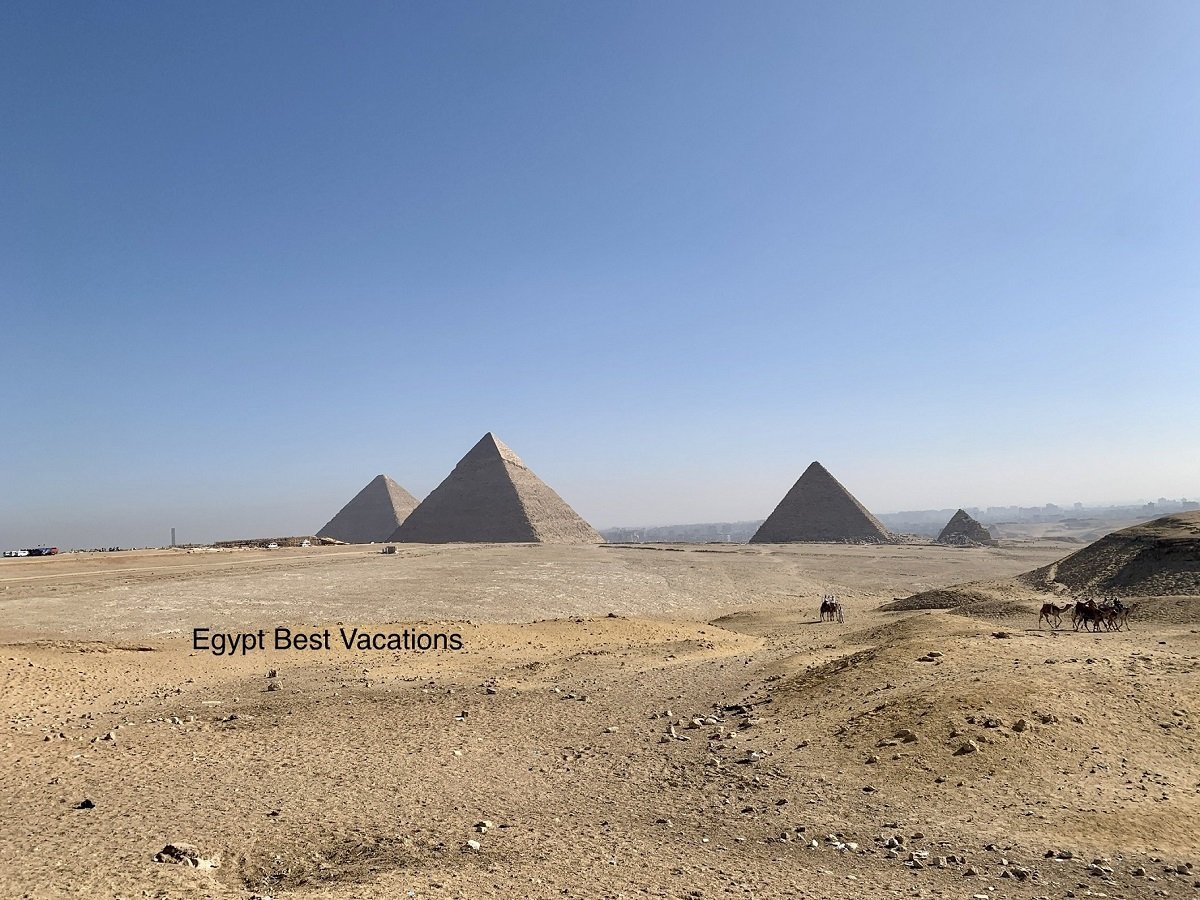
The three pyramids sit on a limestone shelf at the desert edge, and the morning is spent on why they are where they are. Khufu’s is aligned to true north to within a twentieth of a degree, achieved without a compass or a fixed pole star at that date. You will see the boat pit on the south side, the causeway running down toward the valley temple, and the queens’ pyramids that most visitors walk past. Khufu’s pyramid is the only survivor of the seven wonders of the ancient world.
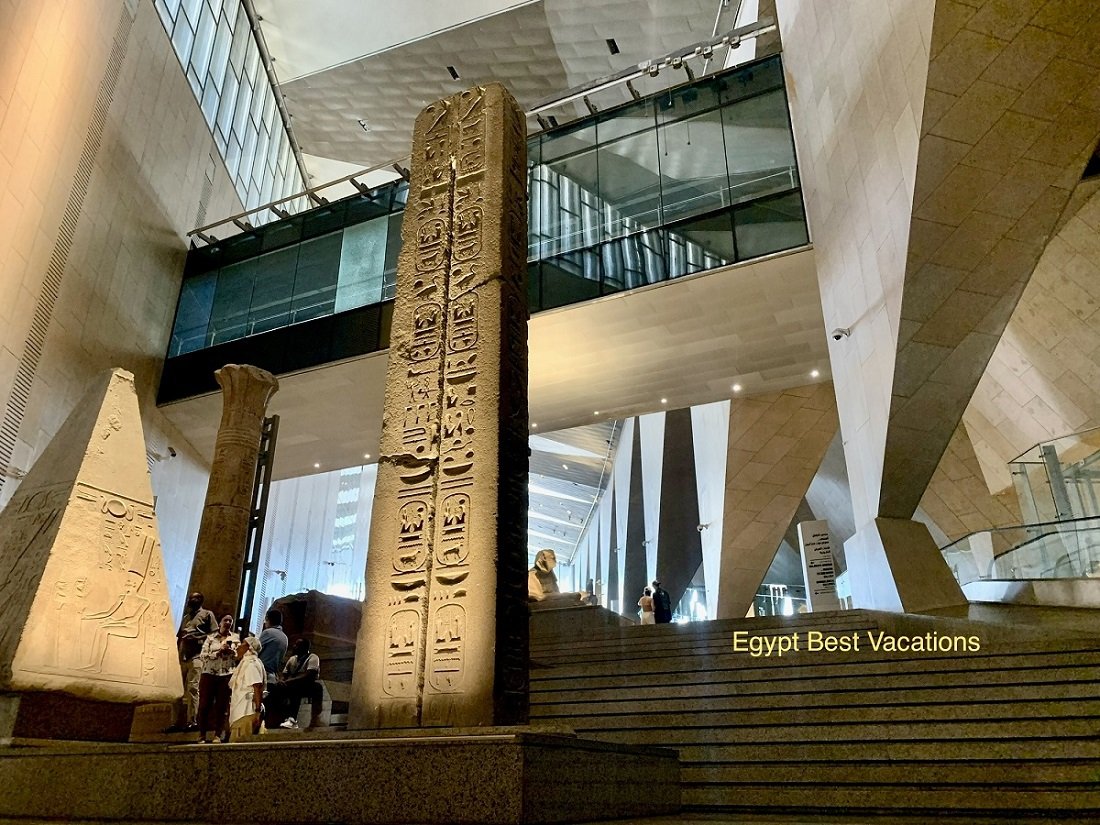
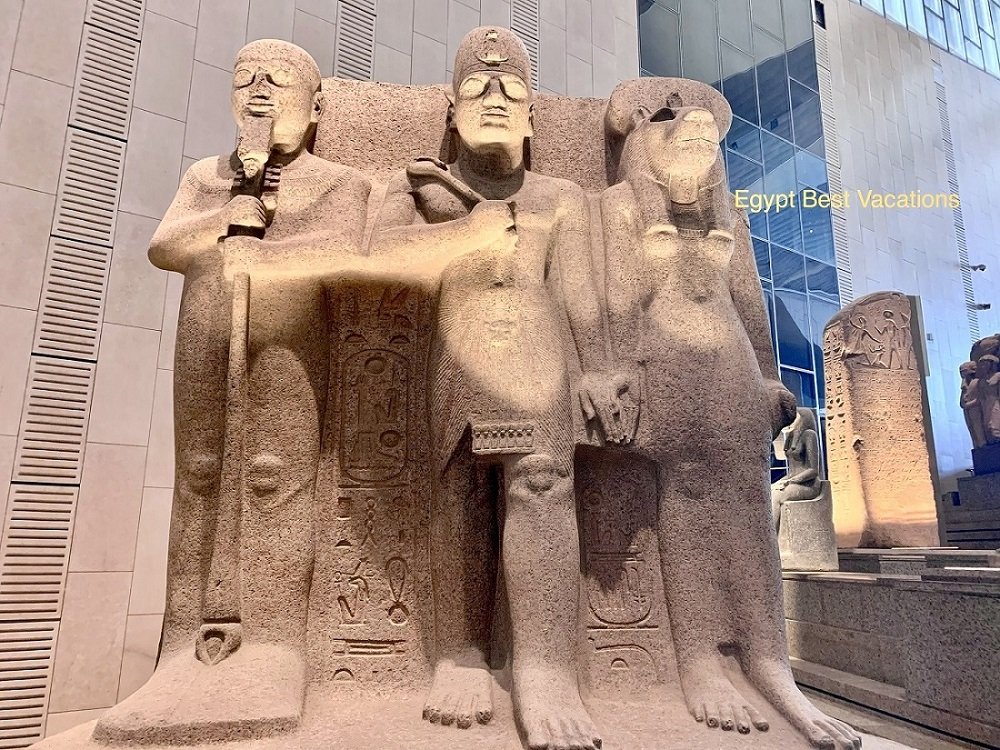
Lunch is at a local restaurant, then the Grand Egyptian Museum. It stands two kilometres from the plateau with the pyramids visible through the glass of the main hall, so the collection and the monuments it came from stay in the same frame. Everything Howard Carter took out of Tutankhamun’s tomb is now displayed here together, most of it never publicly shown before this building opened.
Meals Plan: Breakfast & Lunch
Fifteen centuries in one day, all of it after the pharaohs.
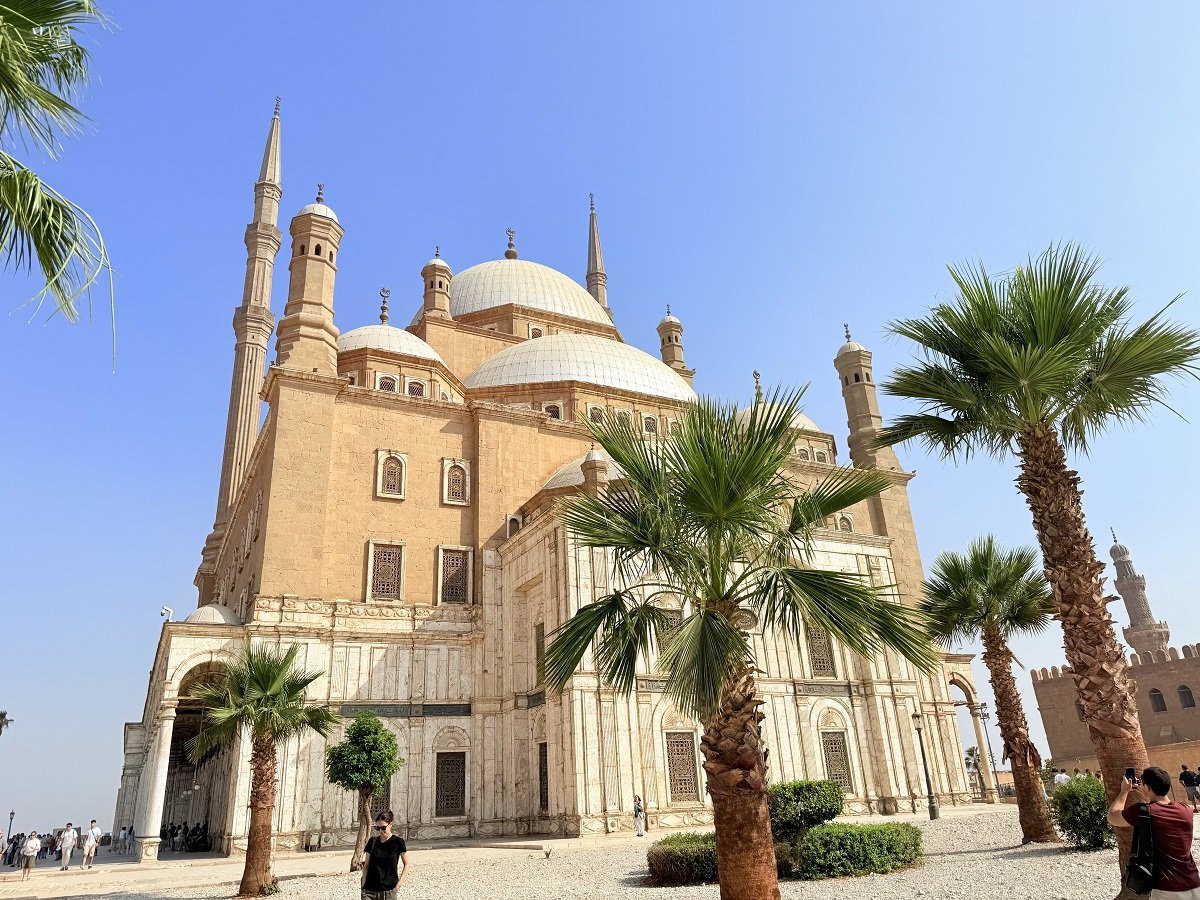
The Citadel of Saladin was begun in 1176 on a spur of the Muqattam hills, chosen because the rock could not be undermined. Inside its walls is Bir Yusuf, a well cut nearly 90 metres straight down through solid stone to reach the water table, with a spiral ramp for the oxen that turned the wheels. The Mosque of Muhammad Ali above it is Ottoman rather than Egyptian in silhouette — deliberately modelled on the imperial mosques of Istanbul — and faced in the pale alabaster that gives it its English name, the Alabaster Mosque. The French clock in its courtyard was a gift from Louis Philippe; it has never worked.
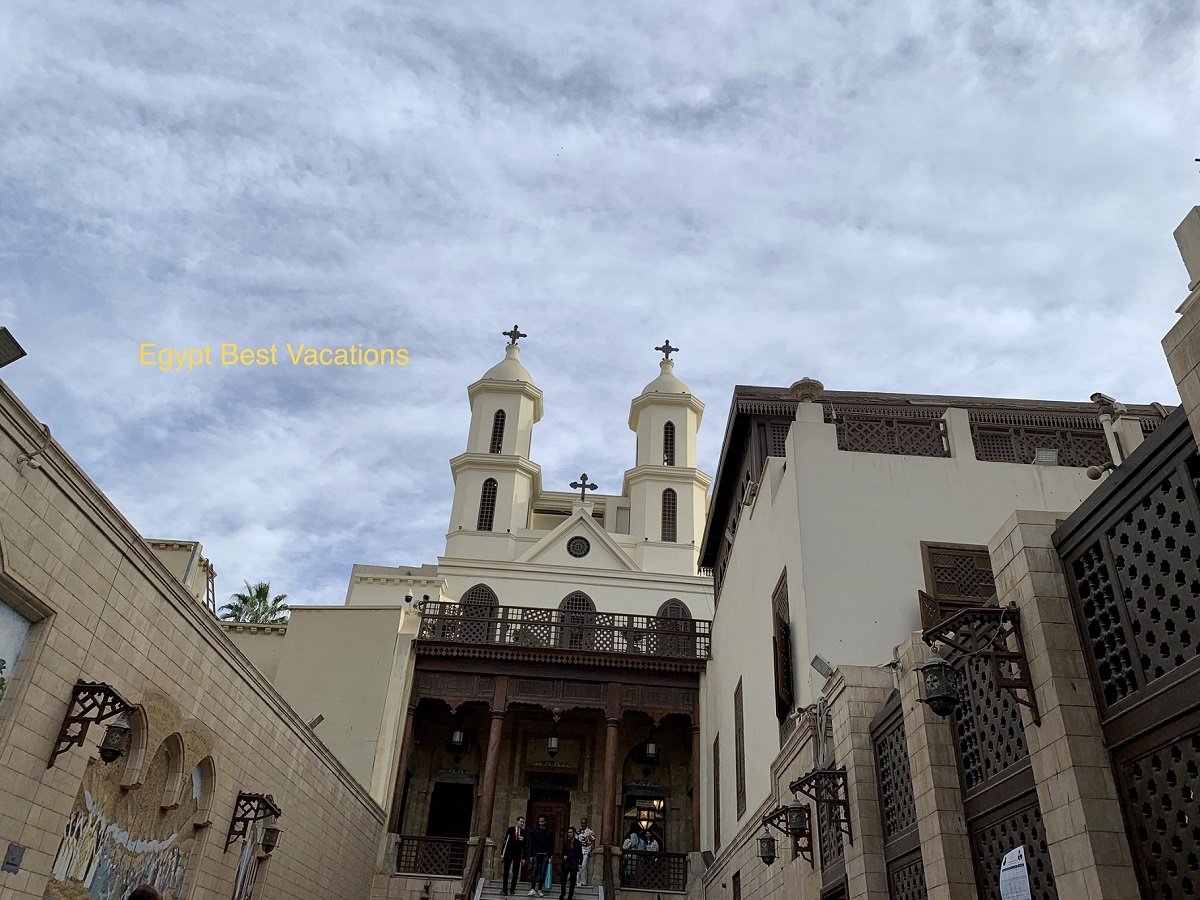
Coptic Cairo sits inside a Roman fortress called Babylon, and you enter between two of its round towers. The Hanging Church is built across the top of a gate, its nave suspended over the opening. Abu Serga stands over a crypt where tradition places the Holy Family, and the crypt floods most years when the water table rises. Ben Ezra Synagogue was a church before it was a synagogue, and its storeroom held the Cairo Geniza — some 300,000 discarded manuscript fragments that are now the single richest source on medieval Mediterranean life.
The day ends in Khan El-Khalili, a market since the 1380s. Fishawi’s café inside it has, by its own account, not closed since 1797.
Meals Plan: Breakfast Only
North to the Mediterranean, about three hours each way, for the Egypt that speaks Greek.
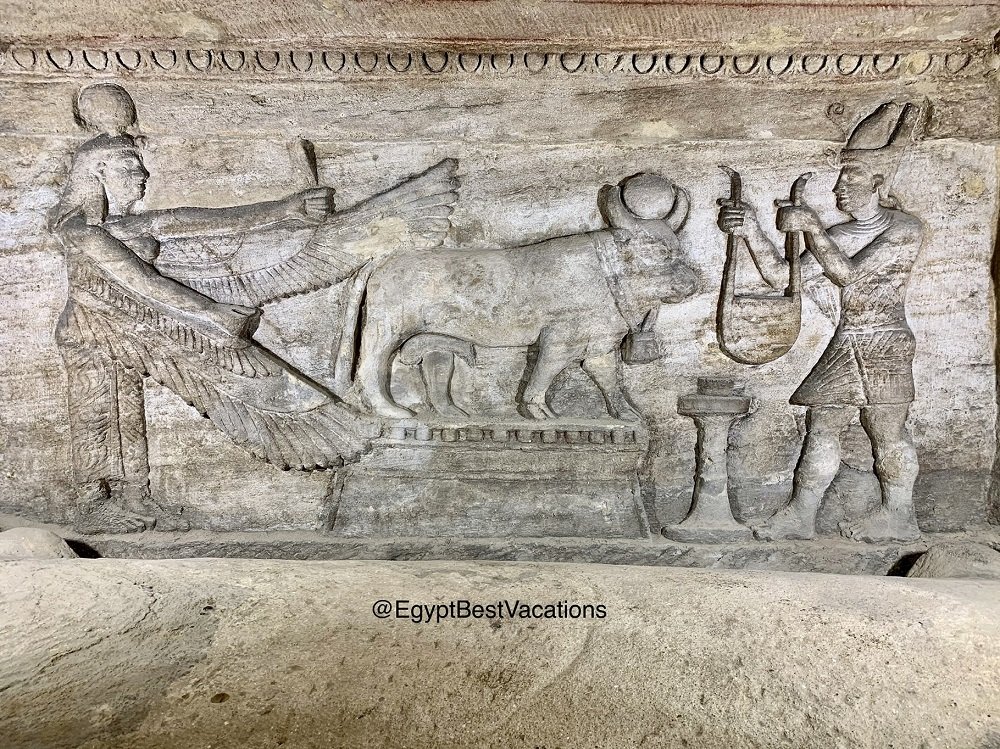
The Catacombs of Kom El-Shoqafa go three levels into the rock and were reached by a spiral staircase wound around an open shaft — the stairs for mourners, the shaft for lowering the dead on ropes. Off the main level is a triclinium, a banqueting chamber with stone couches cut into the walls, where families came to eat beside their relatives on the anniversary of a death. The lowest level is flooded and has been since antiquity.
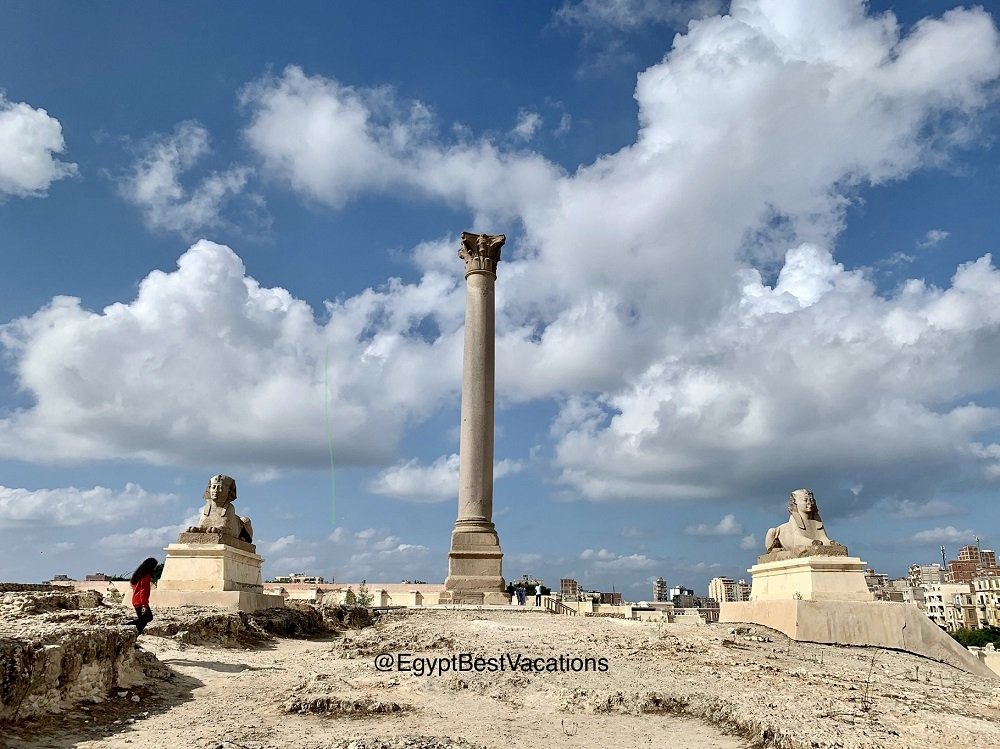
Pompey’s Pillar stands on the mound of the Serapeum, a single shaft of Aswan granite 25 metres high, raised for Diocletian and misnamed by Crusaders who assumed Pompey was buried under it. Two granite sphinxes and the underground galleries of the temple survive around its base.
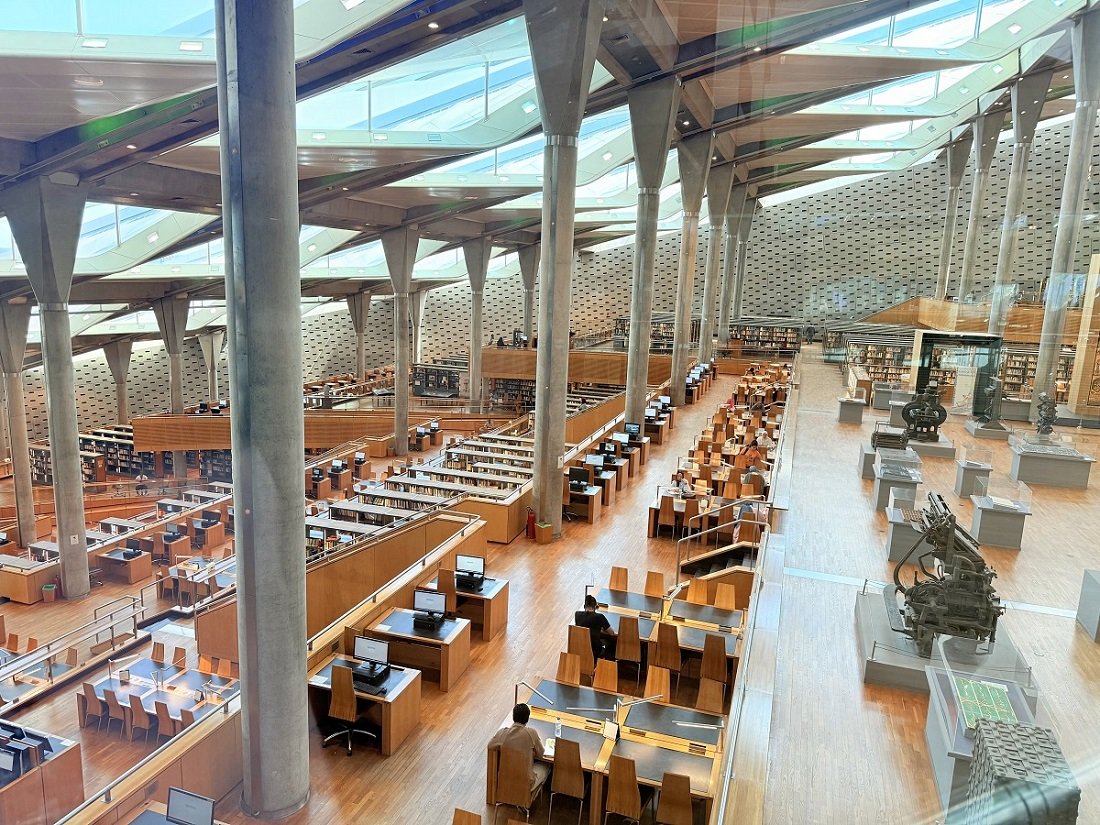
The Citadel of Qaitbay was built in the 1480s on the exact footprint of the Pharos lighthouse, using stone from its collapse. The blocks of the lighthouse itself lie in the water off the seawall, where divers have mapped several hundred of them. The day finishes at the Bibliotheca Alexandrina, opened in 2002, its roof tilted toward the sea like a rising sun disc and its outer wall carved with characters from 120 writing systems.
Lunch on the seafront before the drive back.
Meals Plan: Breakfast & Lunch
The day that explains Giza.
Saqqara first, for Djoser’s Step Pyramid — six mastabas stacked on each other around 2670 BC by Imhotep, the first monumental stone building anywhere in the world. Close by, the pyramid of Unas is small and plain outside and covered inside with the Pyramid Texts, the oldest religious writing that survives from anywhere. The mastaba tombs of the nobles nearby are decorated with something else entirely: cattle being counted, boats being built, men wrestling, a hippopotamus hunt in the marshes.
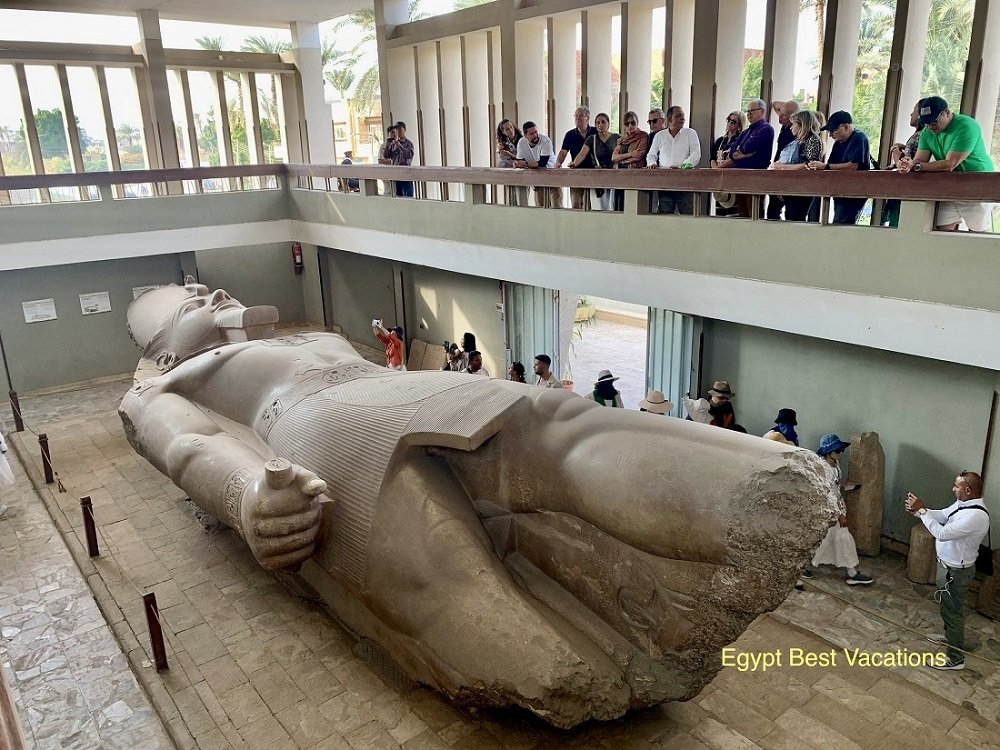
Memphis was the capital for most of the Old Kingdom and is now a small open-air museum in a palm grove. The fallen colossus of Ramses II lies on its back under a shelter, ten metres of limestone, displayed horizontally because the feet were never recovered. An alabaster sphinx of about 80 tonnes sits alongside it.
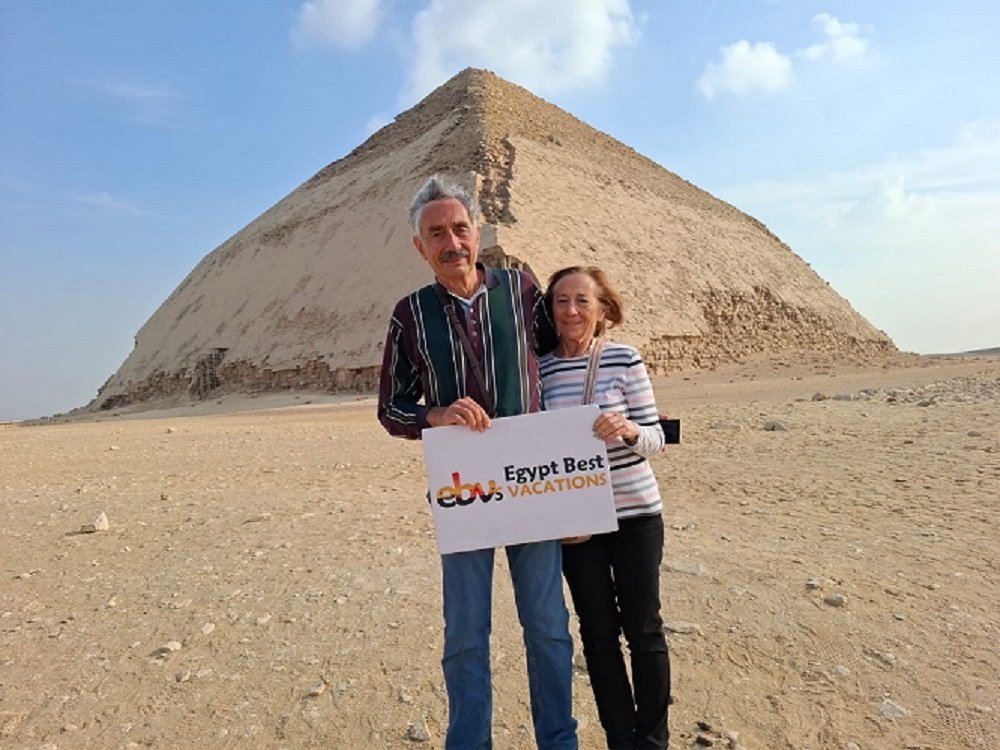
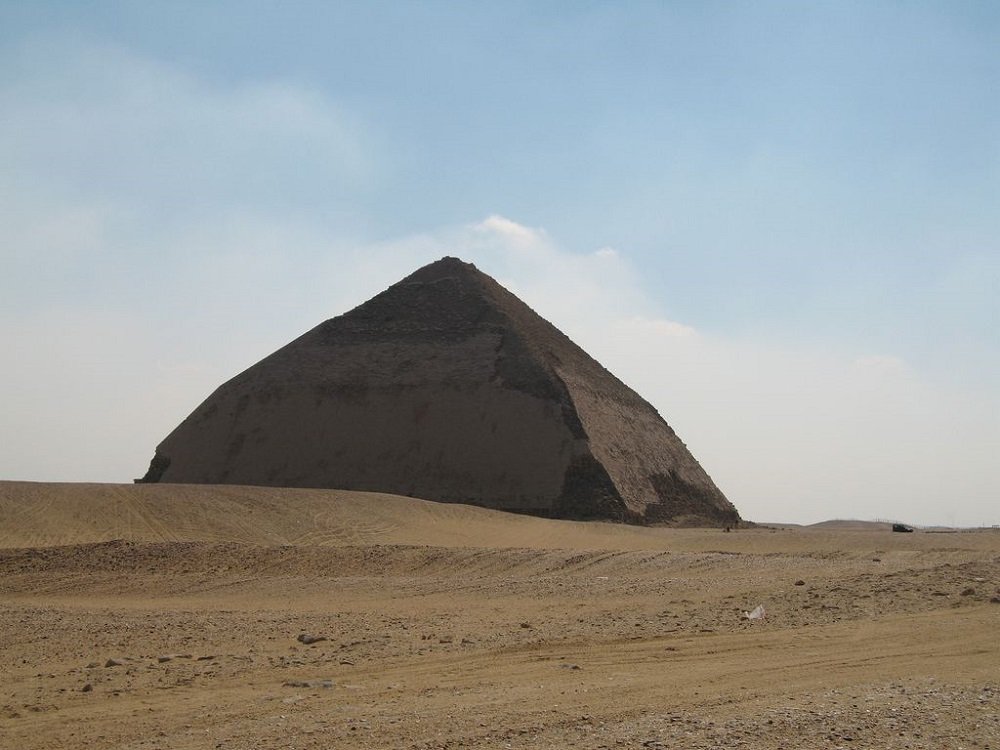
Dahshur closes the day. Sneferu built the Bent Pyramid here and changed its angle halfway up when the structure started to move, then built the Red Pyramid nearby at the corrected slope and got it right. You can walk down into the Red Pyramid — a 60-metre passage at a steep angle, opening into three corbelled chambers. It is one of the few pyramid interiors you are likely to have to yourself.
Meals Plan: Breakfast Only
Morning transfer to Cairo Airport and the flight south. Your Aswan guide meets you at arrivals.
The High Dam comes first. It is 111 metres high and nearly four kilometres across, and the lake behind it runs 550 kilometres upstream into Sudan — the reason the Nile no longer floods, and the reason a dozen temples had to be moved. Philae is one of them. The temple of Isis was under water for most of the year after the first dam was built, and between 1972 and 1980 it was cut into more than 40,000 pieces and rebuilt on Agilkia Island. Its walls still carry crosses cut by Coptic monks who used the temple as a church, and Greek graffiti left by pilgrims.
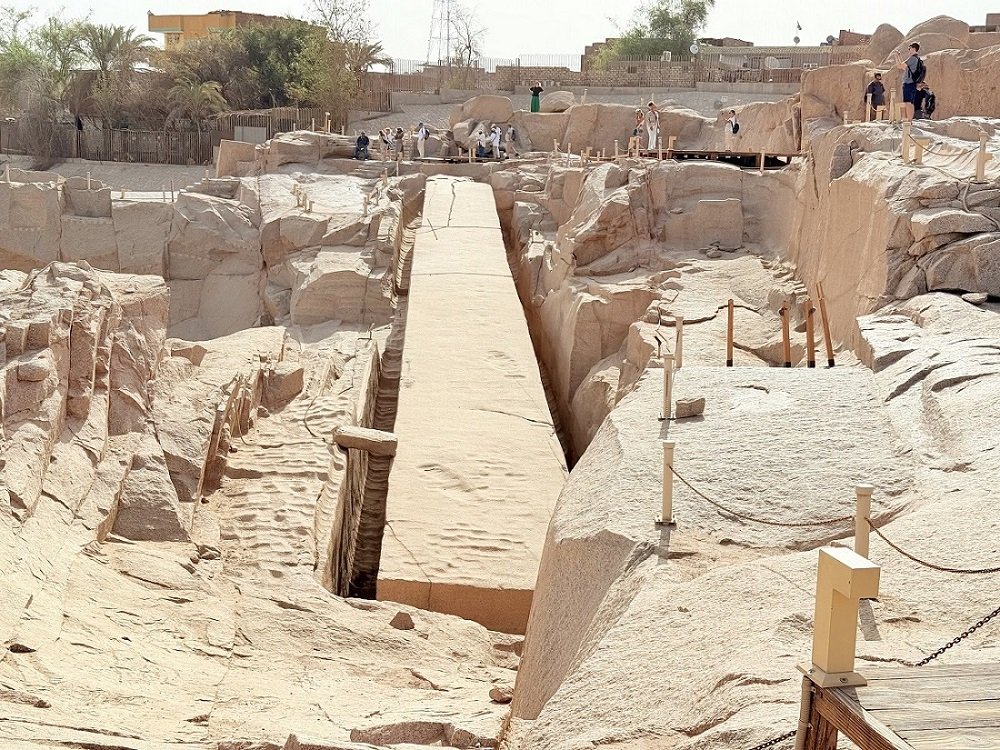
The Unfinished Obelisk lies in the quarry it was cut from. Had it been raised it would have stood nearly 42 metres and weighed over 1,000 tonnes — the largest ever attempted. A fissure appeared in the granite and it was abandoned where it lay, with the pounding marks of the dolerite balls used to shape it still visible along its sides.
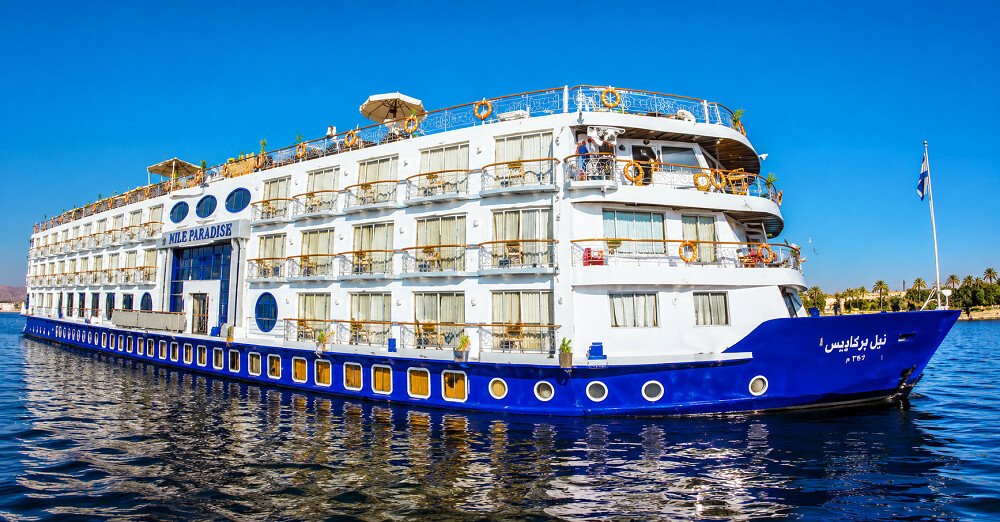
Transfer to your ship in the late afternoon. Overnight moored at Aswan.
Optional tour: Tour to the Nubian Village in Aswan
Meals Plan: Breakfast, Lunch & Dinner
The morning is free on board, unless you have booked the optional Abu Simbel excursion, which leaves before dawn and returns by midday.
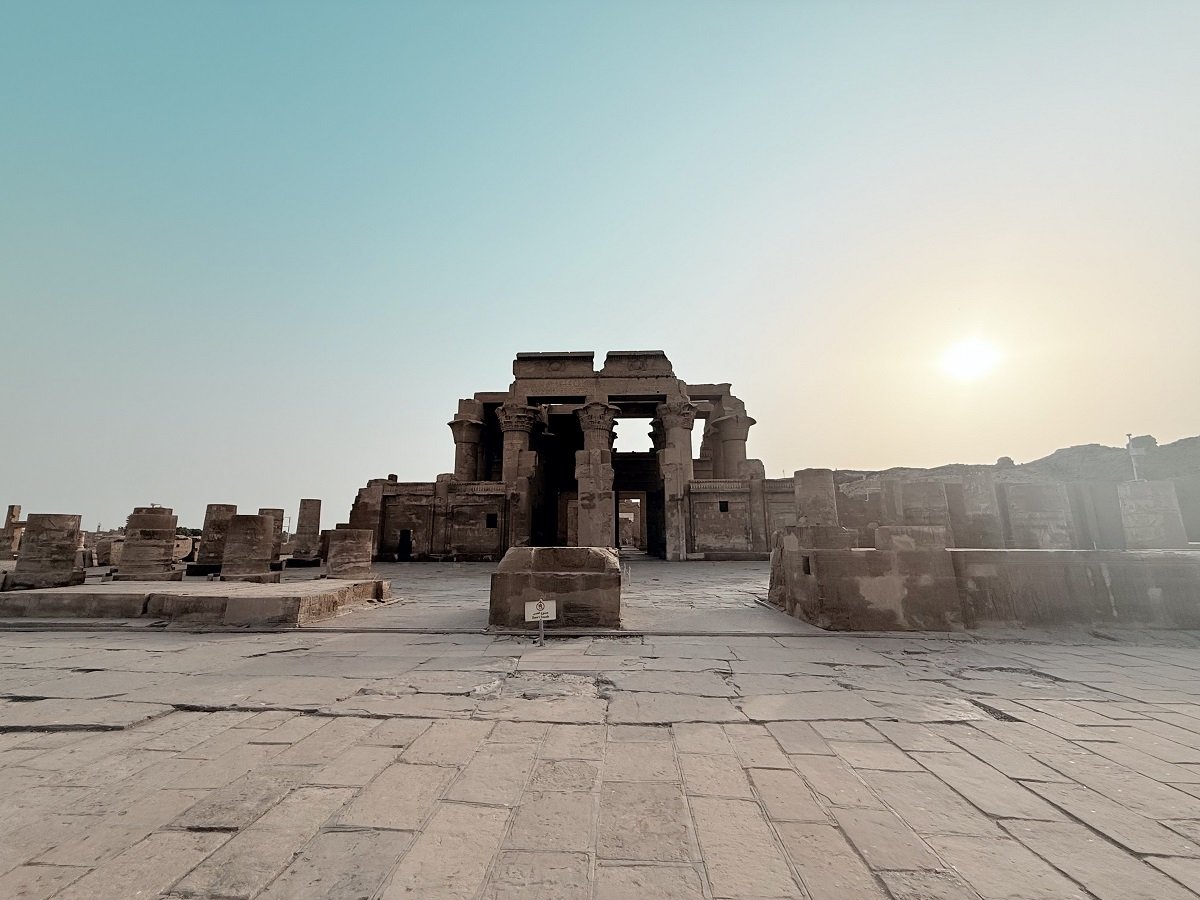
The ship sails after lunch. Kom Ombo stands directly above the river on a bend, and it is the only Egyptian temple built as a perfect mirror image — two gateways, two halls, two sanctuaries, one side for Sobek the crocodile god and the other for Horus the Elder. Building ran from Ptolemy VI in the second century BC to the Roman emperors, roughly four hundred years.
On the rear enclosure wall is a relief that draws every visitor: a set of surgical and medical instruments carved in a single panel — forceps, scalpels, bone saws, cupping vessels, a birthing chair. Nearby, a nilometer well cut into the rock measured the annual flood and set the year’s taxes.
The Crocodile Museum beside the temple holds mummified crocodiles recovered from the site, some over four metres long.
The ship continues to Edfu after the visit. Overnight moored there.
Meals Plan: Breakfast, Lunch & Dinner
A horse and carriage takes you from the mooring to the Temple of Horus before breakfast.
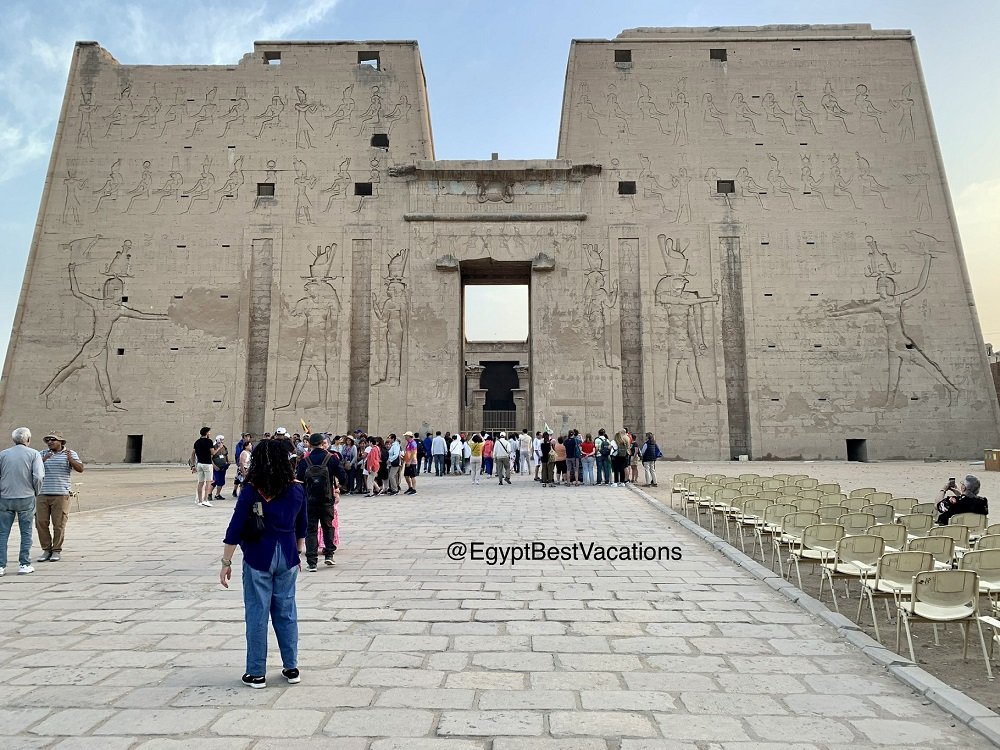
Edfu is the most completely preserved temple in Egypt, because sand buried it to the tops of its walls and kept it that way for centuries. The roof is on, the pylon is standing, the enclosure wall is intact. Two black granite falcons guard the entrance. Inside, a small side room was the House of Life — the temple’s library — and its walls list the titles of the books once shelved there. A birth house stands at the front for the annual festival in which Hathor sailed upriver from Dendera to be married here.
Back aboard, the ship sails to Luxor and passes through the Esna lock, which lifts it past the barrage. Waiting time varies with traffic on the river.
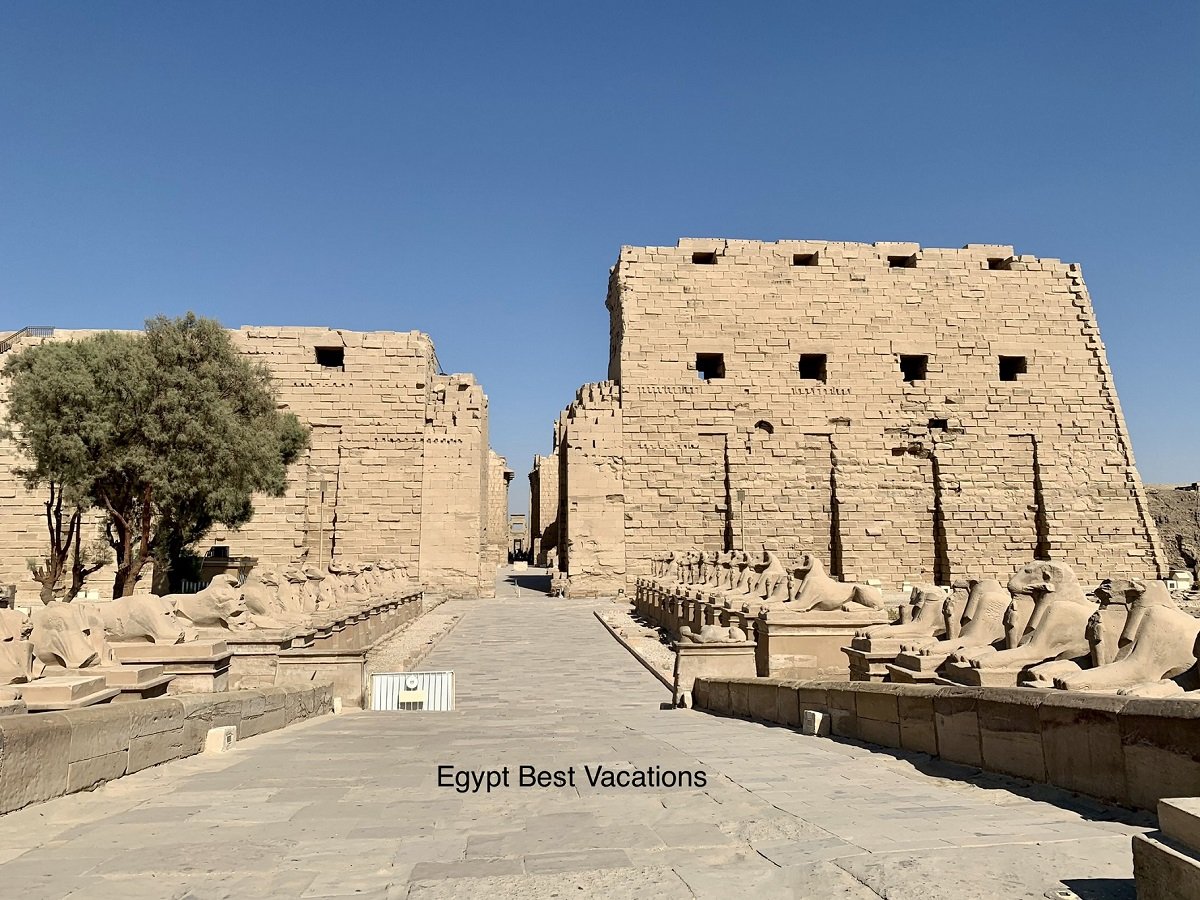
In Luxor you visit Karnak, added to by successive kings for two thousand years and never finished. Beside the main temple lies the sacred lake, dug and lined so the priests could purify themselves before dawn ritual, and Hatshepsut’s standing obelisk of red Aswan granite. Then Luxor Temple, where the mosque of Abu el-Haggag sits high on the buried courtyard wall — built when the temple was under fifteen metres of debris, left in place when the debris was cleared, and still in use. One of its two entrance obelisks is here; the other has stood in the Place de la Concorde in Paris since 1836.
Meals Plan: Breakfast, Lunch & Dinner
Disembark after breakfast and cross the river.
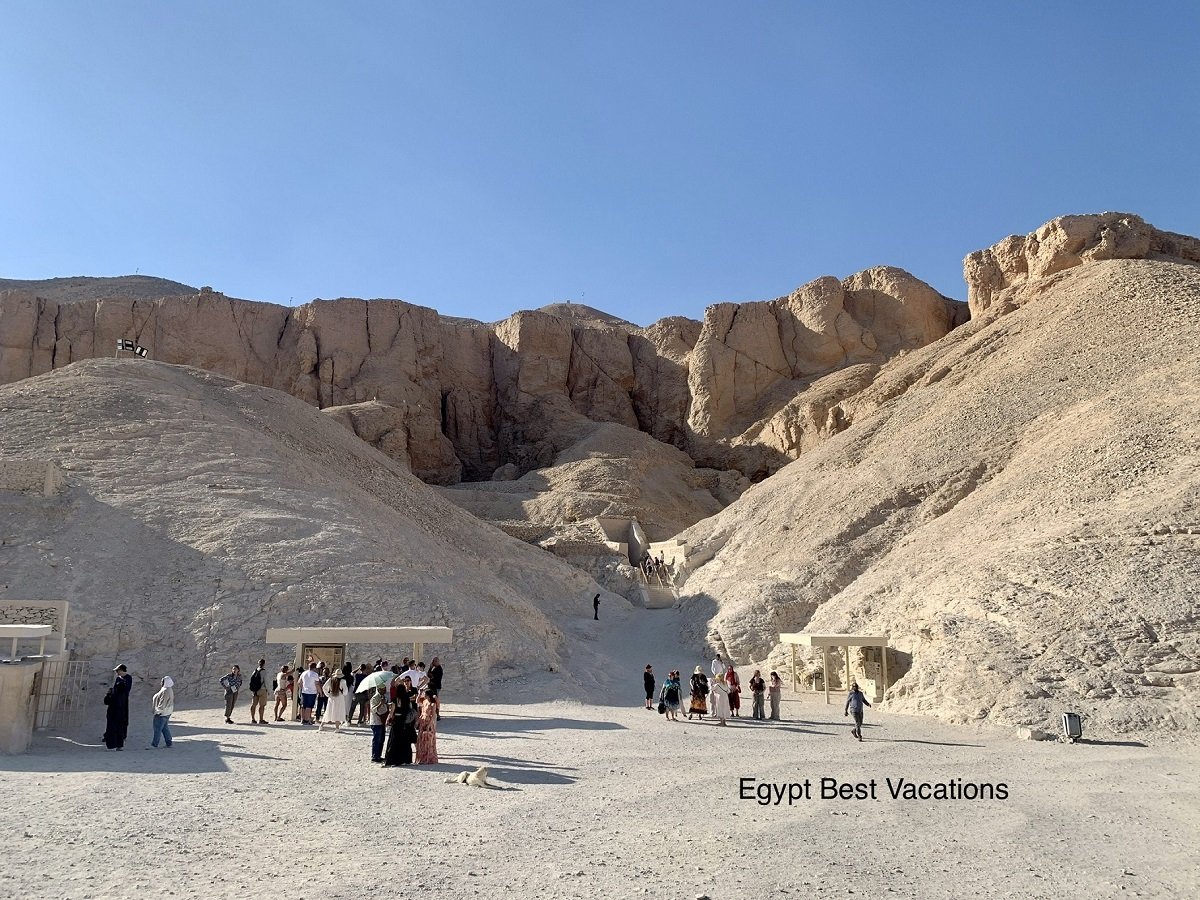
The Valley of the Kings holds more than sixty tombs cut into a limestone gorge below a natural pyramid-shaped peak. The tombs are decorated not with scenes of life but with route maps — the Amduat, the Book of Gates, the Book of Caverns — hour-by-hour accounts of the sun’s night journey, painted so the king could follow it. Your standard ticket admits you to three tombs from the selection open that day, which rotates to spread the wear.
Hatshepsut’s temple at Deir El-Bahari rises in three terraces against a 300-metre cliff. Its colonnade carries a relief record of her trading expedition to Punt, ships loaded with incense trees, ebony and live baboons. Her successor Thutmose III had her name and image chiselled out of the walls decades after her death, and you can still see where.
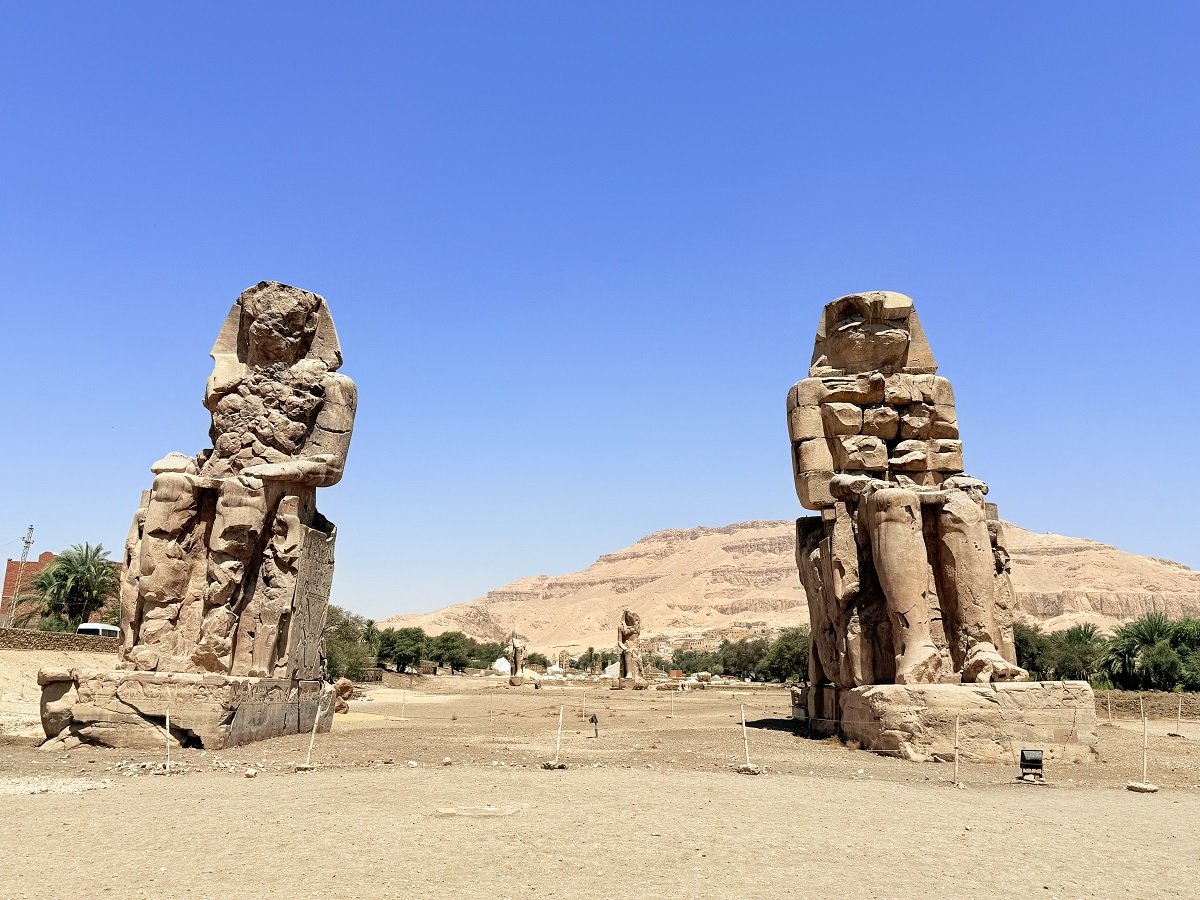
The Colossi of Memnon end the morning. After an earthquake cracked the northern statue in 27 BC it began producing a sound at dawn, and Greek and Roman tourists travelled here to hear it — some of them scratched their names on the legs, which are still legible. Septimius Severus repaired the statue around 199 AD and it never sang again.
The road east to Hurghada takes four to five hours across the Eastern Desert. You arrive at your all-inclusive resort in time for dinner.
Optional tour: Sunrise Hot Air Balloon over Luxor
Meals Plan: Breakfast, Lunch & Dinner
The first of five nights on the coast, and the one to spend on the doorstep.
Most Hurghada resorts sit on their own stretch of shore with a house reef within swimming distance, so the fastest way to see what the Red Sea actually looks like is to put on a mask and walk in. Visibility here routinely exceeds 30 metres and the water stays swimmable all twelve months of the year.
This is also the day to book the rest of the week, while there is still space on the boats. If you want to dive and have never dived, tell the centre today — a four-day open-water certification fits inside your remaining nights, which is exactly why this itinerary has five and not two.
Meals Plan: Breakfast, Lunch & Dinner
The reefs worth the boat ride are an hour or so offshore.
Giftun is the largest island in the Hurghada archipelago and a protected area; Mahmya on its northern shore is the standard full-day trip, with two or three snorkelling stops and lunch served on the beach. Further north, Sha’ab El Erg is a horseshoe reef where a resident pod of spinner dolphins rests through the middle of the day — sightings are frequent but never promised, and reputable operators will not chase them.
Certified divers can join a two-tank day on the offshore reefs instead. If you would rather not get in the water, a traditional sailing day covers the same coast at a slower pace.
Meals Plan: Breakfast, Lunch & Dinner
The Eastern Desert begins a few kilometres inland and runs unbroken to the Nile.
Afternoon safaris by four-wheel drive or quad bike cross the sand flats to a Bedouin camp for dinner, returning after dark. Take a layer — the temperature falls sharply once the sun goes, and by an hour after sunset it is genuinely cold. What most people remember is not the drive but the sky: no settlement between the camp and the river means no light at all, and the Milky Way is plainly visible with the naked eye.
For a quieter version of the same day, El Gouna is 25 minutes up the coast — a lagoon town built around waterways, with a marina and no coach traffic.
Meals Plan: Breakfast, Lunch & Dinner
Nothing planned, on purpose.
By this point you have covered Cairo, Alexandria, Aswan and Luxor, sailed three nights and crossed a desert. This is the day the itinerary sets aside so the trip does not end on a rush.
The resort is all-inclusive, so meals and drinks are handled. Some guests finish a diving certification, some use the spa, some go back to the reef they liked best. Anything you missed on the previous three days can move here.
Meals Plan: Breakfast, Lunch & Dinner
Transfer to Hurghada Airport for the flight to Cairo, under an hour, with a clear view of where the desert meets cultivated land as you descend.
Your driver meets you at arrivals and takes you to your hotel. The evening is open. If anything from your first five days went unseen — the Egyptian Museum in Tahrir, Ibn Tulun, the Manial Palace, dinner on the river — say so on the day and we will arrange it.
Meals Plan: Breakfast Only
Breakfast, then a private transfer to Cairo International timed to your flight, with assistance through check-in.
If you are extending — Sharm El-Sheikh, Siwa, the White Desert, or on to Jordan — tell us before you travel and we will build it onto this itinerary rather than sell it to you as a second trip.
Meals Plan: Breakfast Only