This 19 day Egypt all inclusive package is the longest itinerary we run, and the only one that puts you on two different rivers. Seven nights in Cairo, three sailing Lake Nasser from Abu Simbel down to Aswan, three more on the Nile between Aswan and Luxor, four on the Red Sea, and one under canvas in the White Desert. Eighteen nights, with all domestic flights included.
The Lake Nasser leg is what makes this trip unusual. Most Egypt itineraries treat Abu Simbel as a four-hour round trip from Aswan. Here you fly to it, sleep beside it, and then sail north through Nubia past temples that almost no visitor sees — Qasr Ibrim on its cliff, Amada, Wadi es-Seboua, Dakka, Kalabsha. All of them were cut apart and relocated when the High Dam flooded the valley, and most of them can only be reached by boat.
Cairo gets seven nights rather than the usual three, so you can do Giza and the Grand Egyptian Museum properly and still fit Alexandria, Saqqara, Memphis and Dahshur without a single rushed morning. The trip ends with four nights on the Red Sea and a night camping in the White Desert, which is the one part of the itinerary people talk about afterwards more than the temples.
Egypt Best Vacations is a licensed Egyptian tour operator based in Luxor, run by a working Egyptologist. We have held the TripAdvisor Travellers’ Choice Award three years running: 2024, 2025 and 2026. This tour runs as a small group of up to sixteen people and can be arranged fully private at a supplement.
Your representative meets you inside the arrivals hall at Cairo International, before passport control, holding a sign with your name. If you need a visa on arrival he buys it for you while you wait, which is quicker than queueing yourself. Transfer to the hotel takes about 45 minutes, longer if you land in evening traffic. Nothing is scheduled today.
Meals Plan: No Meals Included
An early start, and deliberately so. Your guide collects you at 8am, because the Giza Plateau is at its best in the first two hours and hard work after eleven.
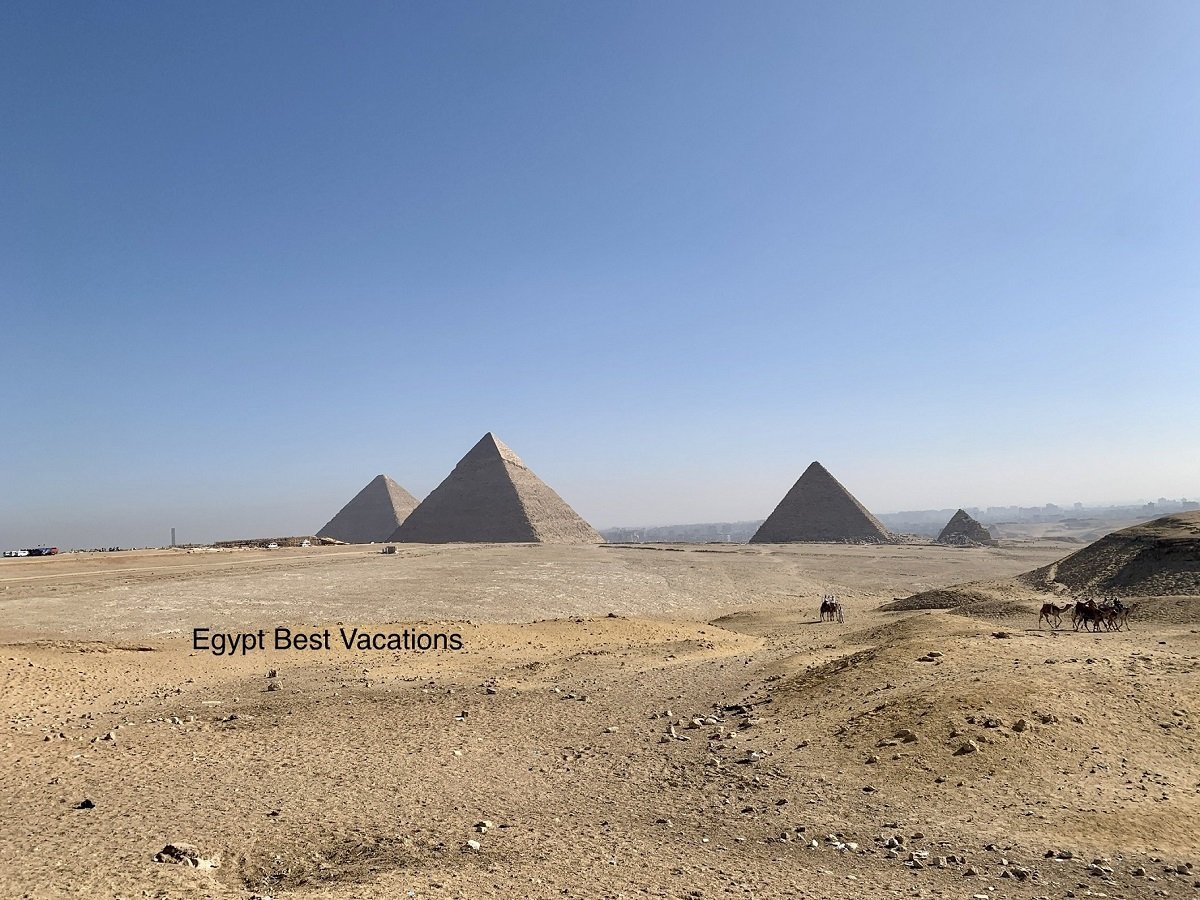
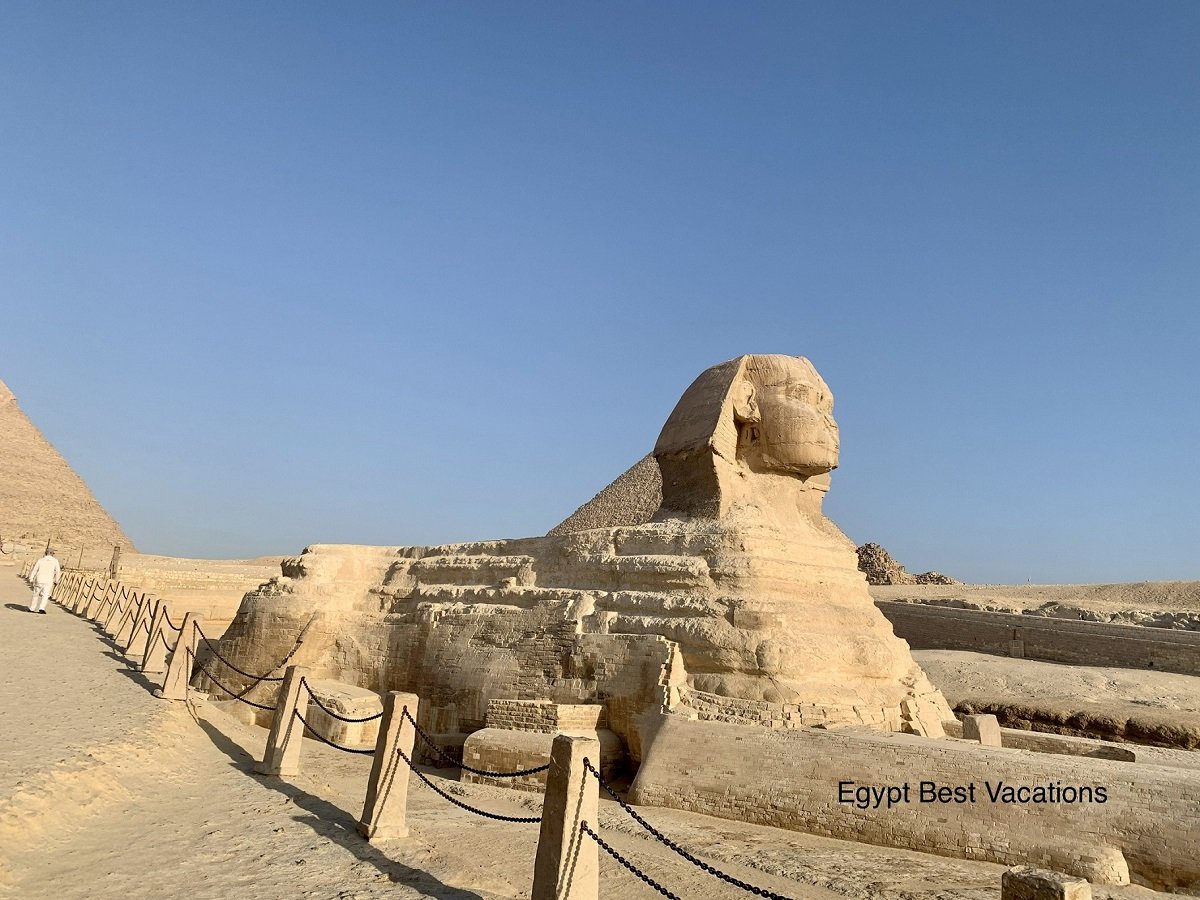
You see all three pyramids — Khufu, Khafre and Menkaure — from the plateau, then the panoramic point where the whole line stands together, then down to the Sphinx and the Valley Temple beside it. Khufu’s is the only survivor of the seven wonders of the ancient world, and the two questions everyone asks are how it was built and why. Your guide will answer both properly. This is the part of the day worth slowing down for.
Going inside the Great Pyramid needs a separate ticket and is not included. Be honest with yourself about it: the passage is steep, low and hot, there is nothing decorated to see at the top, and if confined spaces bother you at all, skip it. Plenty of people do.
Lunch at a local restaurant, then the Grand Egyptian Museum ten minutes away. The complete Tutankhamun collection is here now — more than 5,000 objects from the tomb shown together for the first time since Carter cleared it. Give the grand staircase time; the sightline it opens onto the pyramids at the top is the best-designed moment in the building.
Meals Plan: Breakfast & Lunch
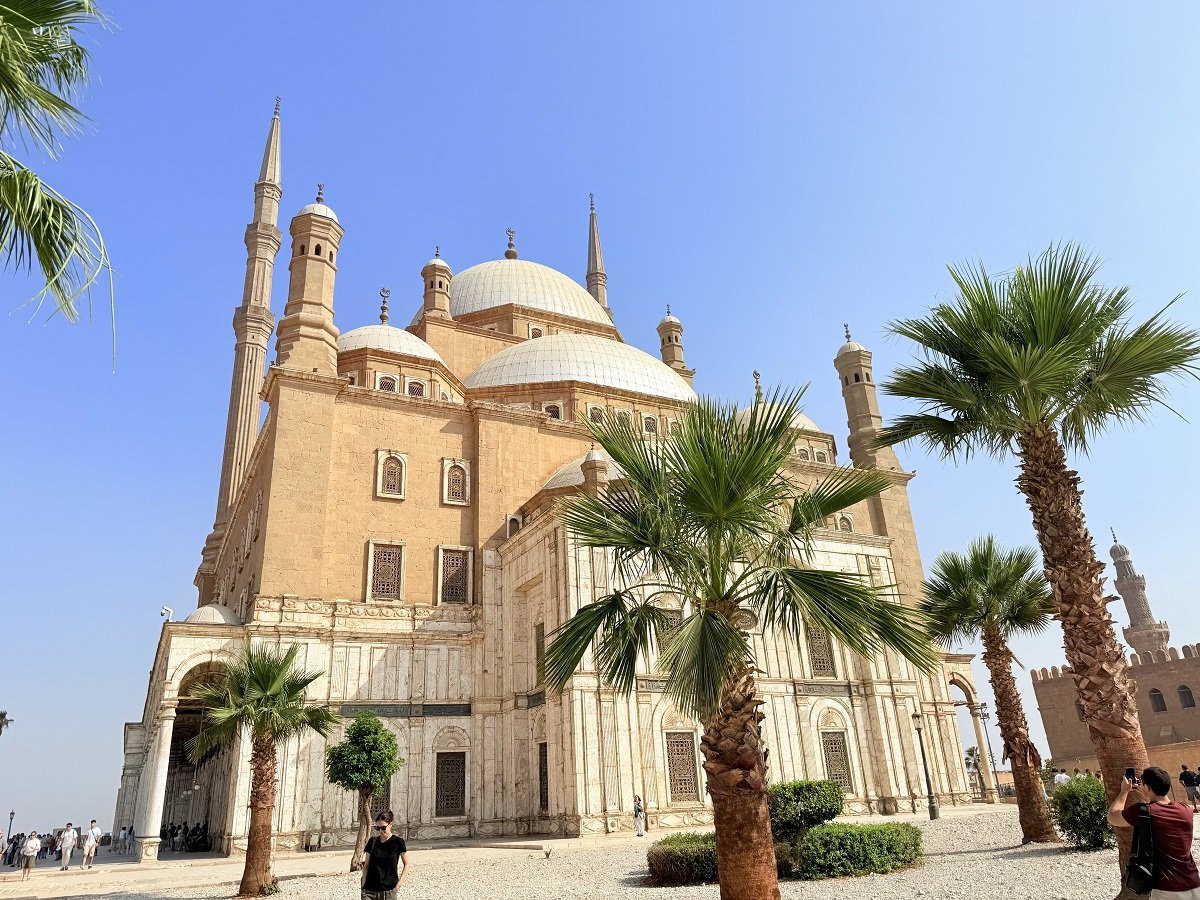
The Citadel of Saladin first, begun in 1176 to hold the city against the Crusaders. Inside it stands the Mosque of Muhammad Ali, faced in alabaster and finished in the 1840s — Ottoman in style rather than Egyptian, which surprises people. The terrace outside gives you the whole city, and on a clear morning the pyramids on the horizon.
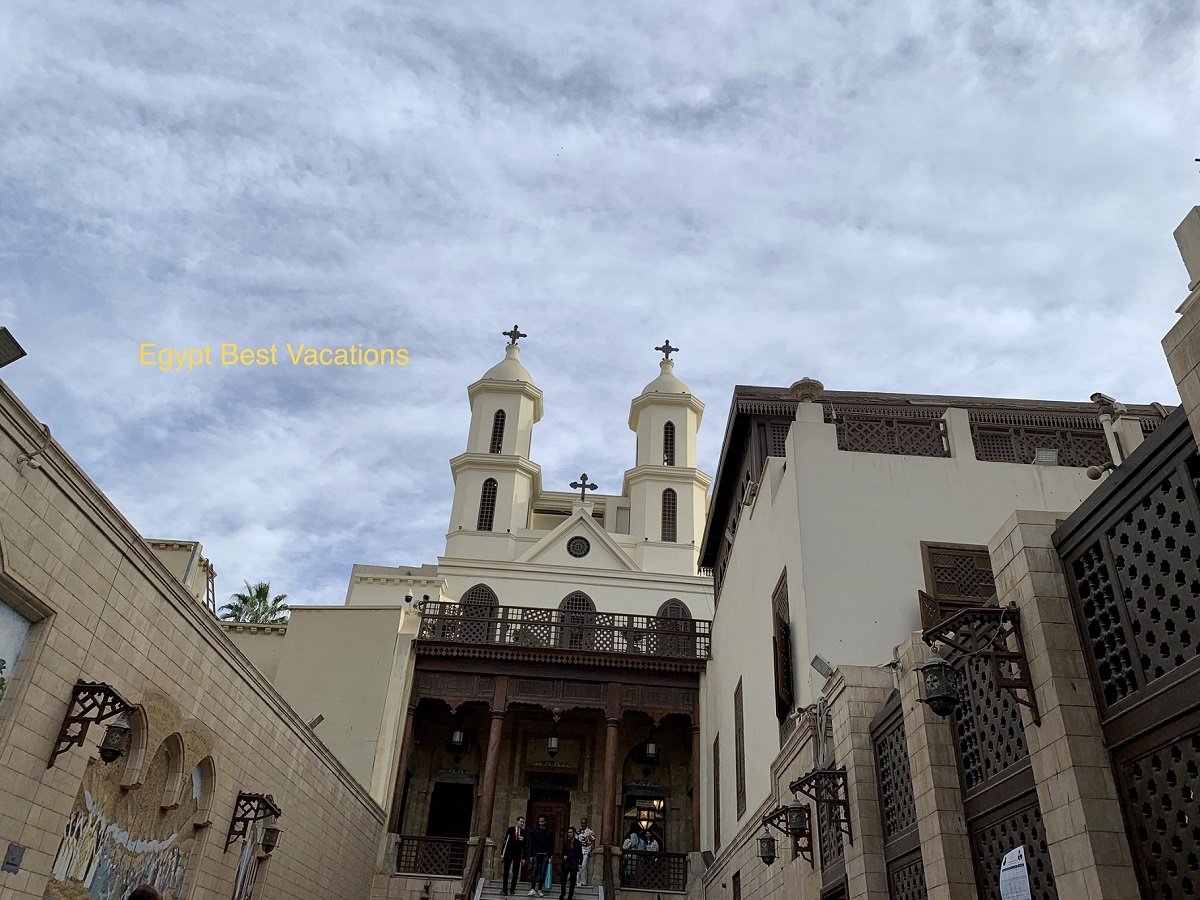
Then down to Coptic Cairo, built on the walls of the Roman fortress of Babylon. The Hanging Church takes its name from its position, suspended over a Roman gatehouse, with a section of glass floor to prove it. The Church of Abu Serga stands above a crypt where tradition holds the Holy Family sheltered during their time in Egypt. A few steps away, the Ben Ezra Synagogue, where a sealed storeroom gave up the Cairo Geniza: nearly 300,000 medieval manuscript fragments, and the richest single source we have for daily life in the medieval Mediterranean.
You finish at Khan el-Khalili, trading since 1382. Prices start high and are expected to be negotiated — that is not a trap, it is the convention. Take a coffee at El Fishawy, open on and off for over two centuries.
Meals Plan: Breakfast Only
Three hours north, and a completely different Egypt: Ptolemaic and Roman rather than pharaonic, Mediterranean rather than Saharan.
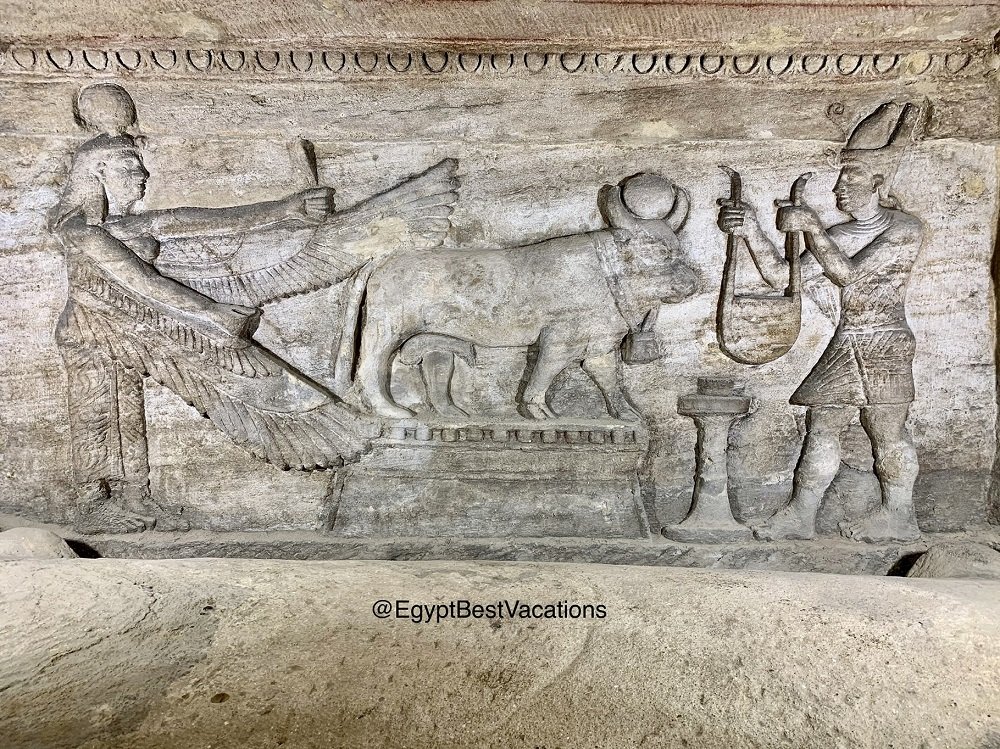
The Catacombs of Kom el-Shoqafa are the largest Roman burial complex in Egypt, cut on three levels around a spiral staircase. They began as a private family tomb in the second century AD and grew into a public cemetery holding more than 300 burials. What makes them worth the drive is the decoration: Egyptian gods carved in Roman dress, Anubis in a legionary’s armour — two religions fusing in one room.
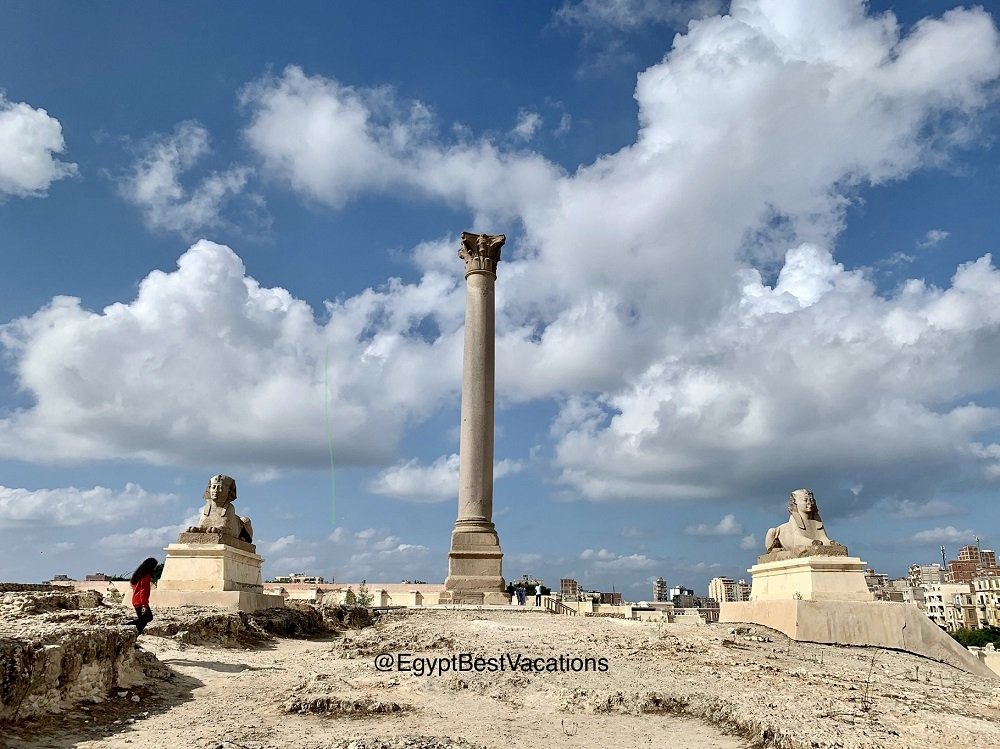
Then Pompey’s Pillar, a single granite column nearly 27 metres high raised for the emperor Diocletian around 297 AD, standing on the site of the Serapeum of Alexandria. The name is a medieval mistake; it has nothing to do with Pompey.
The Qaitbay Citadel next, built in the 1470s by Sultan Qaitbay on the exact footing of the Pharos lighthouse, using its fallen stone. That is the reason to go: you are standing on one of the seven wonders. Last, the Bibliotheca Alexandrina, the modern library raised in 2002 in tribute to the ancient one. Lunch at a local restaurant, then back to Cairo.
Meals Plan: Breakfast & Lunch
Today is the day the pyramids make sense, because you see them being invented.
Saqqara first, and the Step Pyramid of Djoser — the oldest monumental stone building in the world, designed by Imhotep in the 27th century BC. It is six mastabas stacked on one another, an idea nobody had had before.
Then Memphis, capital of Egypt for most of the Old Kingdom and now an open-air museum in a palm grove, where the colossal fallen limestone Ramesses II lies on his back under a shelter.
Dahshur last, and quiet, because most visitors never come. The Bent Pyramid changes angle halfway up, where the builders realised the slope was too steep and corrected it mid-construction. The Red Pyramid beside it is what they built once they knew — the first successful true pyramid, and the direct ancestor of Khufu’s. Seeing the three sites in one day, in that order, is the clearest lesson in ancient engineering available anywhere.
Meals Plan: Breakfast Only
Breakfast or a breakfast box, then transfer to Cairo Airport for the flight south. You land at Abu Simbel, are met by our representative, and board your ship. Lunch on board.
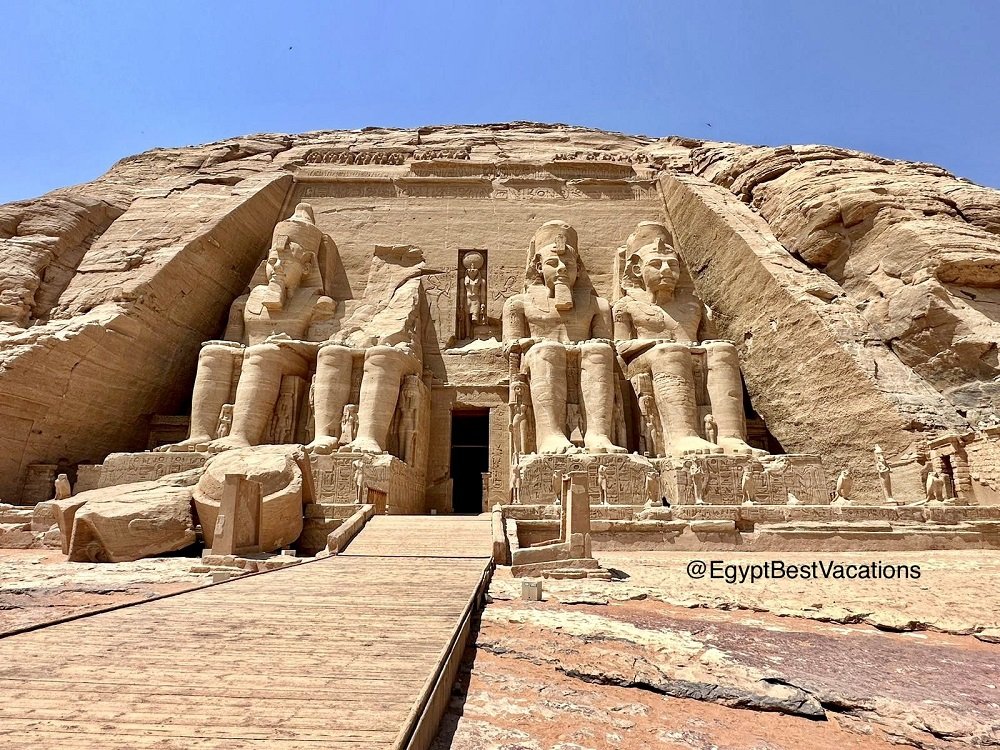
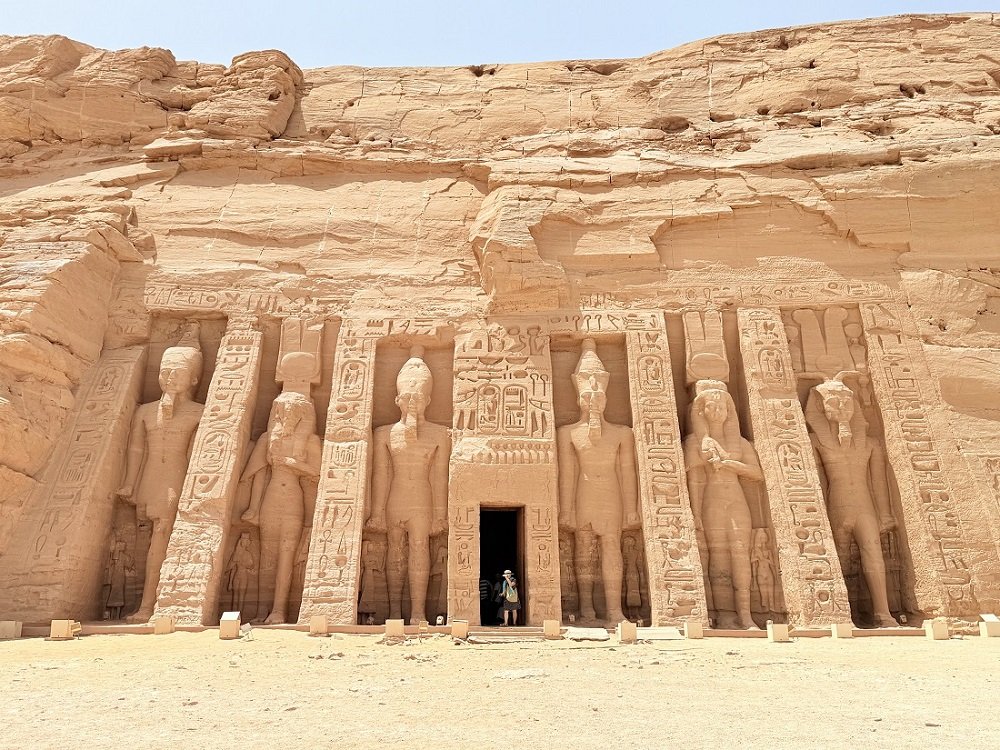
Then the temples. The Great Temple of Ramesses II is cut into the cliff face, its four seated colossi each about twenty metres high, and the Small Temple beside it was built for Nefertari — one of very few Egyptian temples where the queen is shown at the same scale as the king. When the High Dam raised the water, both were cut into blocks and lifted around 65 metres higher and 200 metres back between 1964 and 1968, then rebuilt inside an artificial mountain. Almost nobody realises the hill behind the temples is a concrete dome.
The advantage of arriving by air and sleeping here is that you see Abu Simbel outside the dawn convoy window, when the coaches from Aswan have gone.
Meals Plan: Breakfast, Lunch & Dinner
Your ship sails north. Qasr Ibrim is viewed from the top deck and cannot be landed on — the only Nubian monument still standing on its original site. It once sat on a cliff 70 metres above the valley, about 60 km north of Abu Simbel; now the water is at its edge. It was continuously occupied for more than three thousand years, and the dryness of the site preserved documents in eight languages.
Sail on to Amada. Overnight moored there.
Meals Plan: Breakfast, Lunch & Dinner
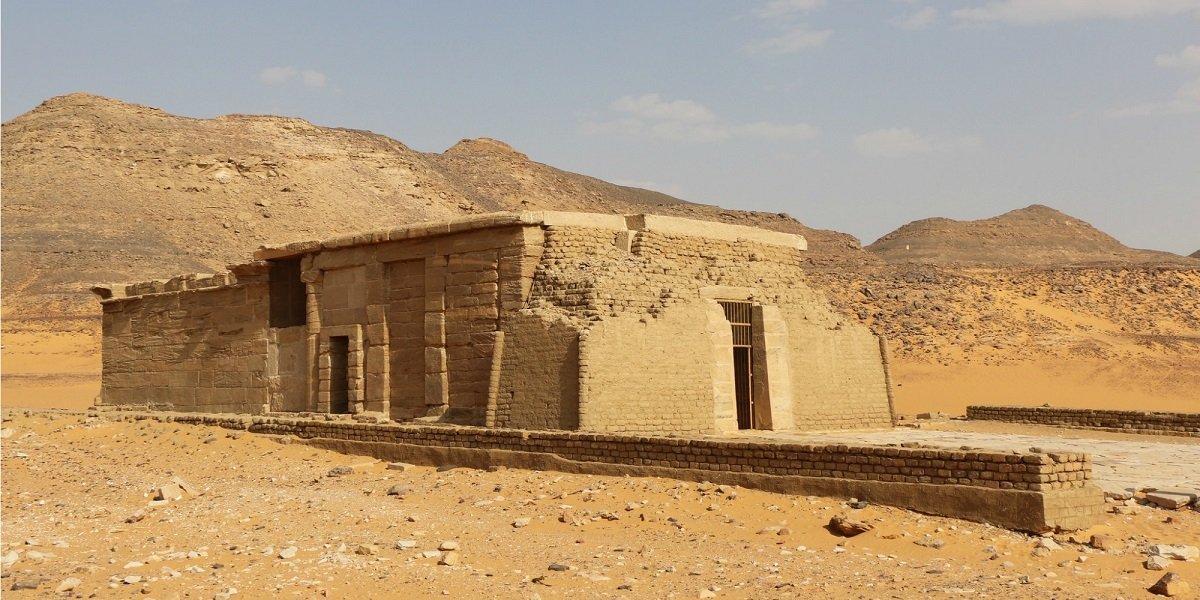
The Temple of Amada was built in the 18th Dynasty under Thutmose III and Amenhotep II, which makes it the oldest surviving monument on Lake Nasser. Its painted reliefs are extraordinarily fresh, and the reason is unglamorous: when the temple was converted to a church the decoration was plastered over, and the plaster protected it. Beside it is the rock tomb of Pennut, Viceroy of Nubia under Ramesses VI.
Then sail to Wadi es-Seboua — “the valley of the lions”, for the sphinx avenue leading up to it — built by Ramesses II. Two more relocated temples stand nearby: Dakka, begun by the Meroitic king Arqamani and extended under the Ptolemies and Romans, and Maharraqa, left unfinished, with the only spiral staircase in an Egyptian temple.
Sail on to Aswan. Overnight on board.
Meals Plan: Breakfast, Lunch & Dinner
Disembark and cross to New Kalabsha, an island where three monuments were reassembled. The Temple of Kalabsha is the largest free-standing temple in Lower Nubia, built under Augustus around 30 BC for the Nubian god Mandulis; it was moved here in more than 13,000 blocks. Beside it, Beit el-Wali, cut by Ramesses II, with battle reliefs still holding their colour, and the Kiosk of Kertassi with its Hathor-headed columns.
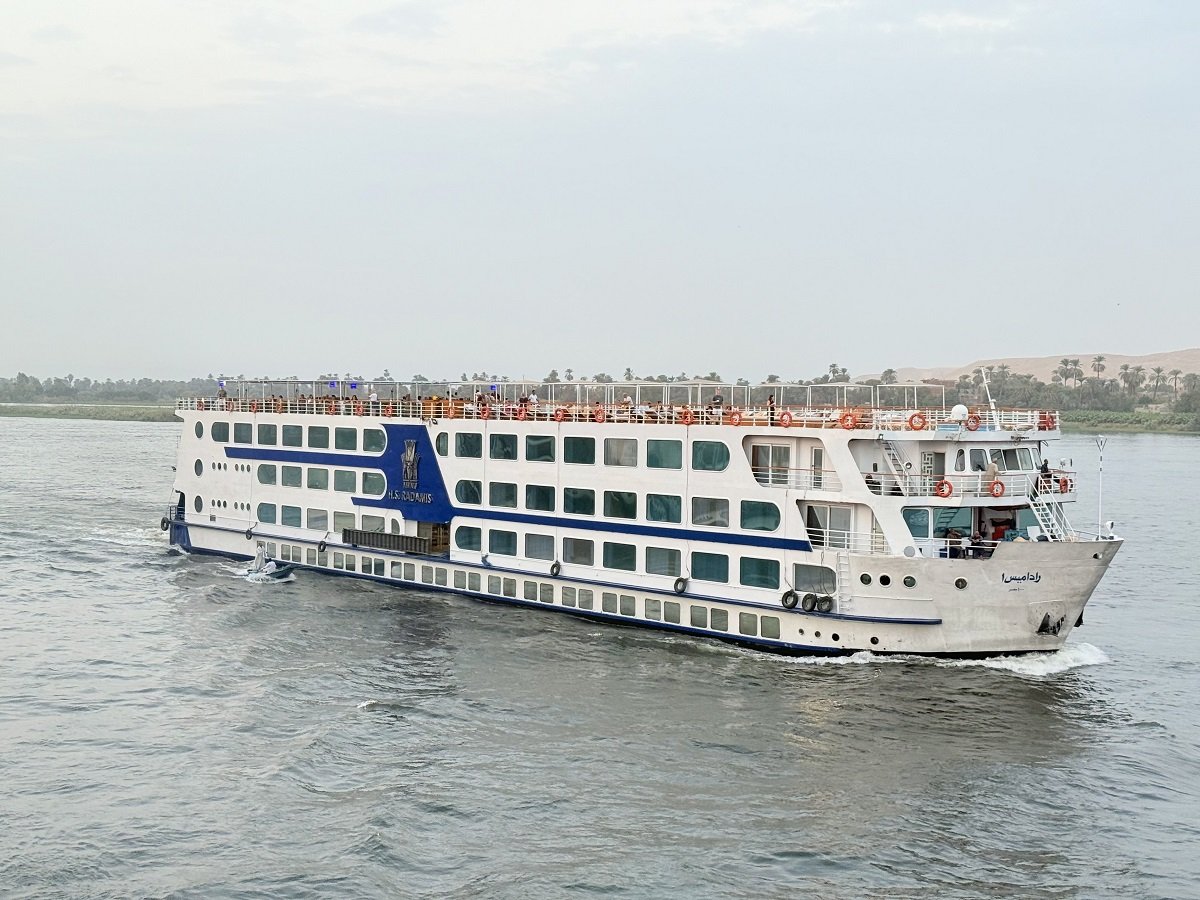
Then board your Nile cruise ship for three nights from Aswan to Luxor. Lunch on board. Overnight moored at Aswan.
Optional tour: Nubian Village in Aswan
Meals Plan: Breakfast, Lunch & Dinner
The High Dam first, built through the 1960s to end the Nile’s annual flood and generate power for the country. It solved a great deal and cost a great deal — the reservoir drowned Nubian villages and swallowed the temples you have just spent three days visiting. Your guide will give you the full account rather than the brochure version.
Then Philae, and the temple you visit is not standing where it was built. The dams left the original island submerged for most of the year, so between 1972 and 1980 UNESCO cut the temple into more than 40,000 blocks and rebuilt it on higher ground at Agilkia Island. You reach it by motorboat. It was the sanctuary of Isis, and one of the last places in Egypt where the old religion was still practised — the final hieroglyphic inscription anywhere was carved here in 394 AD.
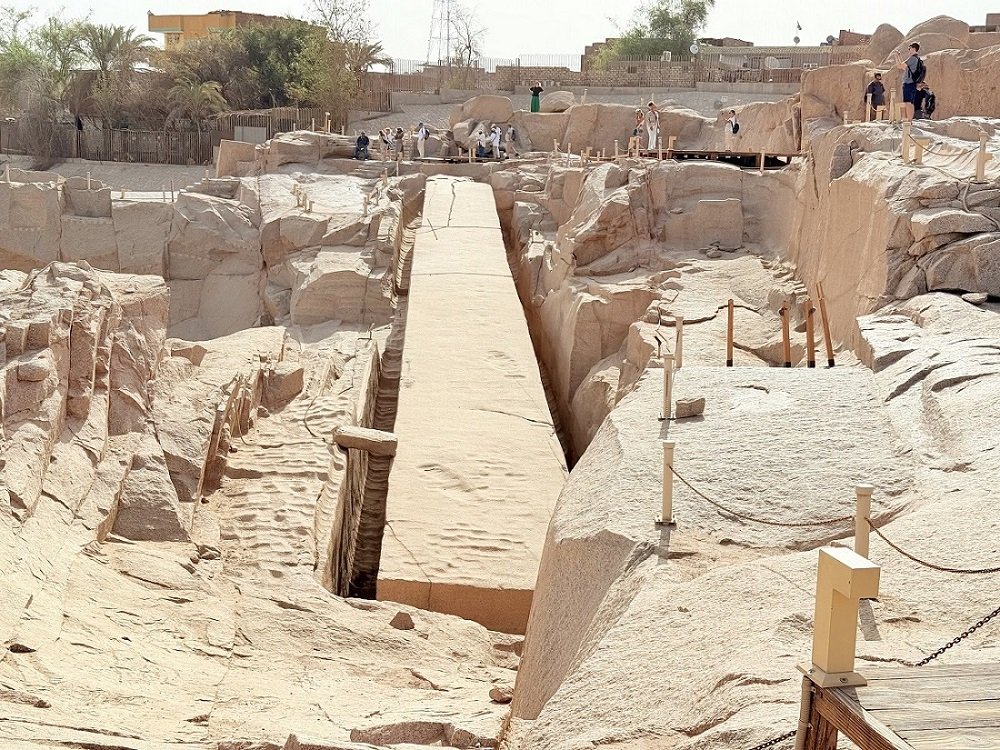
Last, the Unfinished Obelisk, still lying in the granite quarry where it cracked. Had it been raised it would have stood nearly 42 metres and weighed over 1,000 tonnes, larger than any obelisk ever erected. Because it was abandoned mid-cut you can read the working method exactly: the trenches, the tool marks, and the point where the flaw appeared and everything stopped.
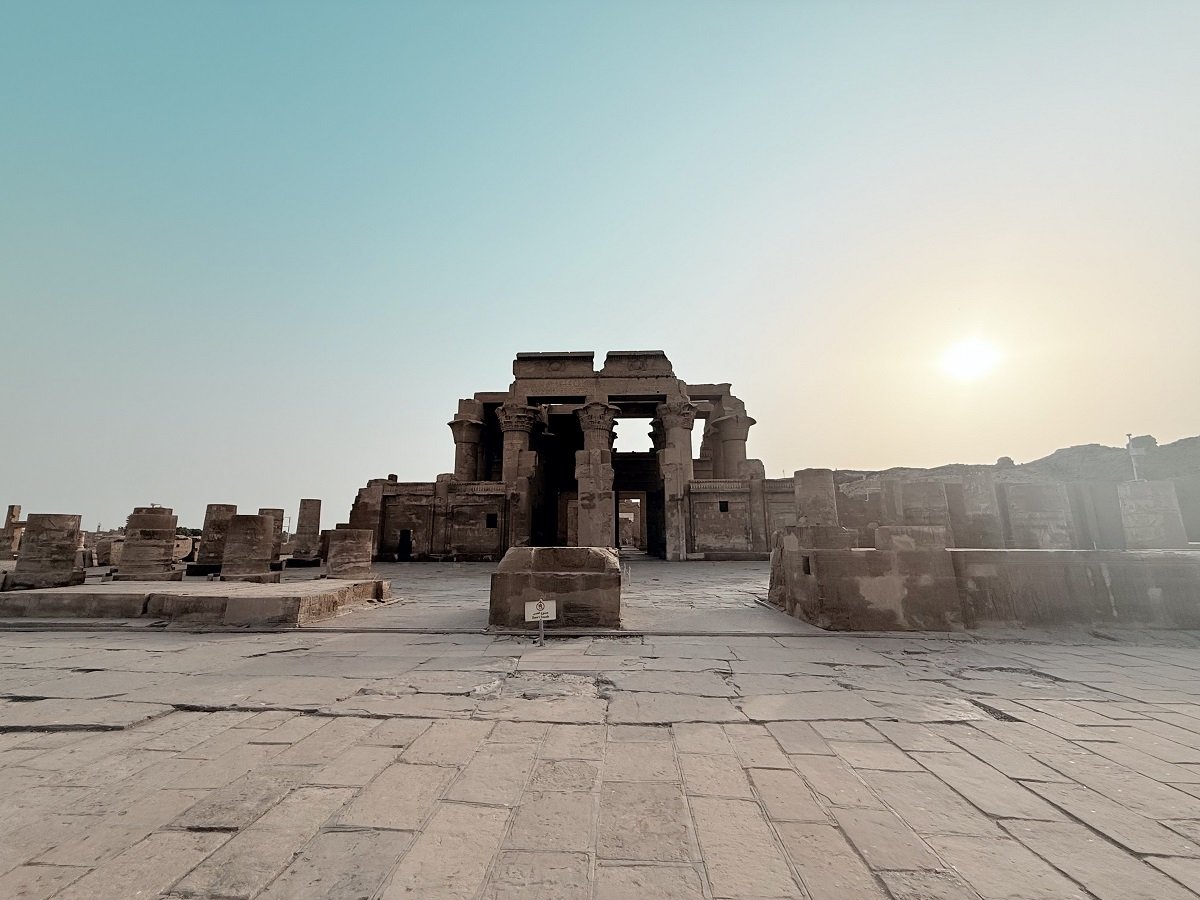
Sail to Kom Ombo, which sits right at the water’s edge — you step off and you are there. It is a double temple, split precisely down the middle: Sobek the crocodile god on one side, Haroeris on the other, each with a matching entrance, hall and sanctuary. Nowhere else in Egypt was built this way. Building began under Ptolemy VI in the second century BC. The Crocodile Museum next door holds mummified crocodiles recovered from the surrounding area.
Sail on to Edfu. Overnight moored there.
Meals Plan: Breakfast, Lunch & Dinner
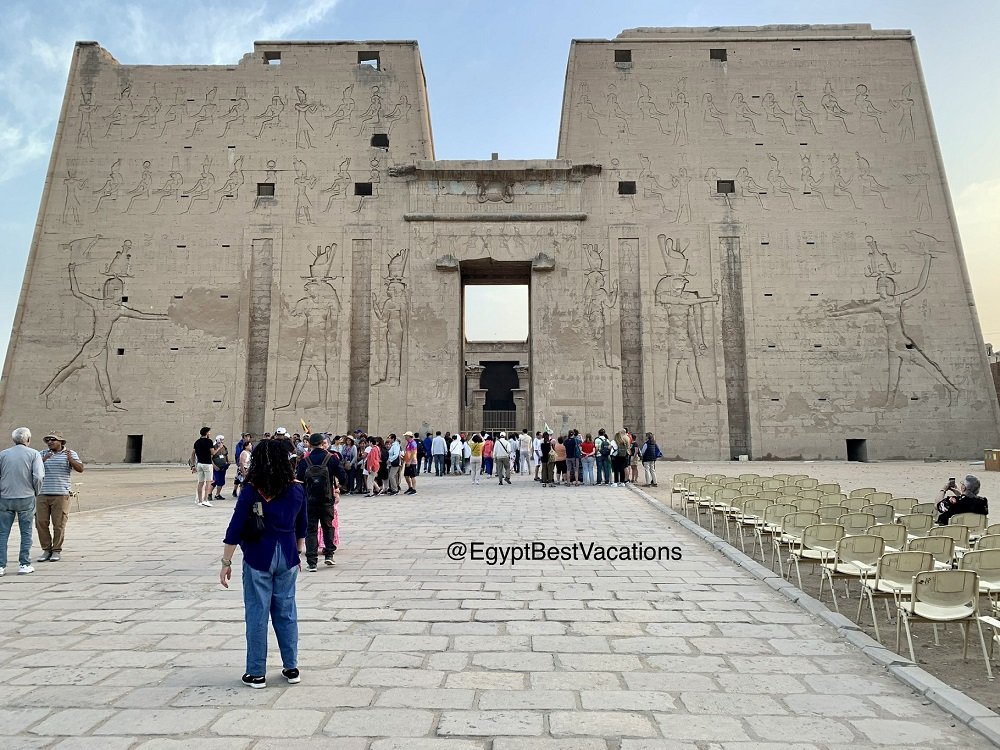
Out before breakfast, by horse-drawn carriage through waking streets to the Temple of Horus. Early is deliberate: this is the best-preserved temple in Egypt and it is a different building with a handful of people in it than with four coaches. It is Ptolemaic — construction ran from 237 to 57 BC — and its walls carry the fullest surviving account we have of how an Egyptian temple actually worked: the festivals, the ritual calendar, the daily service.
Back aboard and north through the Esna lock, which takes an hour or two depending on traffic. Watch from the deck if you can.
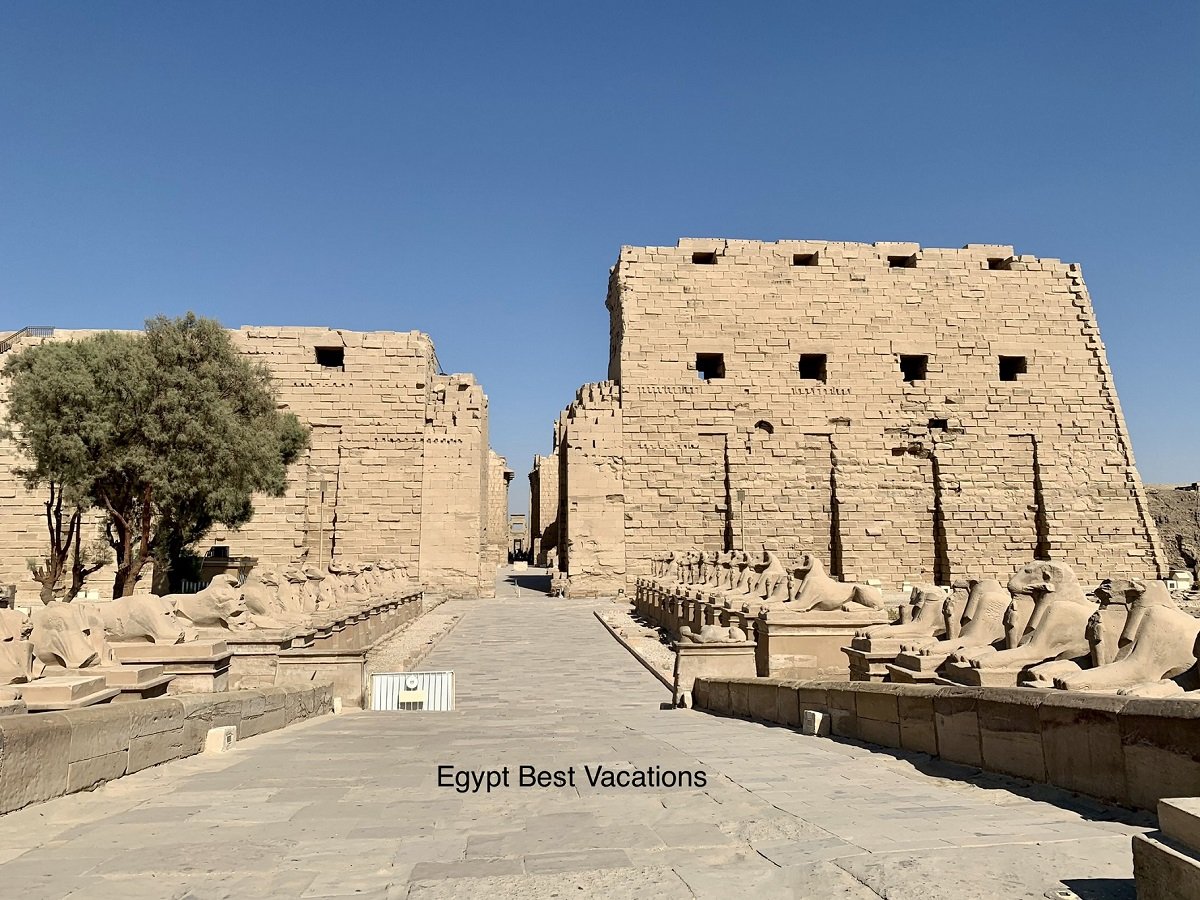
Arriving in Luxor, you visit Karnak — not one temple but the largest religious complex ever built, around 100 hectares, added to for roughly two thousand years. The Hypostyle Hall holds 134 columns, the tallest 21 metres, and photographs consistently fail to convey it.
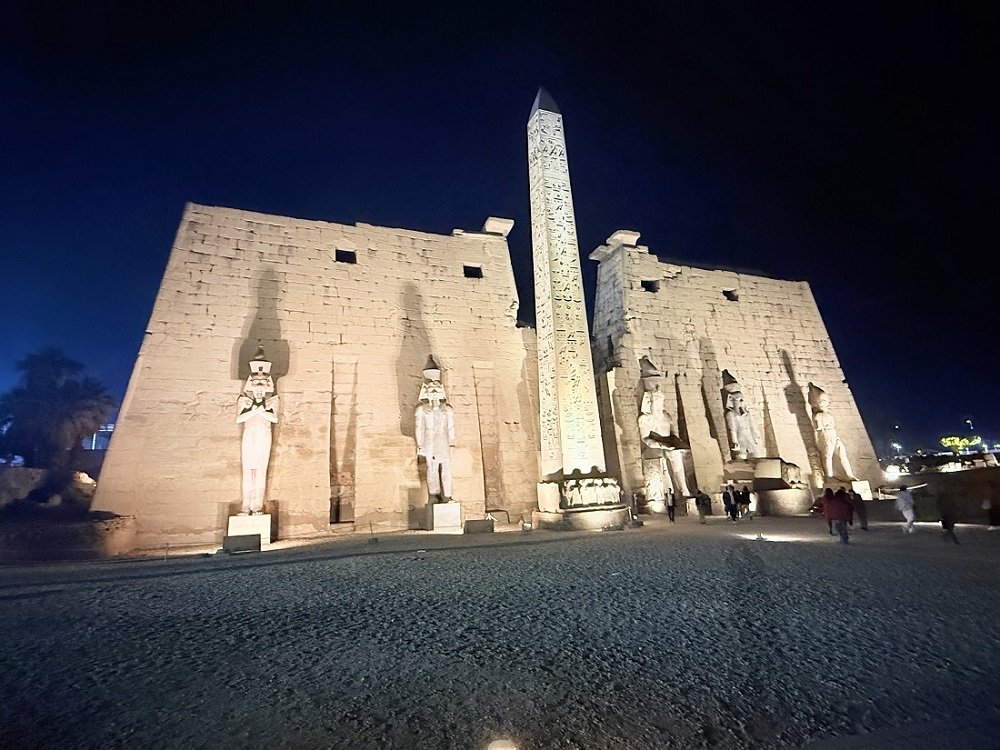
Then Luxor Temple, and if the timing works, at dusk. It was joined to Karnak by an avenue of sphinxes nearly three kilometres long, excavated over decades and reopened in 2021. Look for the mosque built into the temple’s upper level, and the Christian frescoes painted over pharaonic reliefs in the chamber behind it — three religions in one building, none of them demolished for the next.
Meals Plan: Breakfast, Lunch & Dinner
Disembark after breakfast and cross to the west bank.
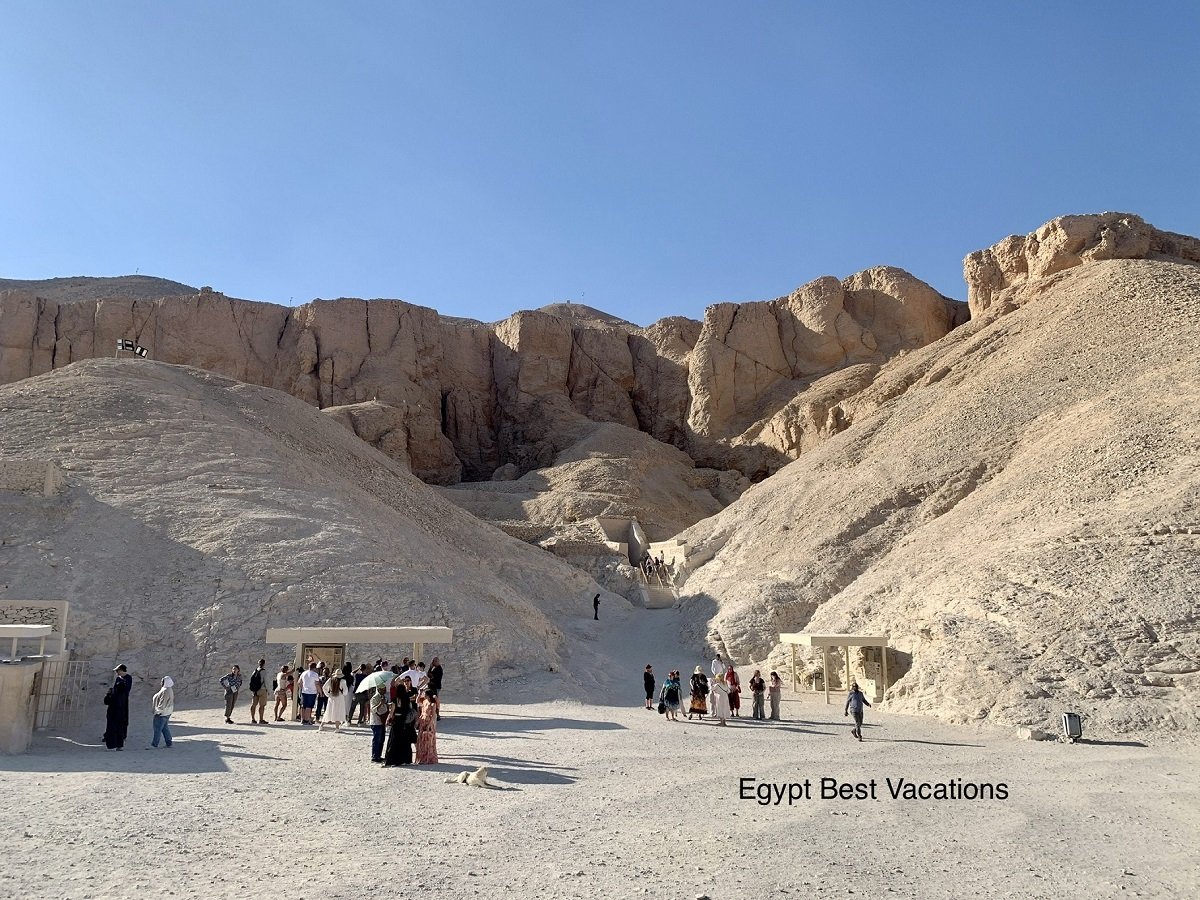
Your standard ticket to the Valley of the Kings admits you to three tombs of your choosing, and the choice matters more than people expect — they vary enormously in decoration and in how much climbing is involved. Your guide will steer you, and flexibility helps, because which tombs are open rotates. Seti I, Tutankhamun and Ramesses V/VI each need a separate ticket.
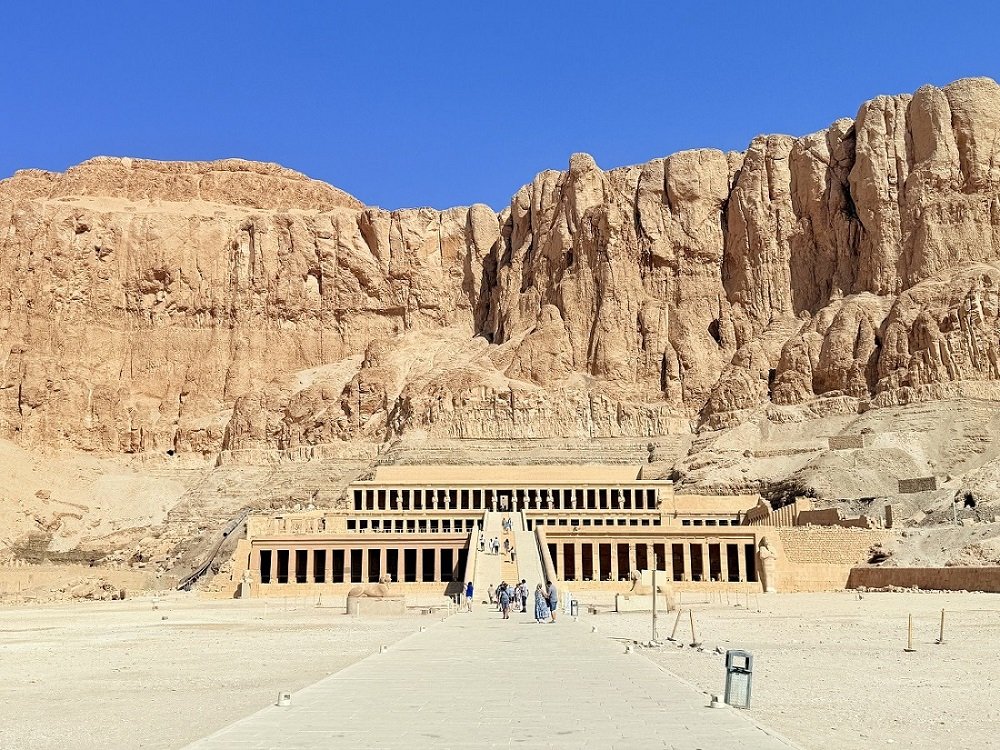
Then Hatshepsut’s temple at Deir el-Bahari, terraced into the cliff by her architect Senenmut. Hatshepsut began as regent for Thutmose III and went on to rule as a crowned king in full pharaonic regalia, with his regnal years still running alongside hers. The erasure of her name and images from the monuments came decades later, not on her death, which is why so many figures here have had their faces cut away.
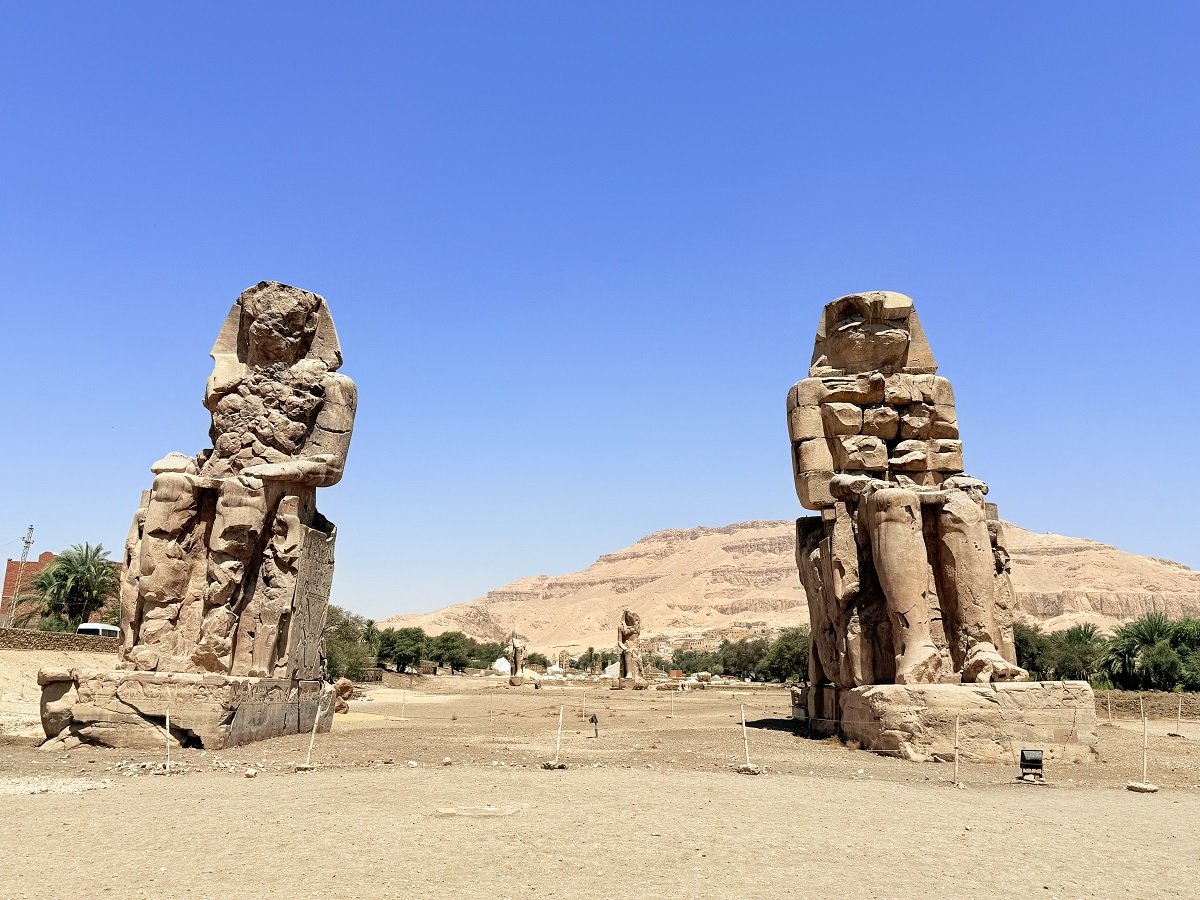
Last, the Colossi of Memnon: two seated statues of Amenhotep III, all that is easily visible of what was once the largest mortuary temple on the west bank. After an earthquake in 27 BC one of them began producing a sound at dawn. Greek and Roman tourists travelled here specifically to hear it and carved their names on the legs while they waited. A Roman repair in the third century silenced it for good.
Then the road to Hurghada, around four hours, arriving late afternoon. Check in. The rest of the day is yours.
Optional tour: Sunrise Hot Air Balloon over Luxor
Meals Plan: Breakfast, Lunch & Dinner
Three clear days with nothing scheduled, and that is the point of putting them at the end rather than the middle.
The Red Sea has some of the most accessible reef anywhere — you can be in coral ten minutes from the beach. Diving, snorkelling trips, glass-bottom boats, submarine tours and desert safaris can all be arranged; ask reception the evening before, because boats leave early. Or don’t. After eleven days of temples, early starts and two cruises, doing nothing is a legitimate choice, and your hotel is all-inclusive.
Meals Plan: Breakfast, Lunch & Dinner (all-inclusive)
Enjoy a free day with your 19 day Egypt all inclusive package with Red Sea. Tours such as diving, glass boat, safari, snorkeling, and submarine rides are available upon request.
Meals Plan: Breakfast, Lunch & Dinner (all-inclusive)
Enjoy a free day with your Red Sea holiday. Tours such as diving, glass boat, safari, snorkeling, and submarine rides are available upon request.
Meals Plan: Breakfast, Lunch & Dinner (all-inclusive)
Transfer to Hurghada airport for the flight to Cairo, then on to your hotel. Tomorrow starts very early, so this is an evening to repack: you will want an overnight bag for the desert and can leave the rest at the hotel.
Meals Plan: Breakfast Only
Leave Cairo early for the drive southwest to the Bahariya Oasis, about four hours. Lunch, then into a 4×4 for the afternoon.
The Black Desert first, its hills capped with dark dolerite from old volcanic activity. Then the cold springs at Hez village, then Crystal Mountain — a ridge of calcite crystal that catches the light. Then Agabat, a valley of eroded pillars that is the most photographed spot in the park and deserves to be.
You make camp in the White Desert itself, among chalk formations wind-carved into shapes that look engineered rather than eroded. Dinner at camp, and then the reason people come: there is no light within a hundred kilometres, and the sky is genuinely extraordinary.
Meals Plan: Breakfast, Lunch & Dinner
Wake for sunrise on the chalk, which is worth the alarm — the formations change colour completely in twenty minutes. Breakfast at camp, then 4×4 back to Bahariya and the road to Cairo, arriving late afternoon. Your final night.
Meals Plan: Breakfast Only
Transfer to Cairo International, timed to your flight; allow three hours for international departures. Your representative sees you through check-in.
If you are carrying anything that looks antique, keep the receipt accessible. Genuine antiquities cannot leave the country and reproductions occasionally get questioned.
Meals Plan: Breakfast Only