This 11 day Egypt tour with Nile cruise gathers everything most first-time visitors hope to see into one unhurried trip: the Great Pyramids of Giza, the treasures of the Grand Egyptian Museum, three nights sailing the Nile between Aswan and Luxor, and three all-inclusive nights on the Red Sea at Hurghada. If you want Egypt’s headline sites without a punishing schedule, this one was built for you.
The trip opens in Cairo, with two full days rather than the single day most itineraries of this length allow. You stand at the foot of the pyramids of Khufu, Khafre and Menkaure, then walk through the Grand Egyptian Museum to meet the complete Tutankhamun collection, now housed at the GEM rather than in Tahrir. The second Cairo day takes you into Coptic Cairo, up to the Citadel of Saladin, and through the lantern-lit lanes of Khan El-Khalili.
From Cairo you fly south to Aswan and board the ship. Three nights on the water, calling at Philae, Kom Ombo and Edfu before you reach Luxor for Karnak and the Valley of the Kings. Then the pace changes entirely: three nights in Hurghada, all-inclusive, with the Red Sea a few steps from your room.
What separates this from the shorter versions is breathing room. Coptic Cairo and the Citadel are not sacrificed to fit the pyramids in. Three Hurghada nights mean you actually rest before flying home. And because every itinerary here is designed and briefed by a working Egyptologist based in Luxor, the guiding goes past the memorized script into what the reliefs and inscriptions really say.
Suited to couples, families and solo travellers alike, this 11 day Egypt tour with Nile cruise includes both domestic flights, all transfers, entrance fees to the main sites and 23 meals across the trip. Prices start from $1,630 per person sharing a triple room. Browse our full range of Egypt packages, or send us your dates and we will tailor this one around them.
Comparing similar trips? The 11 Day Luxury Tour of Egypt follows the same Cairo, Nile and Hurghada route at luxury level, and our Egypt 11-Day Journey swaps the cruise ship for a traditional felucca. With a day less, the 10 day Egypt tour with Nile cruise still ends on the Red Sea, while the 12 day Egypt tour adds Alexandria.
Your flight lands at Cairo International Airport, and somewhere past passport control there is someone holding a sign with your name on it. That is our representative, and from that moment the logistics stop being your problem. They walk you through the visa desk and arrival formalities, introduce you to your driver, and see you to your hotel in an air-conditioned vehicle.
The rest of the day is yours. If you have landed early and jet lag has not caught up with you, the hotel can point you toward dinner. Otherwise, sleep well. Your 11 day Egypt tour begins properly tomorrow, at the pyramids.
Meals Plan: No Meals Included
After breakfast your guide meets you in the hotel lobby and you drive out to the Giza Plateau.
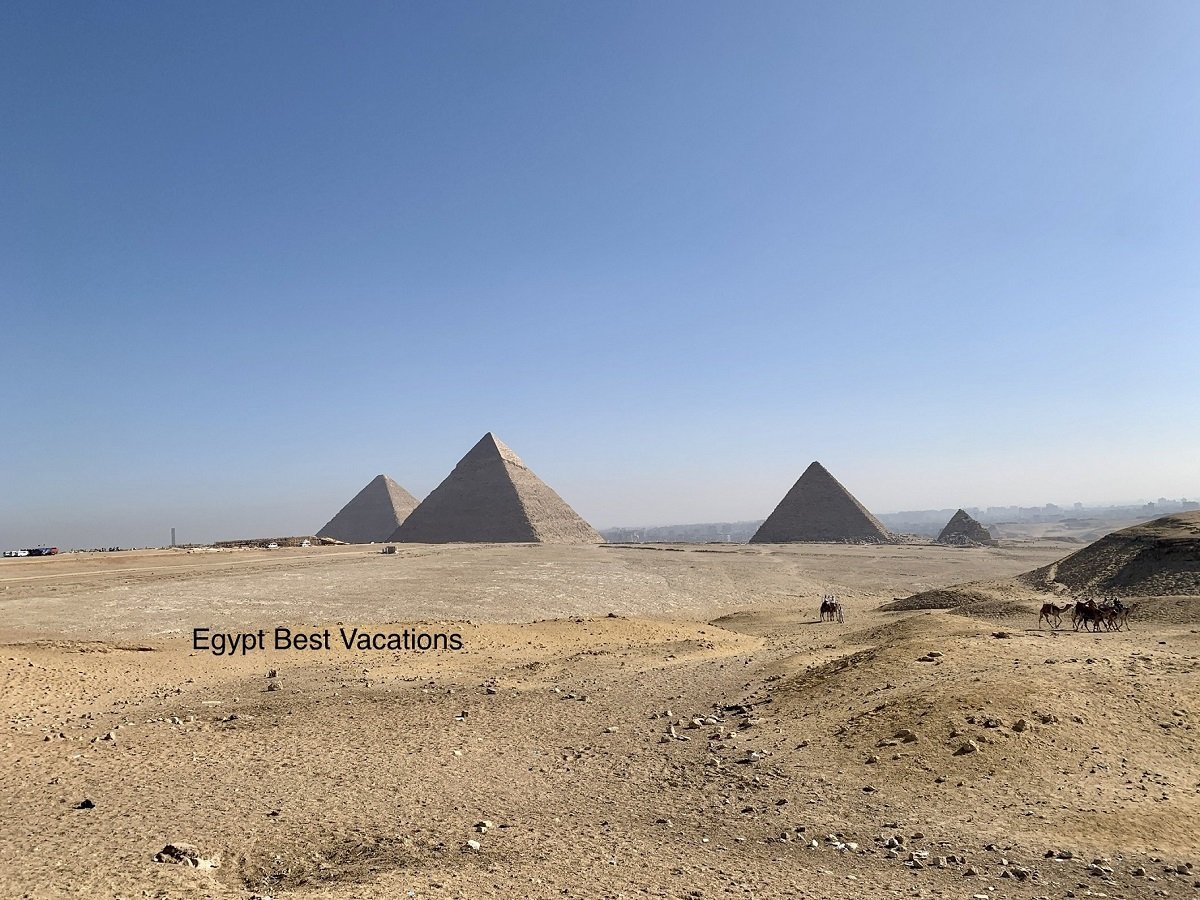
There is a moment, coming around the last bend, when the Great Pyramid stops being a photograph. Khufu’s pyramid is the only one of the seven wonders of the ancient world still standing, and it held the record as the tallest structure on earth for roughly four thousand years. Your guide will walk you through how it was actually built, which is a considerably more interesting story than most of the ones in circulation.
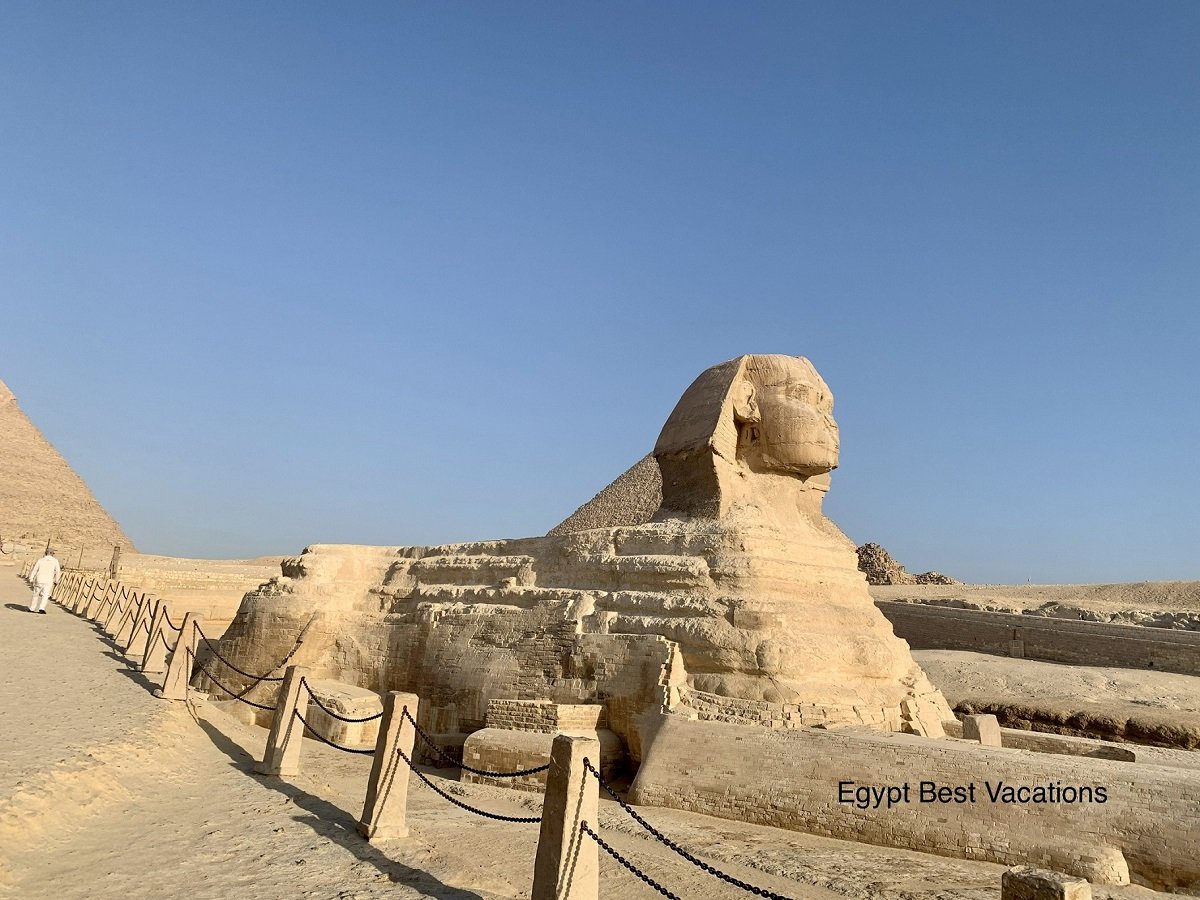
You continue past the pyramids of Khafre, still wearing its cap of original casing stone at the summit, and Menkaure, the smallest of the three. Then down to the Sphinx, carved in place from a single outcrop of limestone the quarrymen left standing.
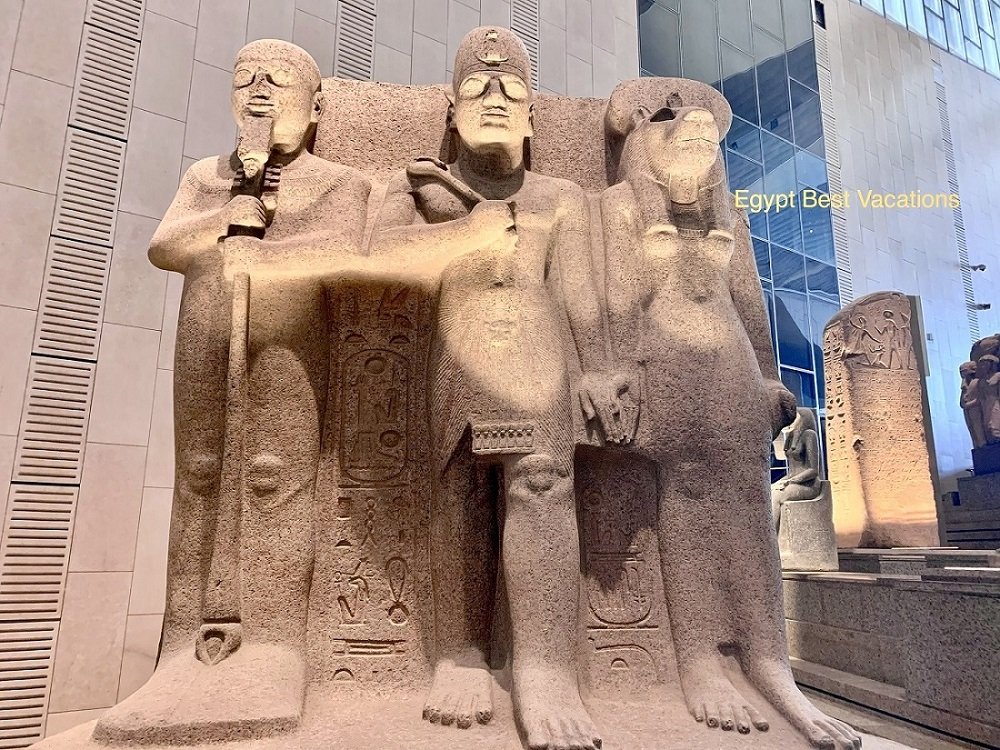
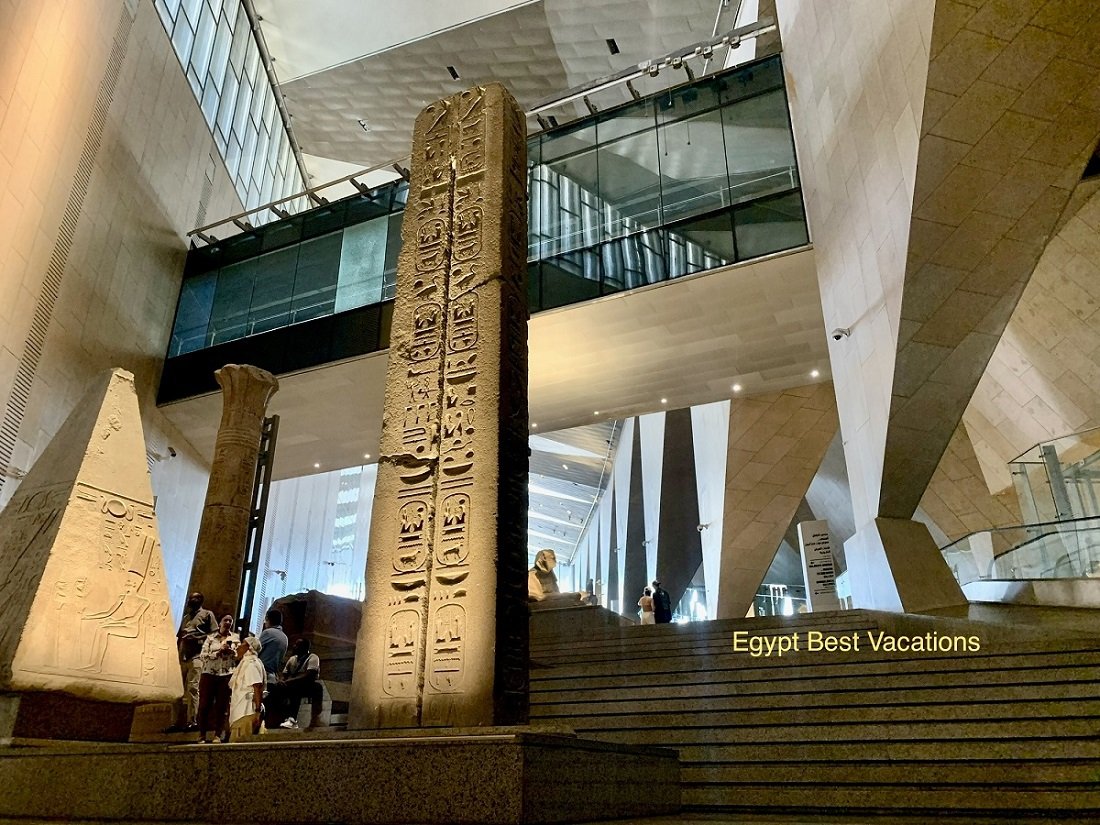
Lunch at a local restaurant. Afterwards you continue to the Grand Egyptian Museum. This is the largest museum in the world devoted to a single civilisation, and the reason it matters to your trip is Tutankhamun: the complete burial assemblage, displayed together for the first time since Howard Carter emptied the tomb. Thousands of objects, in one place, in the order they were found. Give it more time than you think you need.
Transfer back to your hotel.
Meals Plan: Breakfast & Lunch
Today is the Cairo most visitors never see.
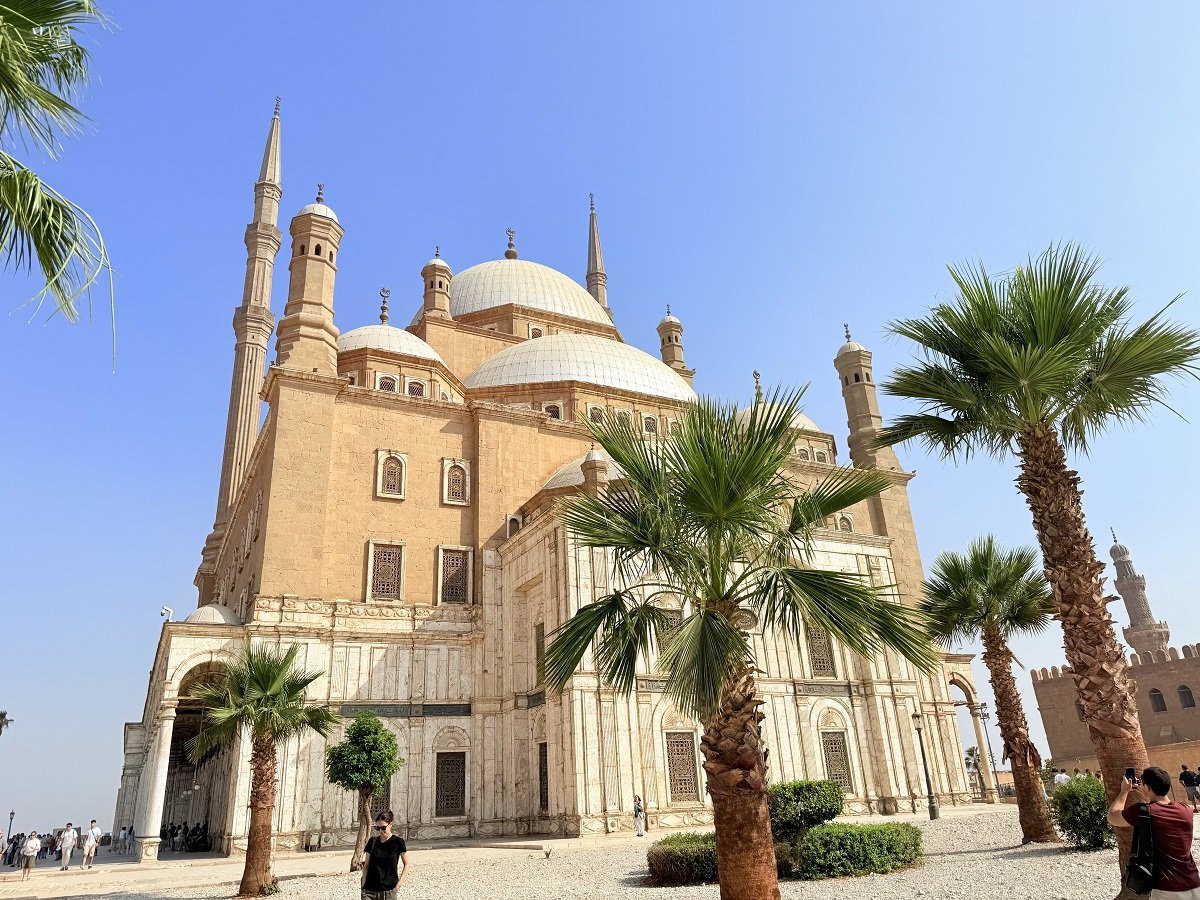
You begin at the Citadel of Saladin, begun in the 1176 on a spur of the Mokattam Hills, positioned so that whoever held it held the city. At its centre stands the Mosque of Muhammad Ali, built in the 1830s and 1840s in Ottoman style and faced in alabaster, its domes visible from most of Cairo. From the terrace outside, on a clear morning, you can see the pyramids across the haze.
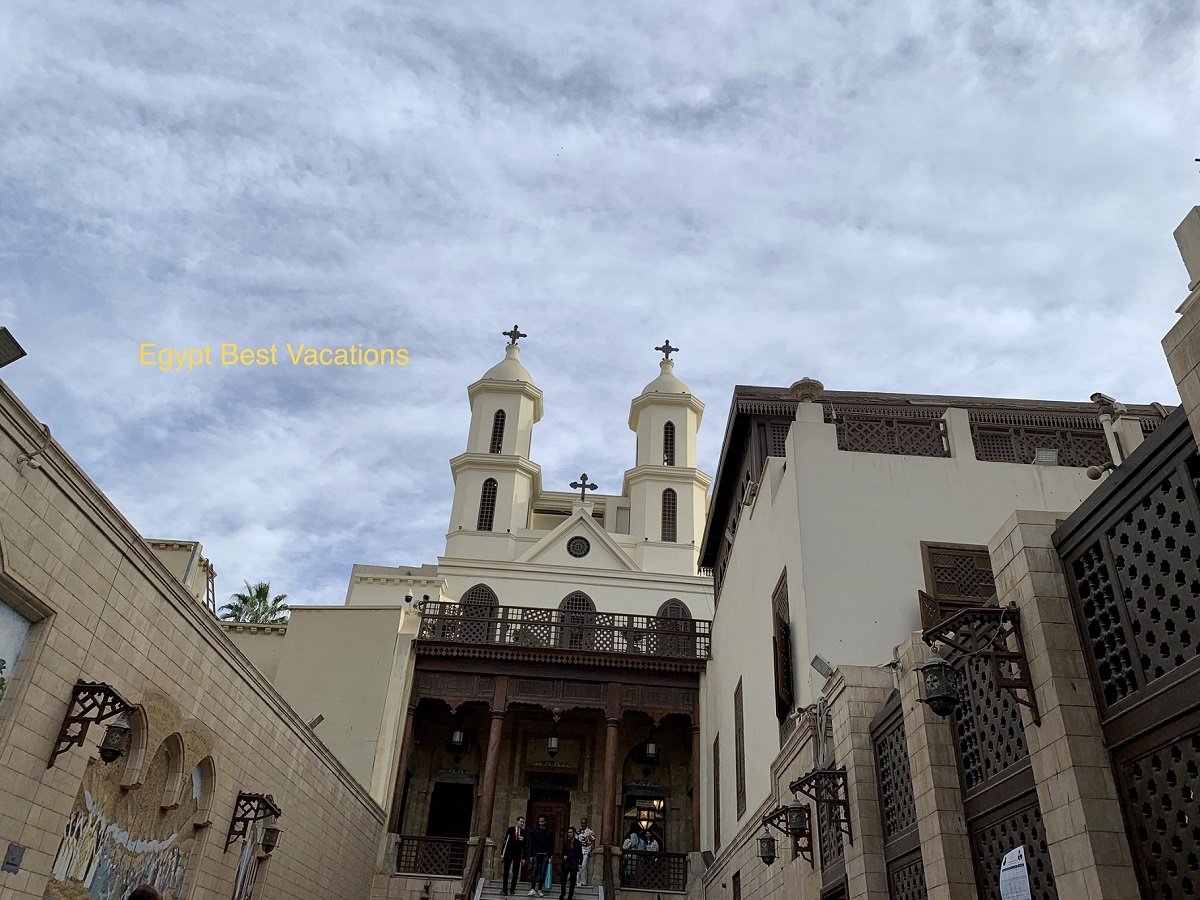
Then down into Coptic Cairo, one of the oldest continuously inhabited quarters in the city. The Hanging Church takes its name from where it sits: suspended above the gatehouse of the Roman fortress of Babylon, with its nave built across the gap between two towers. Inside are a wooden ceiling shaped like an inverted ark, and icons that have been looked at by worshippers for centuries.
A short walk brings you to Abu Serga, the Church of Saints Sergius and Bacchus, where tradition holds the Holy Family sheltered in the crypt beneath the sanctuary during their time in Egypt. You finish at the Ben Ezra Synagogue, unremarkable from outside and quietly extraordinary within: it was here, in a sealed storeroom, that the Cairo Geniza was found. Hundreds of thousands of discarded documents, letters, contracts and shopping lists, preserved because Jewish law forbade destroying any paper bearing the name of God. It remains one of the richest sources we have for daily life in the medieval Mediterranean.
Your day ends at Khan El-Khalili, trading on the same ground since the fourteenth century. Narrow lanes, spice sellers, lamp makers, jewellers, and coffee houses that have not changed their furniture in a hundred years. Haggling is expected and entirely good-natured. Then back to your hotel.
Meals Plan: Breakfast Only
Transfer to Cairo Airport for the short flight south to Aswan, where your guide meets you just outside the arrivals hall. The light here is different: harder, cleaner, with the desert closer on both sides.
You start at the High Dam, built between 1960 and 1970 and one of the largest embankment dams ever constructed. It ended the annual Nile flood that had governed Egyptian farming for five thousand years, generates a substantial share of the country’s electricity, and created Lake Nasser behind it. It also drowned a great deal of Nubia, which is a harder and more honest part of the story than the engineering.
From there to the Temple of Isis at Philae, built mainly under the Ptolemies and among the last places in Egypt where the old religion was still practised, centuries after the temples elsewhere had closed. When the dams raised the water, Philae spent decades partly submerged. In the 1970s UNESCO dismantled it block by block and rebuilt it on higher ground at Agilkia Island, reshaping the island to match the original. You would not know unless you were told.
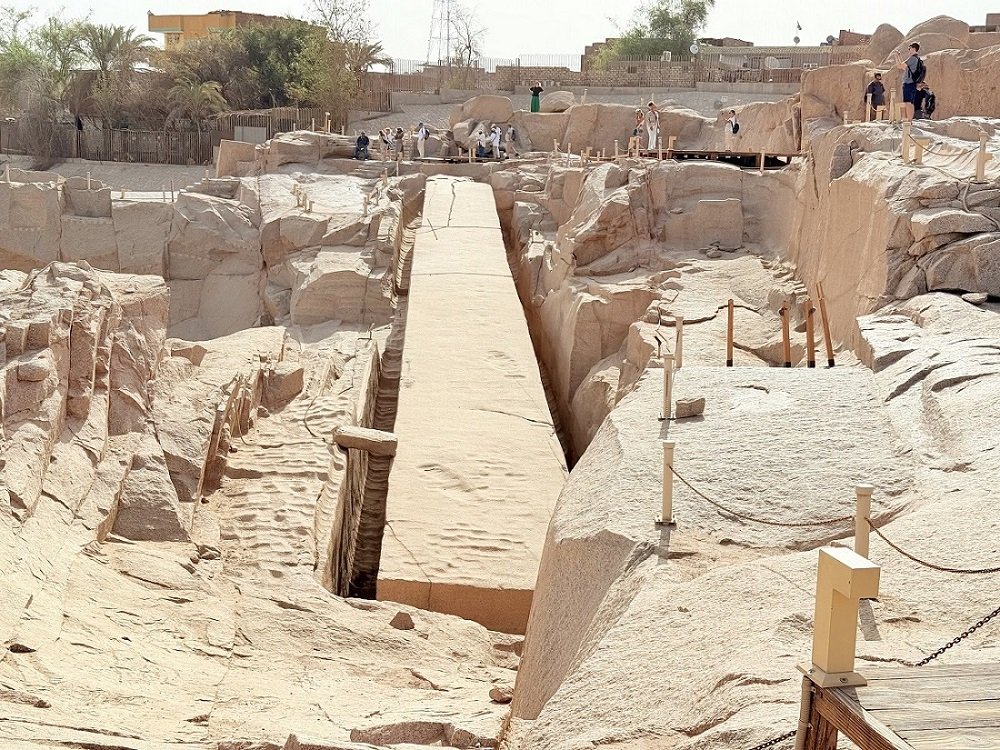
You end at the granite quarries and the Unfinished Obelisk, still lying where it was abandoned. Had it been completed it would have been the largest ever raised in Egypt, but a crack opened through the granite and the work stopped. What remains is the clearest lesson anywhere in the country in how these things were actually made: you can see the pounding marks, the trenches, the exact point where the plan failed.
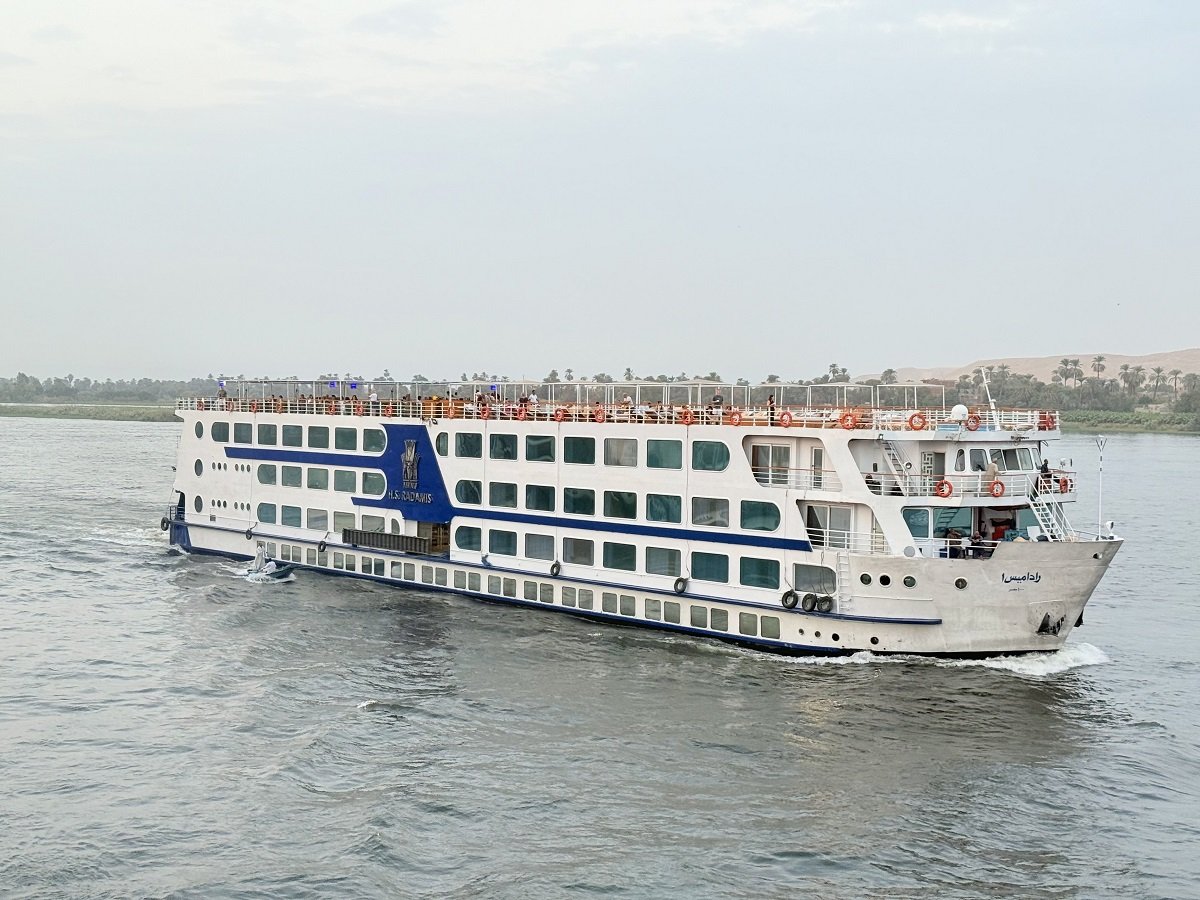
Then transfer to your Nile cruise ship and settle in. Overnight in Aswan.
Optional tour: Tour to the Nubian Village in Aswan
Meals Plan: Breakfast, Lunch & Dinner
A free morning on board, or an early start for the optional excursion to Abu Simbel. If you take it, the drive begins before dawn and the reward is Ramesses II’s colossal rock-cut temple at sunrise, along with the smaller temple he built for Nefertari next door. Both were cut from the cliff, sliced apart and moved uphill in the 1960s ahead of the rising lake.
Your ship sets sail for Kom Ombo around lunchtime. Watch the bank from the sun deck as you go. This stretch of the Nile is still farmed the way it has been for millennia, in a green strip a few fields wide, with the desert beginning abruptly at its edge.
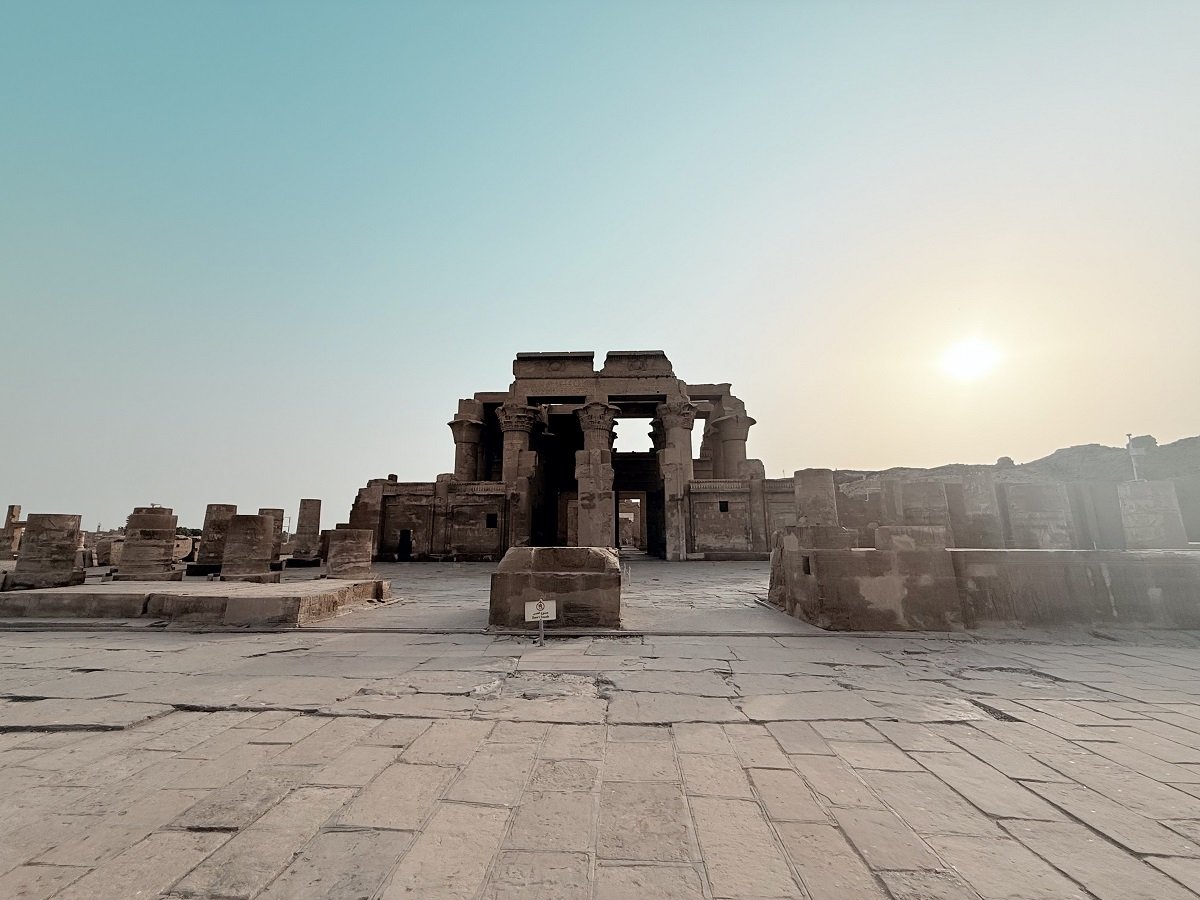
You disembark at Kom Ombo to visit the twin temple of Sobek and Haroeris, which is unlike anything else in Egypt: two complete temples fused along a shared axis, mirrored left and right, so that neither god outranked the other. The right side belongs to Sobek the crocodile deity, with Hathor and their son Khonsu. The left belongs to Horus the Elder, with Tasenetnofret and Panebtawy. The reliefs here include what is often read as a set of surgical instruments.
A short visit to the Crocodile Museum next door, where mummified crocodiles recovered from the site are displayed, before you rejoin the ship and sail on to Edfu. Overnight in Edfu.
Meals Plan: Breakfast, Lunch & Dinner
Early this morning you take a horse-drawn carriage through the waking streets of Edfu to the Temple of Horus.
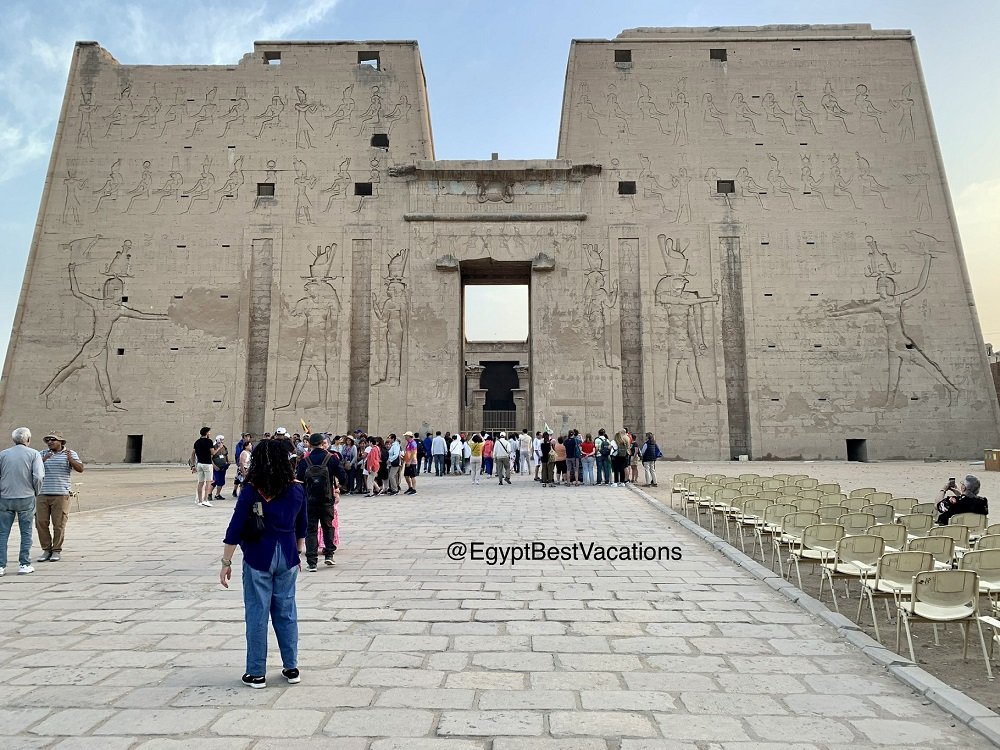
Nothing prepares you for how complete it is. Edfu was buried under sand and village houses for centuries, which is precisely why it survived: the pylons, the courts, the roof, the inner sanctuary with the polished granite shrine still standing in it. Even the reliefs are legible. It was built over roughly two centuries under the Ptolemies, and the walls carry the full account of the yearly festival in which Horus’s image travelled to meet Hathor at Dendera. If you want to understand what an Egyptian temple was for, rather than what it looked like, this is where it becomes clear.
Your carriage returns you to the ship, which sails on to Luxor by way of the Esna Lock, a slow and rather enjoyable piece of theatre as the vessel is raised between the gates.
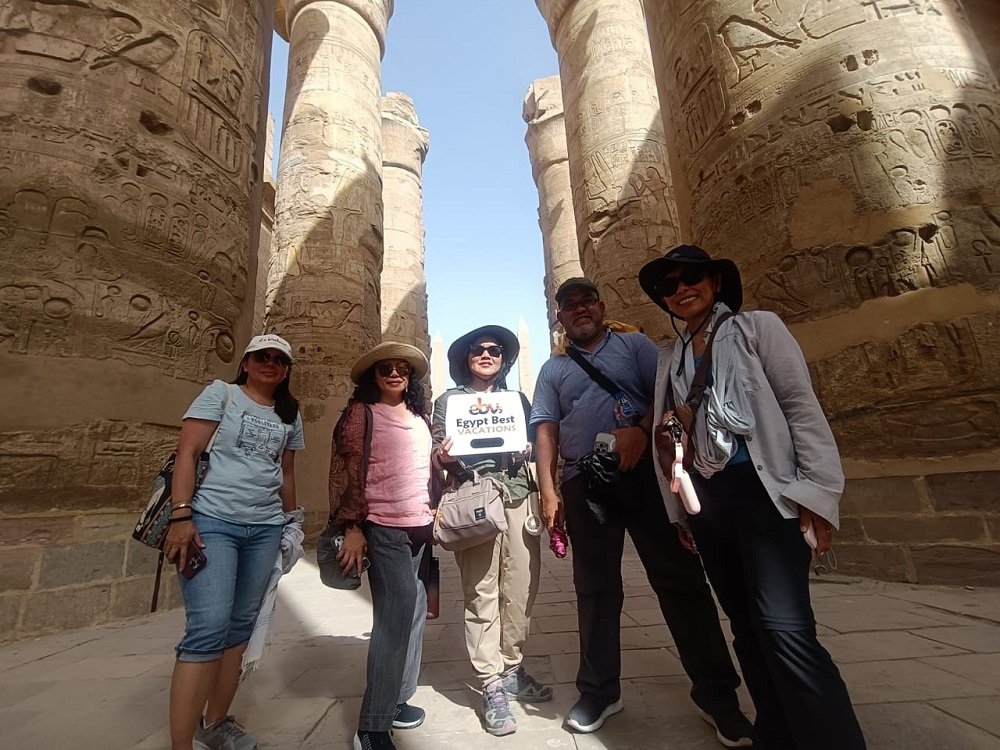
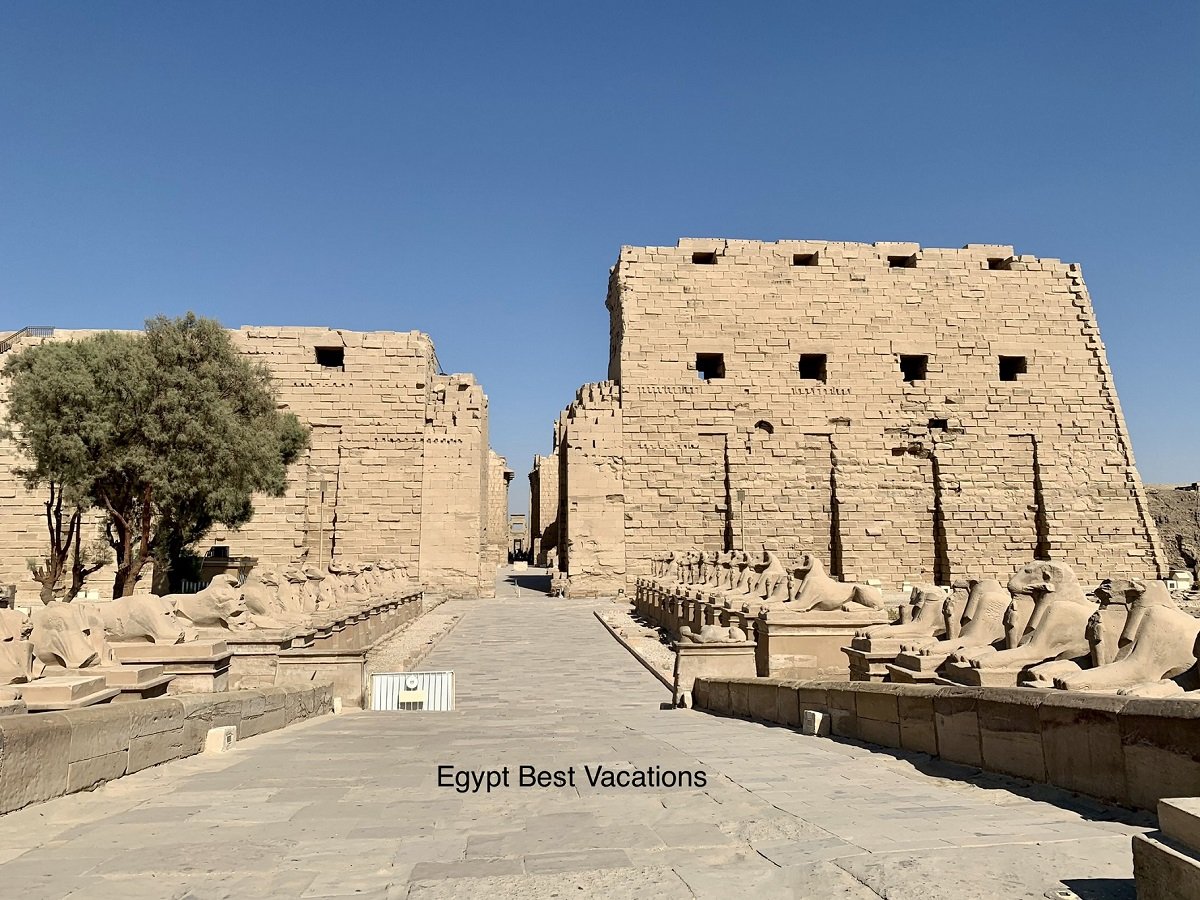
Arriving in Luxor, you visit the Temple of Karnak. It is not one temple but the accumulated work of some thirty pharaohs over two thousand years, and it is the largest religious complex ever built. In the Great Hypostyle Hall a forest of sandstone columns rises overhead, still carrying traces of their original paint high up where the weather could not reach.
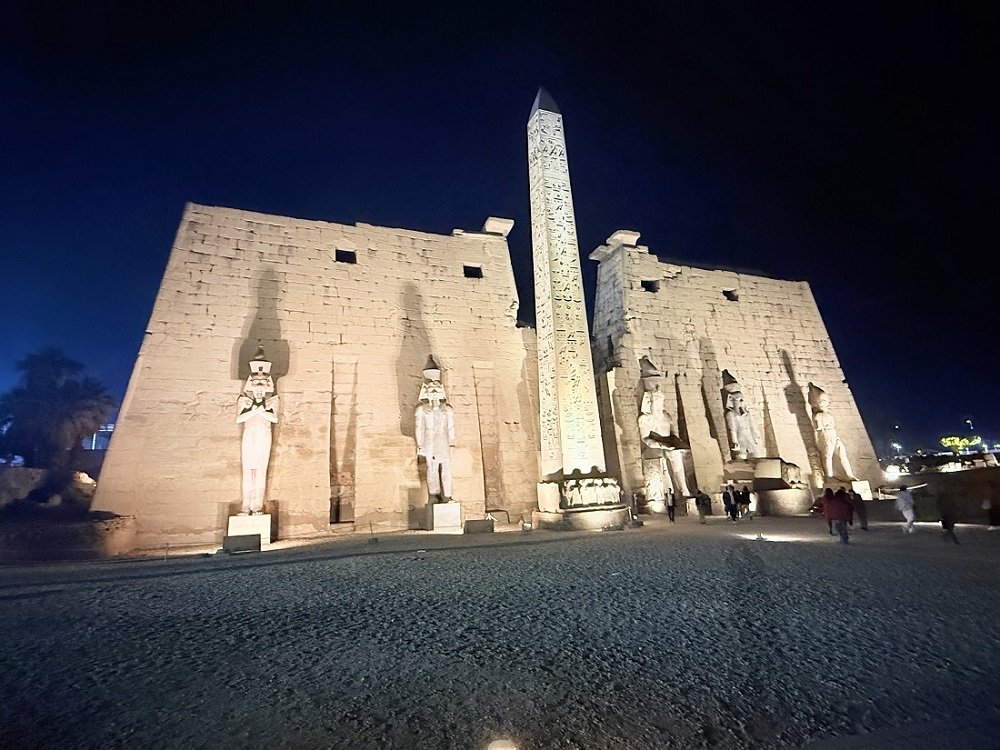
Then to Luxor Temple, built mainly by Amenhotep III and Ramesses II, and connected to Karnak by an avenue of sphinxes running nearly three kilometres between them. Once a year the sacred barques processed along it for the Opet Festival. Both temples were dedicated to the Theban triad: Amun, Mut and Khonsu.
Meals Plan: Breakfast, Lunch & Dinner
Disembarkation after breakfast, then across to the west bank, which the ancient Egyptians associated with the setting sun and the dead.
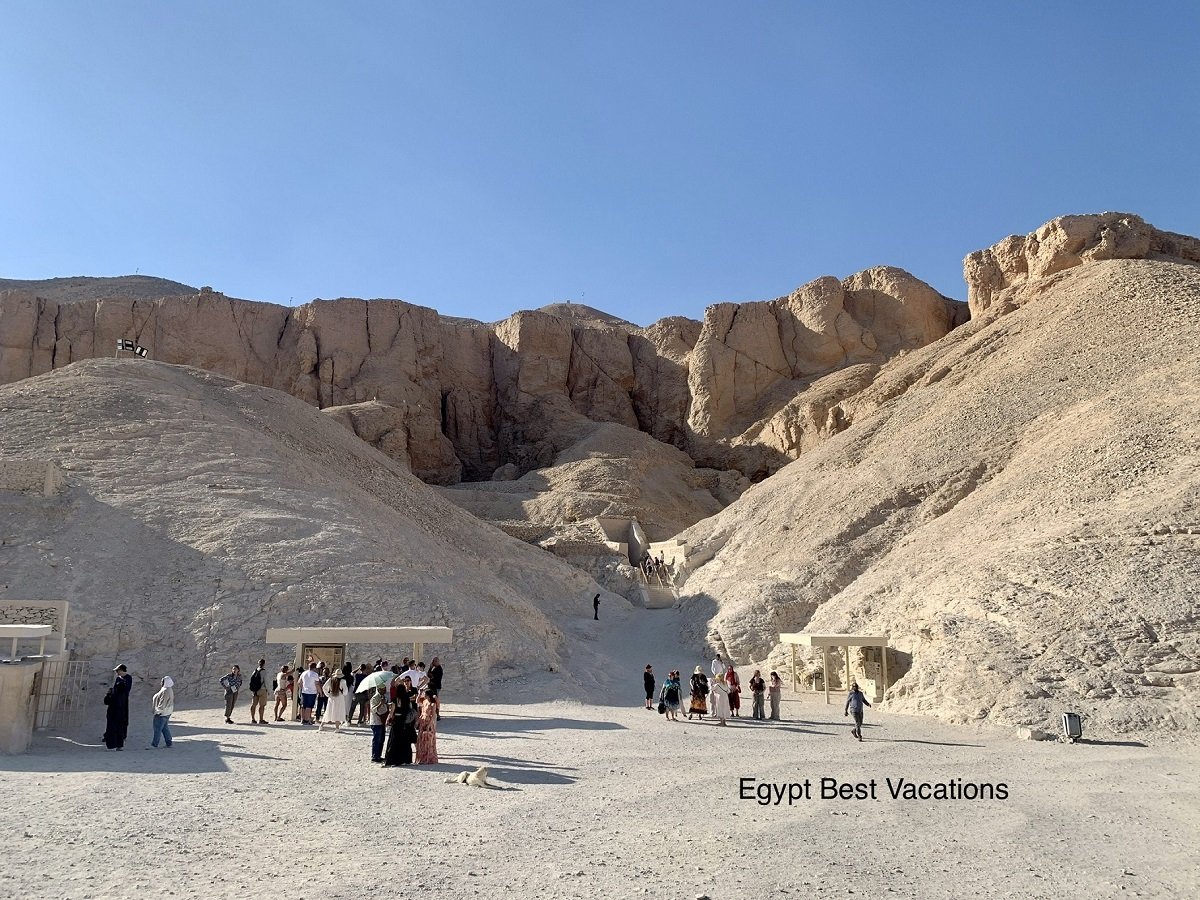
You begin in the Valley of the Kings, where the pharaohs of the New Kingdom abandoned pyramids in favour of tombs cut deep into the rock of a remote desert valley, hoping to defeat the robbers. It did not work. Over sixty tombs have been found here, and only one, Tutankhamun’s, was recovered close to intact. Your guide will recommend the best three tombs open on the day, chosen for their painting rather than their fame.
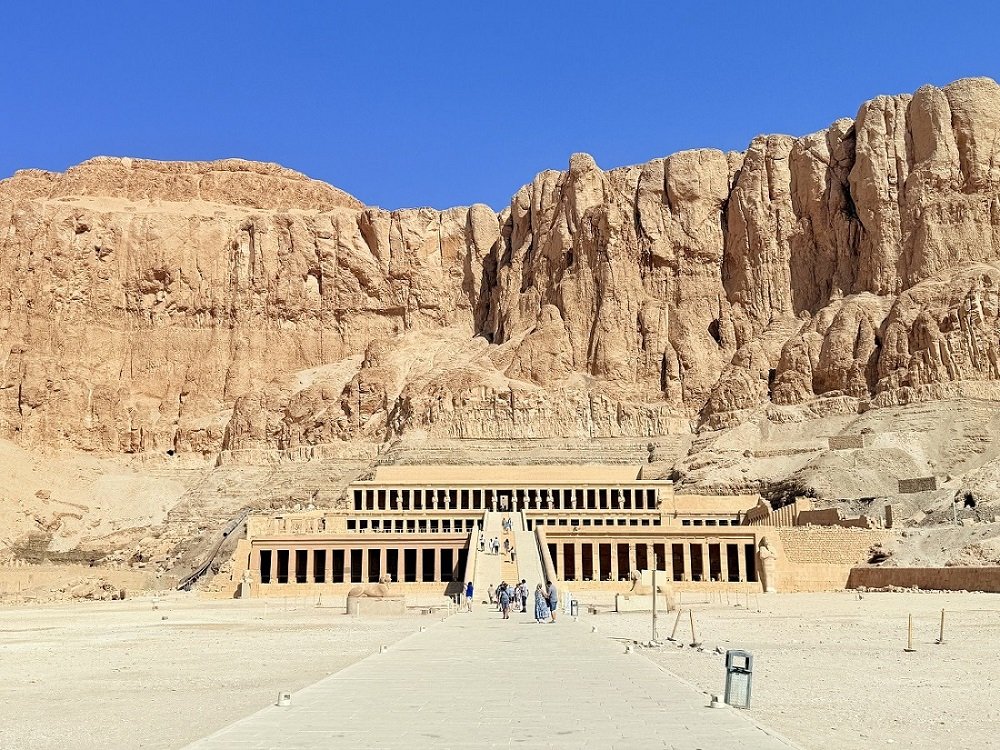
From there to the temple of Hatshepsut at Deir el-Bahari, one of the female pharaohs and among the most successful rulers Egypt produced, holding the throne for around twenty years. Her mortuary temple rises in three colonnaded terraces set directly against the cliff face, and the effect is startlingly modern. Reliefs inside record her trading expedition to the land of Punt, complete with the ships, the cargo and the people who met them.
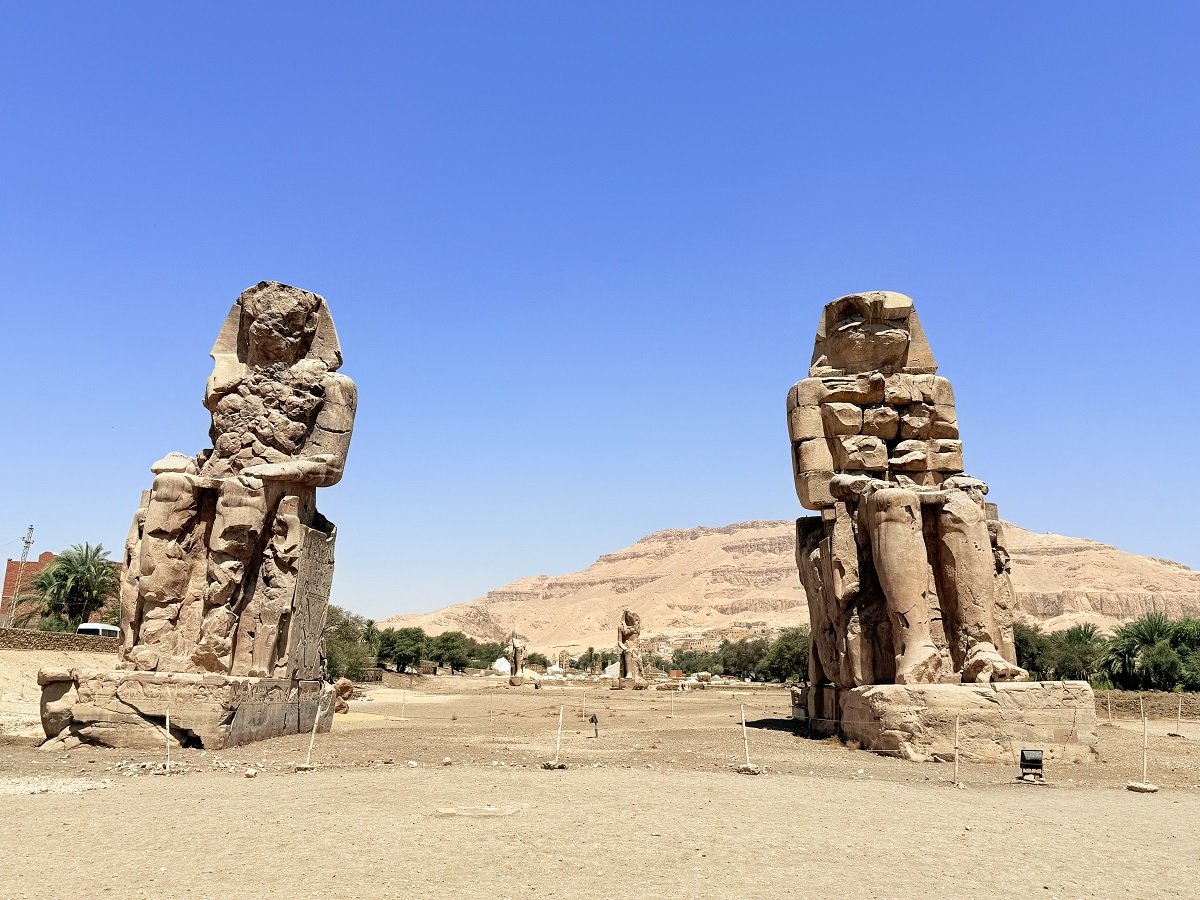
You end at the Colossi of Memnon: two enormous seated statues of Amenhotep III, all that is easily visible of what was once the largest mortuary temple in Egypt, flattened by earthquake and flood. In Roman times one of them was said to sing at dawn, and tourists came from across the empire to hear it.
Then the landscape changes completely. You transfer overland to Hurghada, and by evening the temples are behind you and the Red Sea is in front of you. Three nights here, all-inclusive, at a pace entirely of your own choosing.
Optional tour: Sunrise Hot Air Ballooning over Luxor
Meals Plan: Breakfast, Lunch & Dinner
A free day, and the first real one of your trip.
The Red Sea reefs off Hurghada are among the most accessible in the world, and the water is warm enough to swim year-round. Even a snorkel and mask in the shallows will show you butterflyfish, parrotfish and the coral gardens they live in. If you want to go further, boat trips run daily out to Giftun Island and the reefs around it, and the diving here suits complete beginners and experienced divers equally.
If you would rather not get wet, a glass-bottom boat or the submarine excursion will show you the same reef through a window. All of these can be arranged for you on the day.
Or do none of it. You have been moving for a week. The beach is there, the sea is warm, and nothing on today’s schedule requires your attendance.
Meals Plan: Breakfast, Lunch & Dinner
Your second full day on the Red Sea, and a good one to spend differently from the first.
Inland, the Eastern Desert begins almost immediately behind the town, and half-day and full-day safaris run out into it by jeep, quad or camel, usually taking in a Bedouin settlement and returning after sunset. The desert at dusk is worth the dust.
Closer in, Hurghada Marina is pleasant in the late afternoon, with boats to look at and somewhere to eat facing the water. The old town, El Dahar, has a working market that has nothing to do with tourism and is more interesting for it.
Or take a second day at the reef. Divers often do, since the second dive is the one you actually enjoy.
Whatever you choose, we can arrange it for you the day before.
Meals Plan: Breakfast, Lunch & Dinner
A last morning by the sea, then a transfer to Hurghada Airport for the short flight back to Cairo, where a driver meets you and takes you to your hotel.
Your final evening is unscheduled by design. Some travellers use it to go back to the Grand Egyptian Museum for the wing they ran out of time for. Some go to Khan El-Khalili for the souvenirs they decided against buying on Day 3 and have been thinking about ever since. Some sit still. If you want anything arranged, tell your guide the day before and we will organize it.
Meals Plan: Breakfast Only
Breakfast at your hotel, then a transfer to Cairo Airport in good time for your flight home.
Eleven days is long enough to stop being a visitor. You have stood inside the last surviving wonder of the ancient world, watched the Nile go by from a deck chair, walked into tombs cut three thousand years ago and swum over a living reef. It is a strange trip to leave.
When you are ready for the next one, we are here. Abu Simbel and Lake Nasser, the Western Desert oases, Alexandria and the coast, or the slower Dahabiya sailing that most people wish they had done the first time.
Meals Plan: Breakfast Only