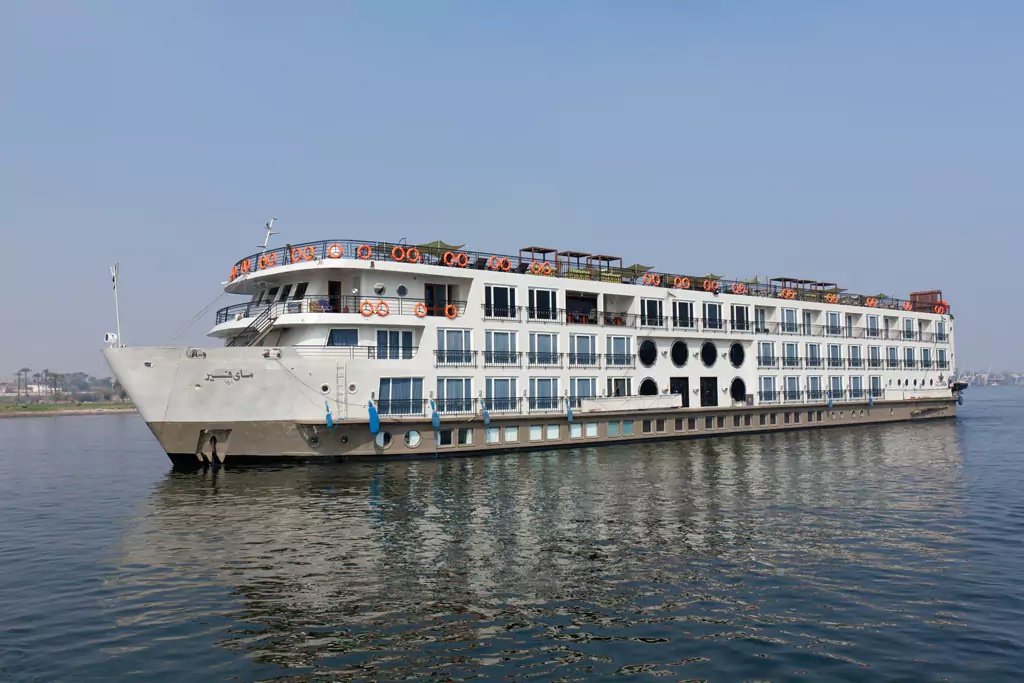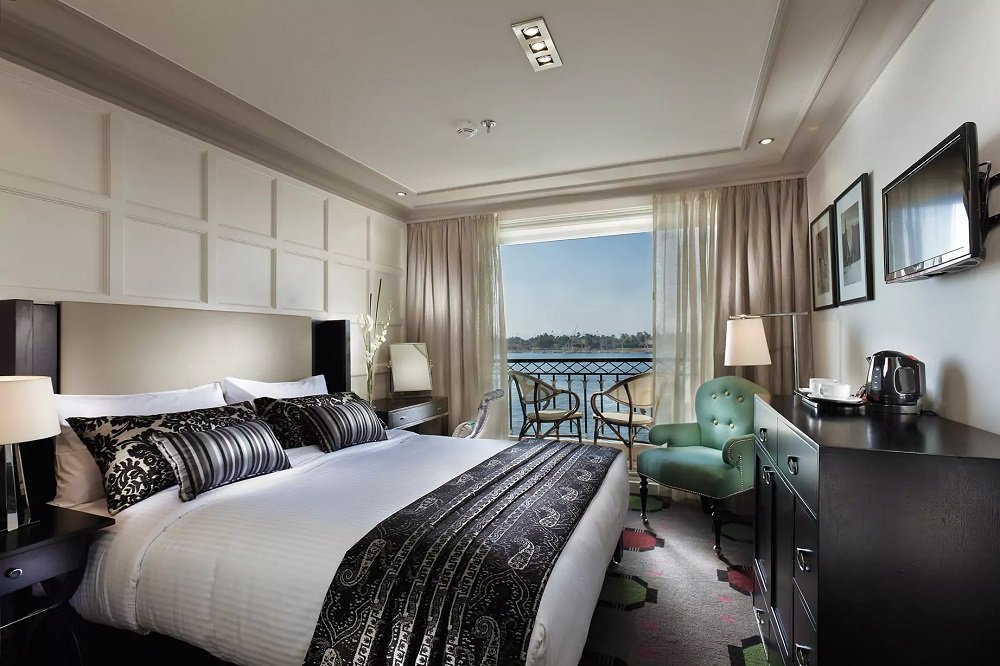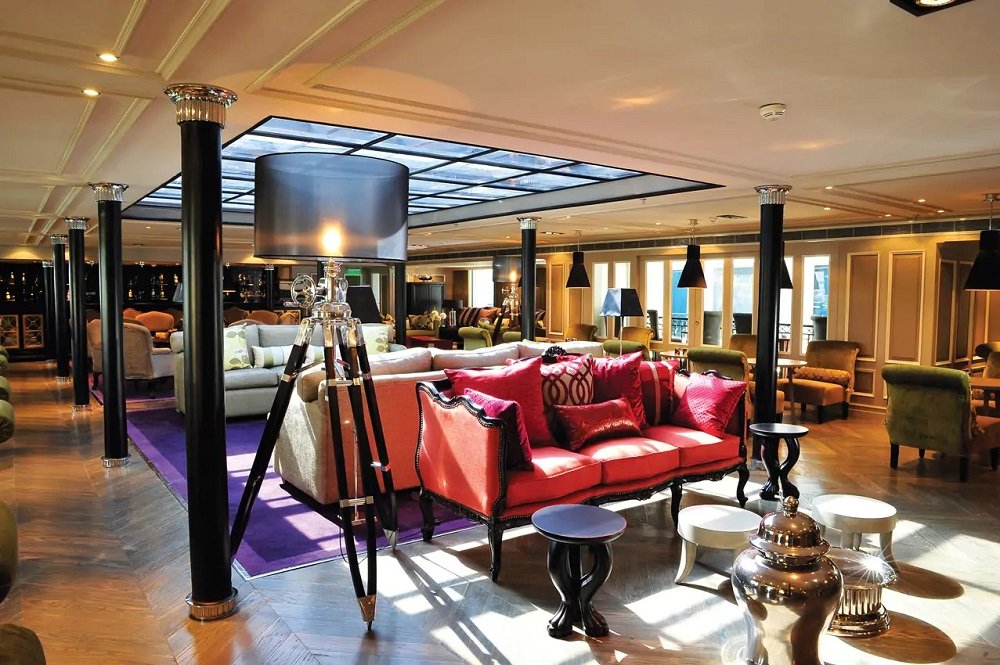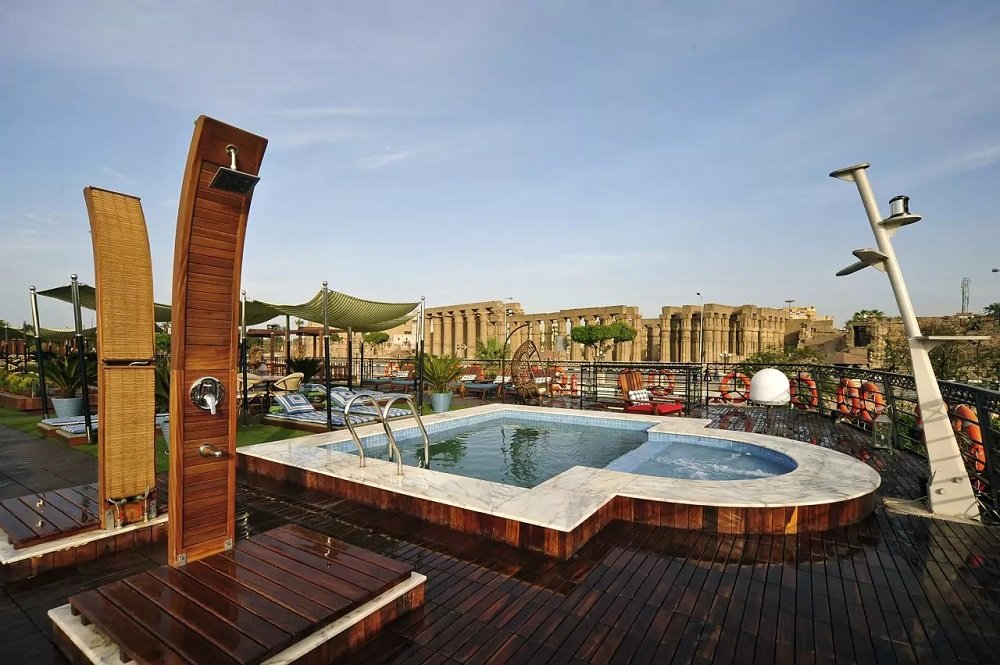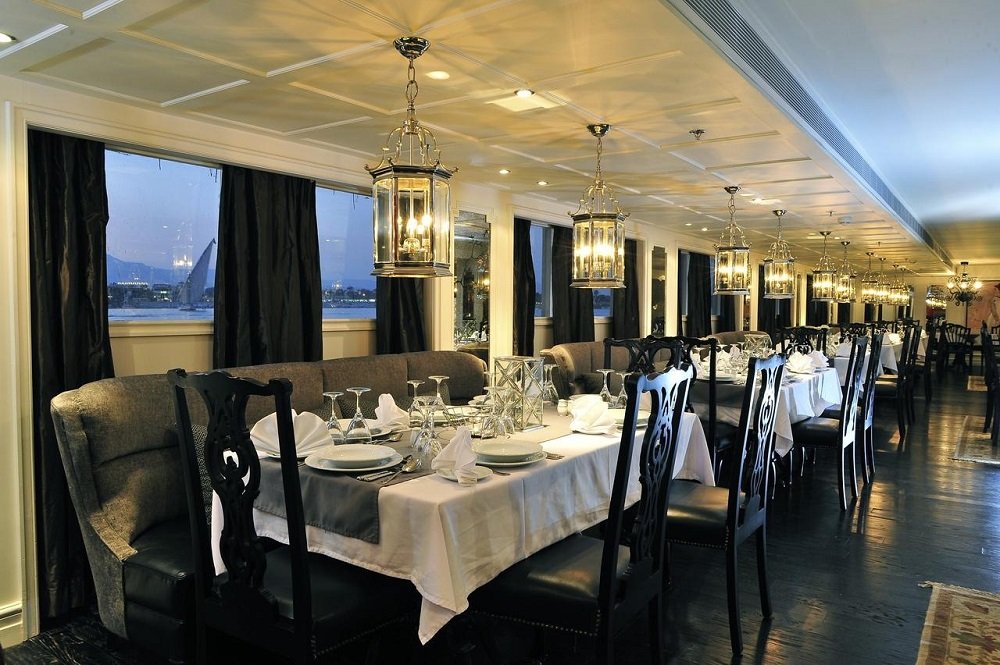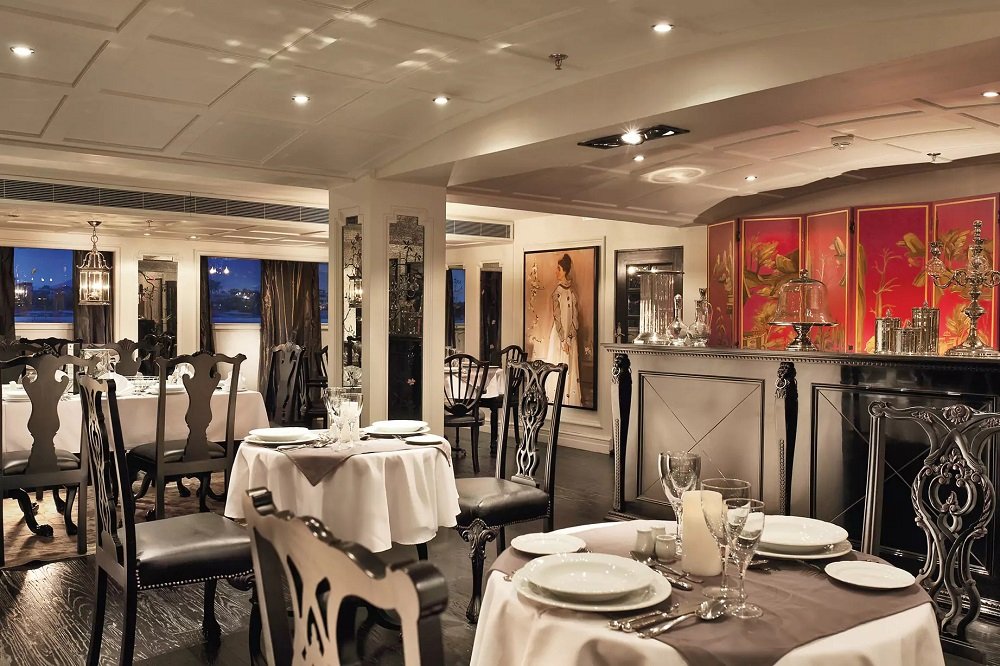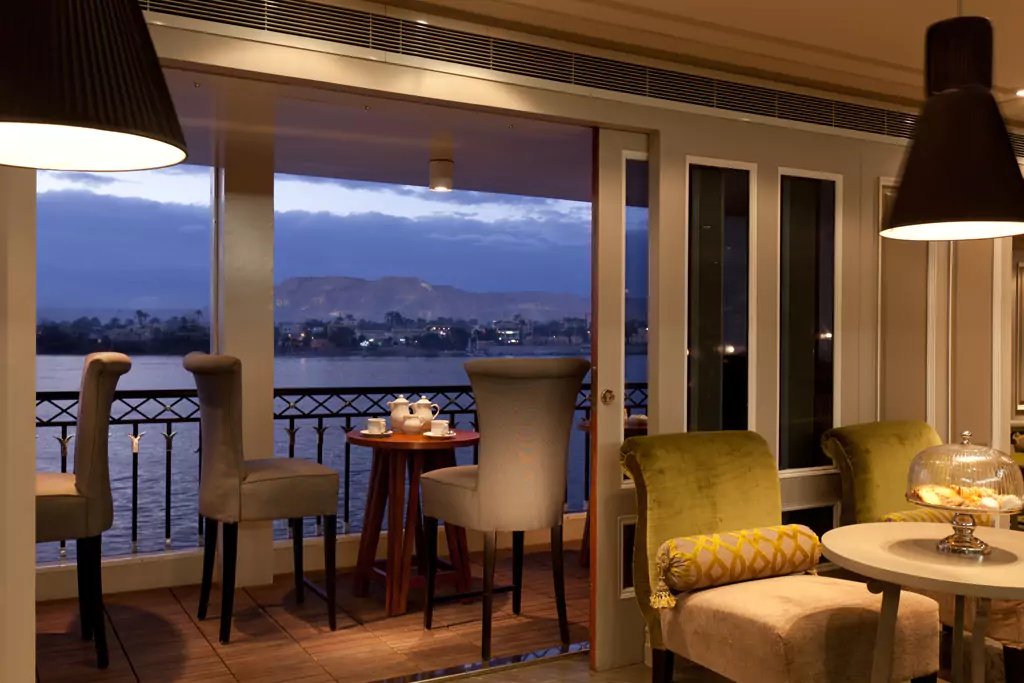
The MS Mayfair is a 5-star ultra deluxe ship sailing the classic route between Luxor and Aswan, with 3, 4 and 7-night itineraries, full-board dining and a licensed Egyptologist guiding every sailing. From $1,160 per person.
Ultra deluxe is one of Egypt’s top vessel classification, above standard 5-star — it covers cabin size, deck space and service ratios rather than being a marketing phrase.
3 nights, Aswan to Luxor, every Friday. The efficient option — Philae, Kom Ombo, Edfu, Karnak, Luxor Temple and the Valley of the Kings. Nothing essential is missed. Best when the cruise is one part of a longer Egypt trip.
4 nights, Luxor to Aswan, every Monday. The same sites with a full extra day, starting in Luxor. Useful if you’re flying in from Cairo, and it finishes in Aswan — the gentler of the two cities to end in.
7 nights, round trip from Luxor, every Monday. The full loop. The extra nights are sailing and leisure rather than new temples, so choose this if you want the river itself to be the holiday.
All three include the same guided excursions, entrance fees and private transfers. Full facilities and deck-by-deck detail are below.
A licensed Egyptian operator based in Luxor, run by a working Egyptologist — the guiding on this route is done by people who live with these temples rather than visit them. Three consecutive TripAdvisor Travellers’ Choice Awards: 2024, 2025, 2026.
Abu Simbel and a sunrise balloon over Luxor can be added, and we’ll arrange domestic flights and Cairo nights either side.
Your Egypt Best Vacations representative meets you inside the arrivals terminal at Aswan airport, or on the platform at Aswan railway station, holding a signboard with your name, and hands you over to your private Egyptologist guide. The sightseeing starts straight away.
First the High Dam, built through the 1960s to end the Nile’s annual flood and generate power for the country. It did both, and it cost a great deal – the reservoir behind it drowned Nubian villages and swallowed temples. Your guide will give you the whole account rather than the brochure version.
Then Philae, and the temple you visit is not standing where it was built. The dams left the original island underwater for most of the year, so between 1972 and 1980 UNESCO cut the temple into more than 40,000 blocks and rebuilt it on higher ground at Agilkia. You reach it by motorboat. This was the sanctuary of Isis and one of the last places in Egypt where the old religion survived – the final hieroglyphic inscription carved anywhere is here, dated 394 AD.
Last, the Unfinished Obelisk, still lying in the granite quarry where it cracked. Had it been raised it would have stood nearly 42 metres, larger than any obelisk ever erected. Because it was abandoned mid-cut you can read the method straight off the rock: the trenches, the tool marks, and the flaw that stopped the work.
Board your ship in the late afternoon, with lunch and dinner served on board. The evening is free, and Aswan is a good city to walk in – the corniche and the souk are both close to the mooring.
Optional Tour: Visit a traditional Nubian Village in Aswan.
Meals Included: Lunch & Dinner
If you want Abu Simbel, this is the morning for it — a 4am departure and roughly three hours each way by road. It is a long start to the day and most people are glad they did it: Ramses II’s temple cut into the cliff face, and moved block by block in the 1960s exactly as Philae was. An optional extra, booked in advance.
If you stay aboard, the morning is yours. Sun deck, pool, and the bank going past.
The ship sails around lunchtime for Kom Ombo, one of the few temples you can walk to straight off the gangway — it stands right at the water’s edge. It is a double temple, divided precisely down its length: Sobek the crocodile god on one side, Haroeris the falcon on the other, each with a matching gateway, hall and sanctuary. Nowhere else in Egypt was built this way. The Crocodile Museum beside it holds mummified crocodiles recovered from the surrounding area.
Back aboard and on to Edfu, where you moor for the night.
Meals Included: Breakfast, Lunch & Dinner
Out before breakfast, by horse-drawn carriage through waking streets to the Temple of Horus. Early is deliberate: this is the most completely preserved temple in Egypt, and it is a different place with a handful of people in it than with four coaches parked outside. Building began in 237 BC and ran for 180 years. Its walls carry the fullest surviving account we have of how an Egyptian temple actually functioned — the festivals, the ritual calendar, the daily service.
Back aboard for breakfast, then north through the Esna lock, which takes an hour or two depending on traffic. Watch from the deck if you can.
Arriving in Luxor, you visit Karnak — not one temple but a site added to for roughly 2,000 years. The Hypostyle Hall holds 134 columns, the tallest of them 21 metres, and photographs consistently fail to convey it.
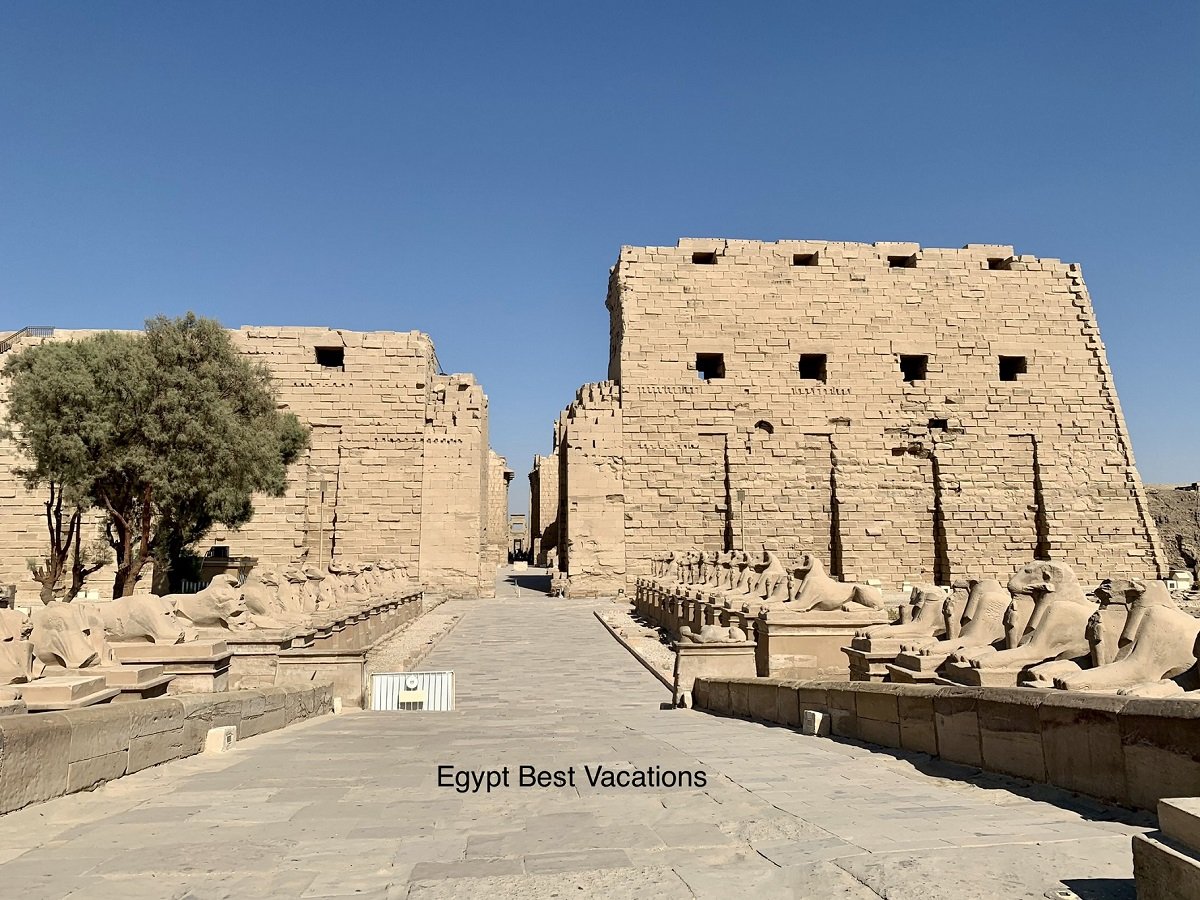
Then Luxor Temple, and if the timing works, at dusk. It was joined to Karnak by an avenue of sphinxes nearly three kilometres long, excavated over decades and reopened in 2021. Look for the mosque built into the temple’s upper level, and the Christian frescoes painted over pharaonic reliefs in the chamber behind it — three religions in one building, none of them demolished for the next.
Your final evening on board, moored at Luxor.
Meals Included: Breakfast, Lunch & Dinner
Breakfast on board, then disembark and cross to the west bank.
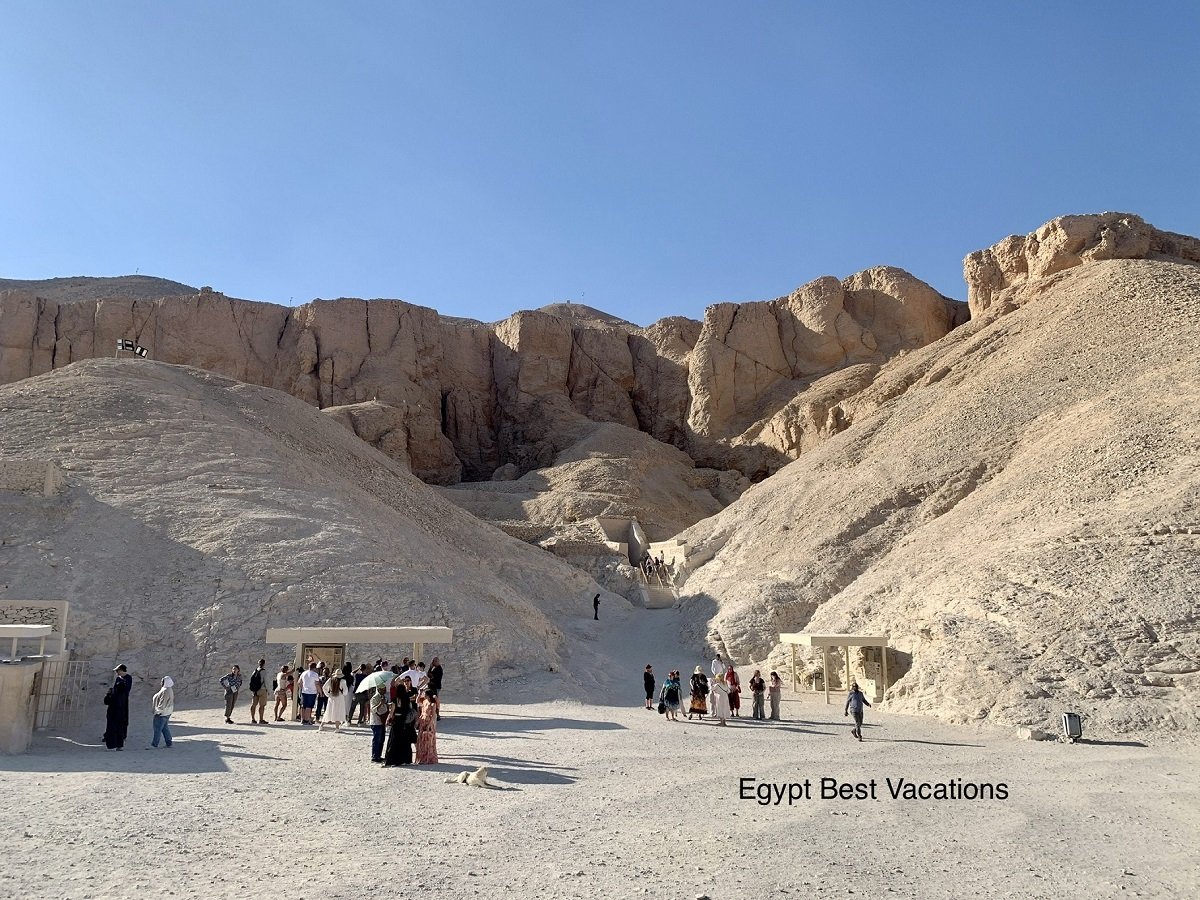
Your standard ticket to the Valley of the Kings admits you to three tombs of your choosing, and the choice matters more than people expect — they vary a great deal in decoration and in how much climbing is involved. Your guide will steer you, and it helps to stay flexible, because which tombs are open rotates. Seti I, Tutankhamun and Ramses V/VI each need a separate ticket.
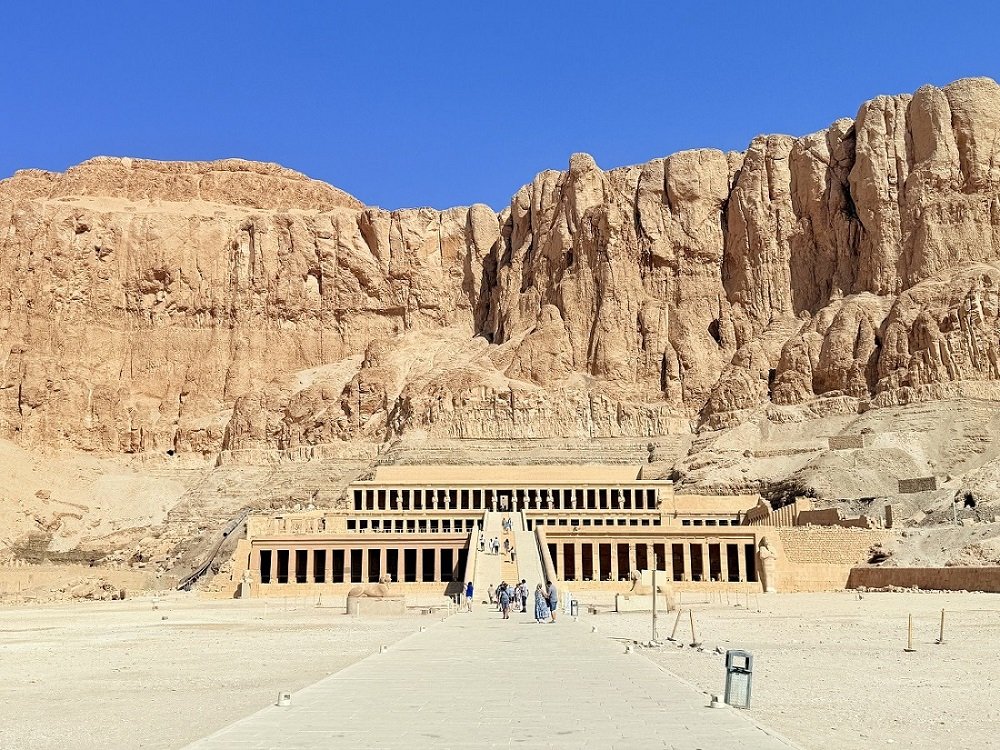
Then Hatshepsut’s temple at Deir el-Bahari, terraced into the cliff by her architect Senenmut. She ruled as pharaoh for around two decades, and after her death her successor set about erasing her name from the monuments — which is why so many figures here have had their faces cut away.
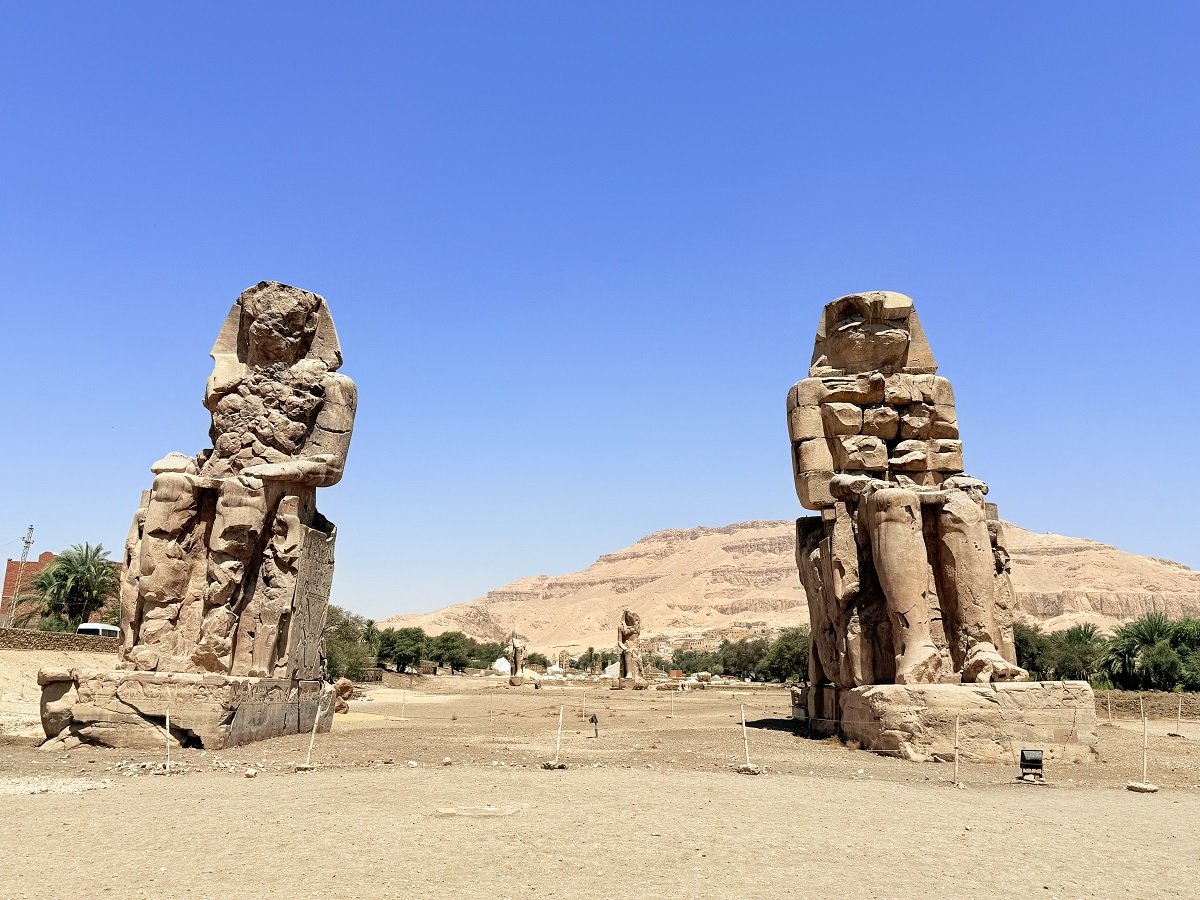
Last, the Colossi of Memnon: two seated statues of Amenhotep III, nearly all that survives above ground of what was once the largest mortuary temple on the west bank. After an earthquake in 27 BC, one of them began producing a sound at dawn. Greek and Roman visitors travelled here to hear it and carved their names on the legs while they waited. A Roman repair in the third century silenced it for good.
Transfer to Luxor airport, the railway station, or your hotel in Luxor.
Optional Experience: Sunrise Hot Air Balloon Ride over Luxor — it flies at dawn, so it runs before breakfast this morning and must be arranged in advance.
Meals Included: Breakfast
Your Egypt Best Vacations representative meets you inside the arrivals terminal at Luxor airport, or on the platform at Luxor railway station, holding a signboard with your name, and hands you over to your private Egyptologist guide.
Karnak first — not one temple but a site added to for roughly 2,000 years, from the Middle Kingdom through to the Ptolemies, with each ruler building outward from the last. The Hypostyle Hall holds 134 columns, the tallest of them 21 metres, and photographs consistently fail to convey it. The sacred lake and Hatshepsut’s obelisk, the tallest still standing in Egypt, are both here.
Then Luxor Temple, and if the timing works, at dusk when the lighting comes on. It was joined to Karnak by an avenue of sphinxes nearly three kilometres long, excavated over decades and reopened in 2021. Look for the mosque of Abu el-Haggag built into the temple’s upper level and still in use, and the Christian frescoes painted over pharaonic reliefs in the chamber behind it — three religions in one building, none of them demolished for the next.
Board your ship in the late afternoon, with lunch and dinner served on board.
Optional Tour: Attend the spectacular Karnak Sound and Light Show in the evening
Meals Included: Lunch & Dinner
Breakfast on board, then across to the west bank.
Your standard ticket to the Valley of the Kings admits you to three tombs of your choosing, and the choice matters more than people expect — they vary a great deal in decoration and in how much climbing is involved. Your guide will steer you, and it helps to stay flexible, because which tombs are open rotates. Seti I, Tutankhamun and Ramses V/VI each need a separate ticket. Seti I is the finest tomb in the valley and priced accordingly. There are more than sixty tombs here: the New Kingdom pharaohs abandoned pyramids entirely and cut their tombs into hidden ground instead, hoping to defeat the robbers. It did not work, but Tutankhamun came close.
Then Hatshepsut’s temple at Deir el-Bahari, terraced into the cliff by her architect Senenmut. She ruled as pharaoh for around two decades, and after her death her successor set about erasing her name from the monuments — which is why so many figures here have had their faces cut away.
Last, the Colossi of Memnon: two seated statues of Amenhotep III, nearly all that survives above ground of what was once the largest mortuary temple on the west bank. After an earthquake in 27 BC, one of them began producing a sound at dawn. Greek and Roman visitors travelled here to hear it and carved their names on the legs while they waited. A Roman repair in the third century silenced it for good.
Back aboard, and the ship sails south through the Esna lock toward Edfu, where you moor for the night. The lock takes an hour or two depending on traffic — watch from the deck if you can.
Optional Tour: Sunrise Hot Air Balloon Ride over Luxor — it flies at dawn, so it runs before breakfast this morning and must be arranged in advance
Meals Included: Breakfast, Lunch & Dinner
After breakfast, by horse-drawn carriage through waking streets to the Temple of Horus. This is the most completely preserved temple in Egypt. Building began in 237 BC and ran for 180 years. Its walls carry the fullest surviving account we have of how an Egyptian temple actually functioned — the festivals, the ritual calendar, the daily service.
Back aboard for breakfast, then on to Kom Ombo, one of the few temples you can walk to straight off the gangway — it stands right at the water’s edge. It is a double temple, divided precisely down its length: Sobek the crocodile god on one side, Haroeris the falcon on the other, each with a matching gateway, hall and sanctuary. Nowhere else in Egypt was built this way. The Crocodile Museum beside it holds mummified crocodiles recovered from the surrounding area.
The ship then sails on to Aswan, where you moor for the night.
Meals Included: Breakfast, Lunch & Dinner
Aswan is the gentlest of Egypt’s cities and its sites sit close together, so today is unhurried.
The Unfinished Obelisk first, still lying in the granite quarry where it cracked. Had it been raised it would have stood nearly 42 metres, larger than any obelisk ever erected. Because it was abandoned mid-cut you can read the method straight off the rock: the trenches, the tool marks, and the flaw that stopped the work.
Then the High Dam, built through the 1960s to end the Nile’s annual flood and generate power for the country. It did both, and it cost a great deal — the reservoir behind it drowned Nubian villages and swallowed temples. Your guide will give you the whole account rather than the brochure version.
Last, Philae — and the temple you visit is not standing where it was built. The dams left the original island underwater for most of the year, so between 1972 and 1980 UNESCO cut the temple into more than 40,000 blocks and rebuilt it on higher ground at Agilkia. You reach it by motorboat. This was the sanctuary of Isis and one of the last places in Egypt where the old religion survived — the final hieroglyphic inscription carved anywhere is here, dated 394 AD.
Back to the ship for your final evening on board. The corniche and the souk are both an easy walk from the mooring if you want the evening ashore.
Optional Tour: Visit a traditional Nubian Village in Aswan
Meals Included: Breakfast, Lunch & Dinner
Breakfast on board, then check out and disembark. We transfer you to Aswan airport, the railway station, or your hotel in Aswan.
If you are flying out in the evening, Abu Simbel can be added this morning — it is a 4am departure and roughly three hours each way by road, so it only works with a late departure. Tell us before you travel and we will check it against your flight.
Optional Tour: Abu Simbel Temples Excursion
Meals Included: Breakfast Only
Across to the west bank after breakfast for the Valley of the Kings, where your standard ticket admits you to three tombs of your choosing and your guide will advise which are worth them. Then Hatshepsut’s temple at Deir el-Bahari, terraced into the cliff, and the Colossi of Memnon, two seated statues of Amenhotep III that are nearly all that survives of the largest mortuary temple ever built on this bank.
Back aboard, and the ship sails south through the Esna lock to Edfu, mooring there for the night.
Optional Tour: Sunrise Hot Air Balloon Ride over Luxor, before breakfast this morning
Meals Included: Breakfast, Lunch & Dinner
Out after breakfast by horse-drawn carriage to the Temple of Horus at Edfu, the most completely preserved temple in Egypt and the fullest record we have of how an Egyptian temple actually ran.
Then on to Kom Ombo, the double temple divided down its length between Sobek the crocodile god and Haroeris the falcon, with the Crocodile Museum beside it. The ship sails on to Aswan for the night.
Meals Included: Breakfast, Lunch & Dinner
The Unfinished Obelisk, abandoned mid-cut in its quarry with the working method still readable off the rock. The High Dam, which ended the annual flood and drowned a great deal of Nubia doing it. And Philae, moved block by block to Agilkia island between 1972 and 1980 and reached by motorboat — the sanctuary of Isis, and the site of the last hieroglyphic inscription carved anywhere, dated 394 AD.
Back to the ship, moored at Aswan for the next two nights.
Optional Tour: Visit a traditional Nubian Village in Aswan
Meals Included: Breakfast, Lunch & Dinner
The ship stays moored at Aswan all day and nothing is scheduled. This is the day the longer cruise earns its length, and there are four good ways to spend it.
Abu Simbel. The best use of the day if you have the appetite for it — a 4am departure and roughly three hours each way by road, or a short flight. Ramses II’s temple is cut directly into the cliff face, with four seated colossi of the king across the front, and beside it the smaller temple he built for Nefertari. Both were dismantled and moved to higher ground in the 1960s ahead of the rising lake, the largest rescue of its kind ever attempted. An optional extra, booked in advance.
A felucca afternoon. Aswan is the best stretch of the river for sailing, and the traditional boats work the channel around Elephantine Island. Kitchener’s Island, planted as a botanical garden in the 1890s, is a short hop across.
The Nubian Museum. Genuinely good and routinely skipped. It tells the story of the culture that was displaced when the dam went up, which is the other half of the High Dam you saw yesterday.
Nothing at all. Four days of early starts is enough to earn a day on the sun deck.
Meals Included: Breakfast, Lunch & Dinner
The ship turns north and begins the return leg, and this is the most restful day of the cruise. You are travelling with the current now, which is how everything on this river moved for four thousand years before engines.
There is a stop at Kom Ombo in the afternoon. You have already been, so the choice is yours — go ashore again and see it in different light, which is a real difference at that temple, or stay aboard while the ship is quiet and the deck is empty.
Overnight moored at Edfu.
Meals Included: Breakfast, Lunch & Dinner
A slow morning at Edfu, then the ship sails north through the Esna lock to Luxor. The lock takes an hour or two and is worth watching from the deck.
Arriving in Luxor, you finally cross to the east bank — the temples this itinerary has been saving. Karnak is not one temple but a site added to for roughly 2,000 years, each ruler building outward from the last. The Hypostyle Hall holds 134 columns, the tallest of them 21 metres, and photographs consistently fail to convey it. The sacred lake and Hatshepsut’s obelisk, the tallest still standing in Egypt, are both here.
Then Luxor Temple, ideally at dusk when the lighting comes on. It was joined to Karnak by an avenue of sphinxes nearly three kilometres long, reopened in 2021 after decades of excavation. Look for the mosque of Abu el-Haggag built into the temple’s upper level and still in use, and the Christian frescoes painted over pharaonic reliefs in the chamber behind it.
Seeing these at the end rather than the start is the argument for the longer cruise. By now you have the whole New Kingdom in your head, and Karnak reads very differently for it.
Your final evening on board, moored at Luxor.
Meals Included: Breakfast, Lunch & Dinner
Breakfast on board, then check out and disembark. We transfer you to Luxor airport, the railway station, or your hotel in Luxor.
If you are continuing to Cairo or the Red Sea, tell us before you travel and we will arrange the flights and the nights either side.
Meals Included: Breakfast