Do not hesitate to give us a call or WhatsApp.
+20-155-1580-786
info@egyptbestvacations.com
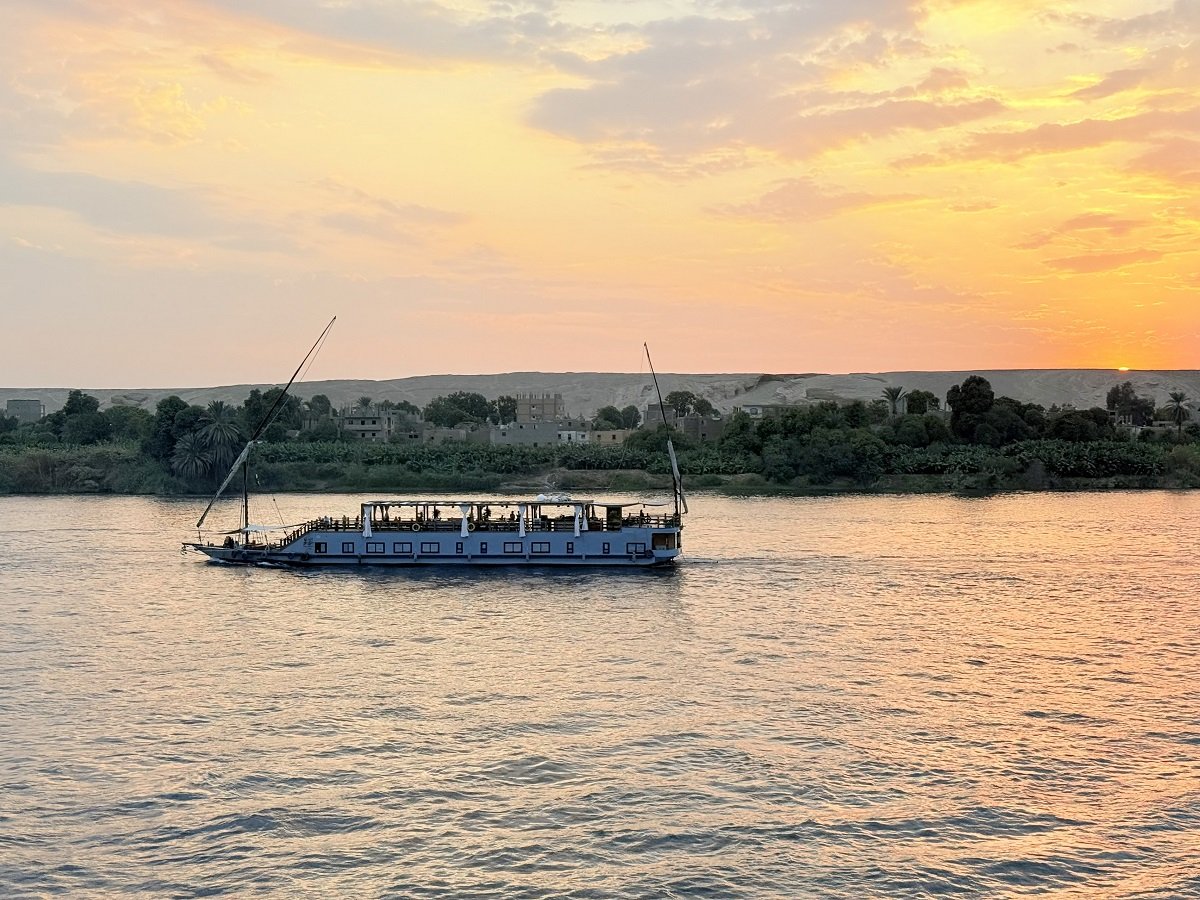
The wind on the Nile blows from the north. The current runs to the north. So a boat heading south sails, and a boat heading north drifts — and our 5 days 4 nights Dahabiya Nile cruise from Luxor to Aswan is the southbound one. You spend more of this route under canvas than on any other cruise we run.
The ancient Egyptians built the distinction into their writing. The hieroglyph for travelling south is a boat with its sail raised; the sign for travelling north is a boat with the sail down. Upstream to Aswan is the direction a dahabiya was made for.
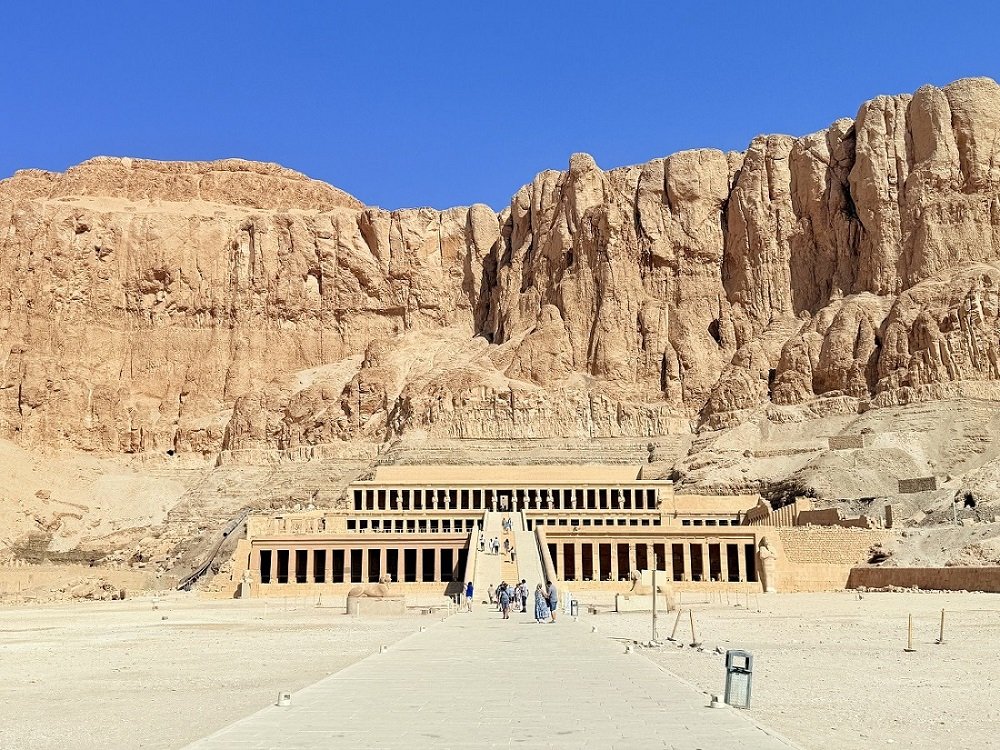
It is also the fullest of our short dahabiya itineraries. Four nights aboard buys you two unhurried days in Luxor before you cast off — the Valley of the Kings, Hatshepsut’s terraces and the Colossi of Memnon on the West Bank, then Karnak and Luxor Temple on the East — followed by Edfu, Kom Ombo, and a full closing day in Aswan.
A Nile cruise ship carries between 100 and 150 guests. A dahabiya carries between 8 and 28, depending on how many cabins she has, and our own group is capped at 16. She moors at sandbanks and islands rather than at concrete quays, and the rhythm of the day is set by the wind rather than a timetable.
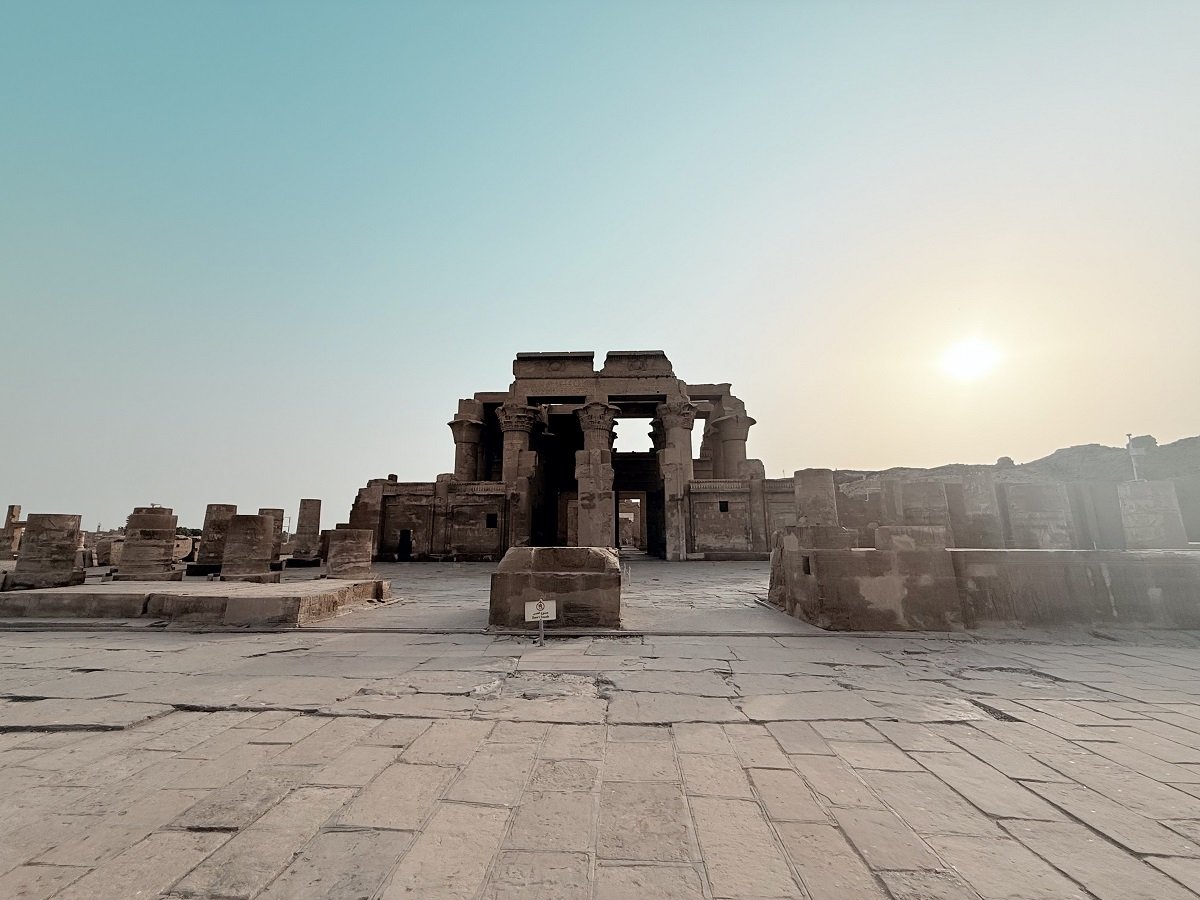
At Edfu you leave the boat by horse and carriage for the Temple of Horus — the most completely preserved temple in Egypt, buried in silt for centuries, which is why its roof and its inner chambers survived when others lost theirs. At Kom Ombo you find the only temple in Egypt built as a true double: two entrances, two halls, two sanctuaries, one side for Sobek the crocodile god and one for Haroeris. The Crocodile Museum beside it holds the mummified crocodiles recovered from the site.
Aswan closes the journey. The High Dam that ended the annual flood and created Lake Nasser; the Unfinished Obelisk, still lying where it cracked in the granite quarry; and Philae, the temple of Isis, lifted block by block onto Agilkia Island when the water rose.
Please keep in mind that slight changes in the itinerary might occur due to circumstances beyond our control.
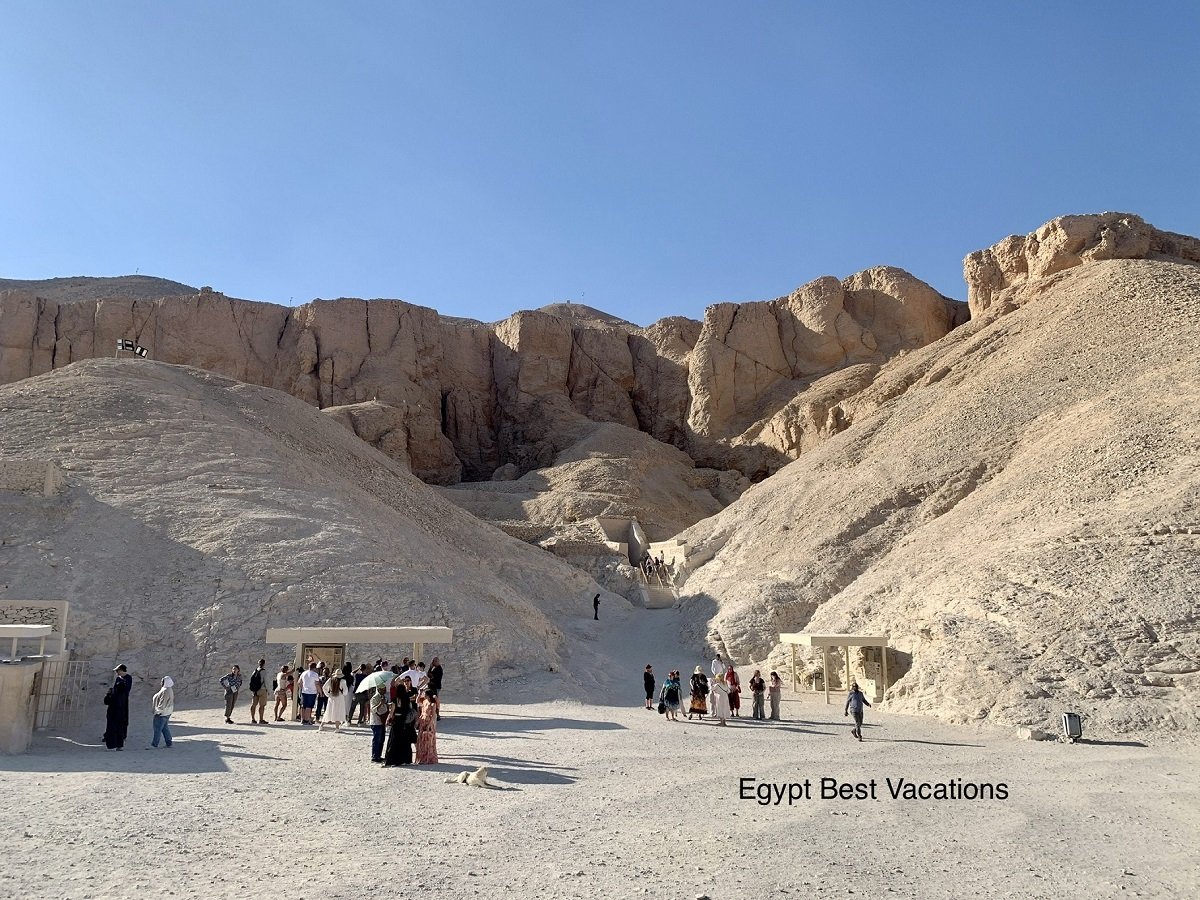
Your guide meets you outside the arrivals terminal at Luxor airport or the railway station. You begin on the West Bank, in the Valley of the Kings, where the New Kingdom pharaohs hid their tombs in a desert wadi rather than announce them with pyramids. Your guide picks the three strongest tombs open on the day — which ones are open rotates, and the choice matters.
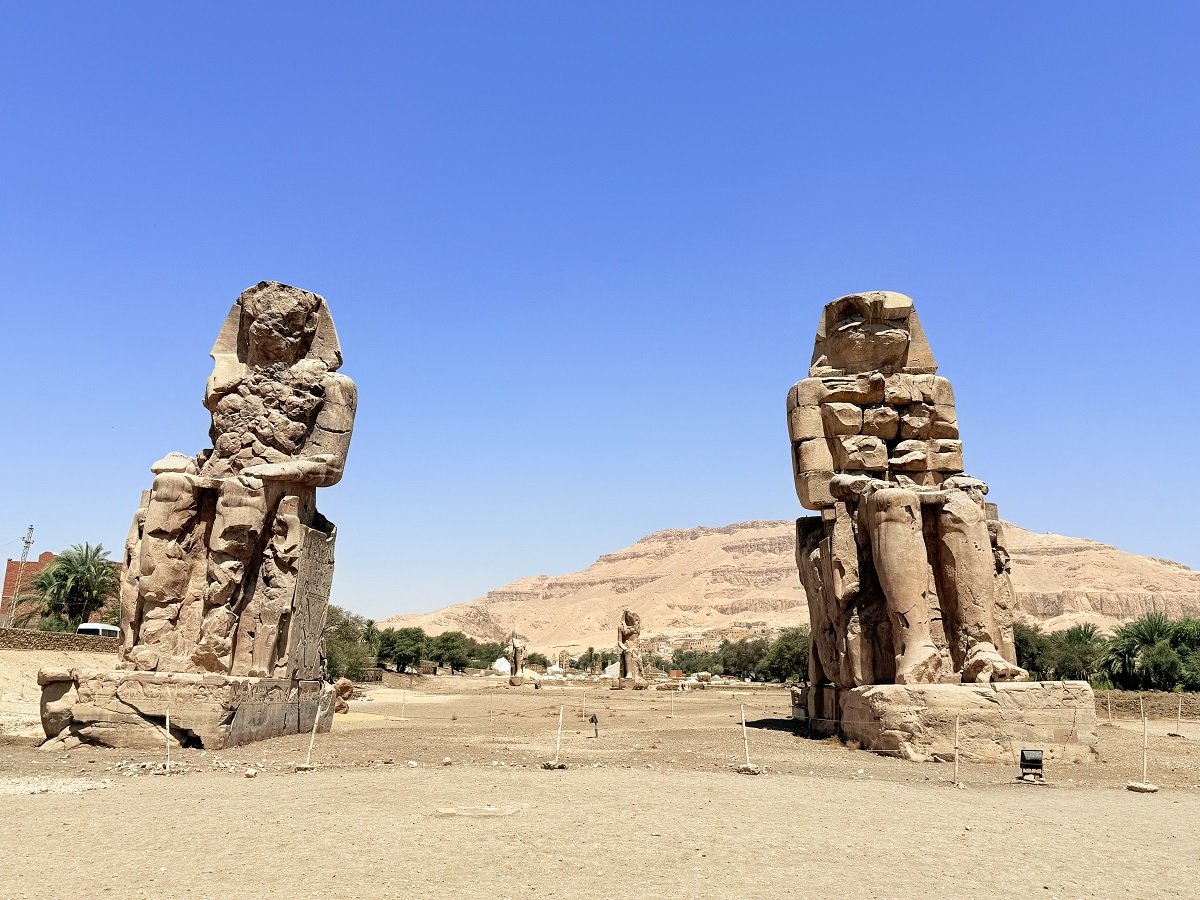
Then Hatshepsut’s mortuary temple at Deir el-Bahari, rising in three terraces against the cliff. She ruled as pharaoh for roughly two decades, and the temple was reused as a Coptic monastery centuries later, which is where the modern name comes from. The Colossi of Memnon on the way back — all that stands above ground of Amenhotep III’s own mortuary temple.
Board your dahabiya and settle in. Overnight moored at Luxor.
Meals: lunch and dinner
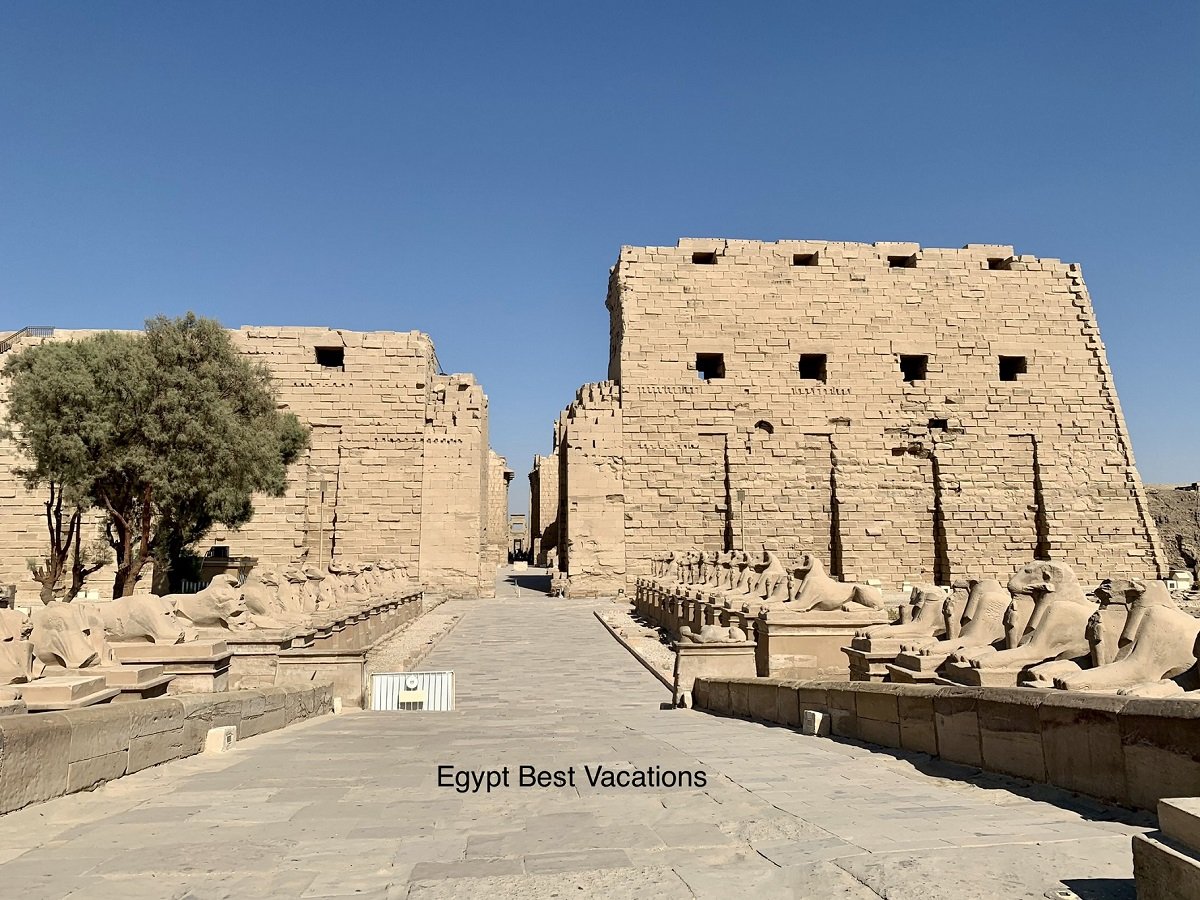
Breakfast on deck, then across to the East Bank. Karnak first: thirty pharaohs building on one site across roughly two thousand years, the largest religious complex ever raised. Then Luxor Temple, begun by Amenhotep III, extended by Ramses II, and added to by Tutankhamun, Horemheb and Alexander the Great in turn — joined to Karnak by the Avenue of Sphinxes.
Back aboard, and the sailing begins. You cast off south through the Esna Lock and moor at an island for the night.
Optional: sunrise hot air balloon over the West Bank.
Meals: breakfast, lunch and dinner
Sailing south through the morning, lunch served under way. At Edfu a horse and carriage takes you up through the town to the Temple of Horus — built between 237 and 57 BC and buried in silt for centuries, which is why its roof, its inner chambers and its inscriptions survived. The black granite falcon still stands at the gate.
Carriage back to the boat, then on to Al Ramady Island for the night.
Meals: breakfast, lunch and dinner
Breakfast, then south to Kom Ombo, which sits right on the bank — one of the few temples you step off the boat and into. It is the only temple in Egypt built as a true double: two entrances, two hypostyle halls, two sanctuaries, one side for Sobek the crocodile god and one for Haroeris, Horus the Elder. Look for the relief of surgical instruments, one of the earliest medical images to survive from the ancient world.
A short walk away, the Crocodile Museum holds the mummified crocodiles once sacred to Sobek, along with the coffins and votive objects found with them.
Back aboard for the final leg south to Aswan.
Meals: breakfast, lunch and dinner
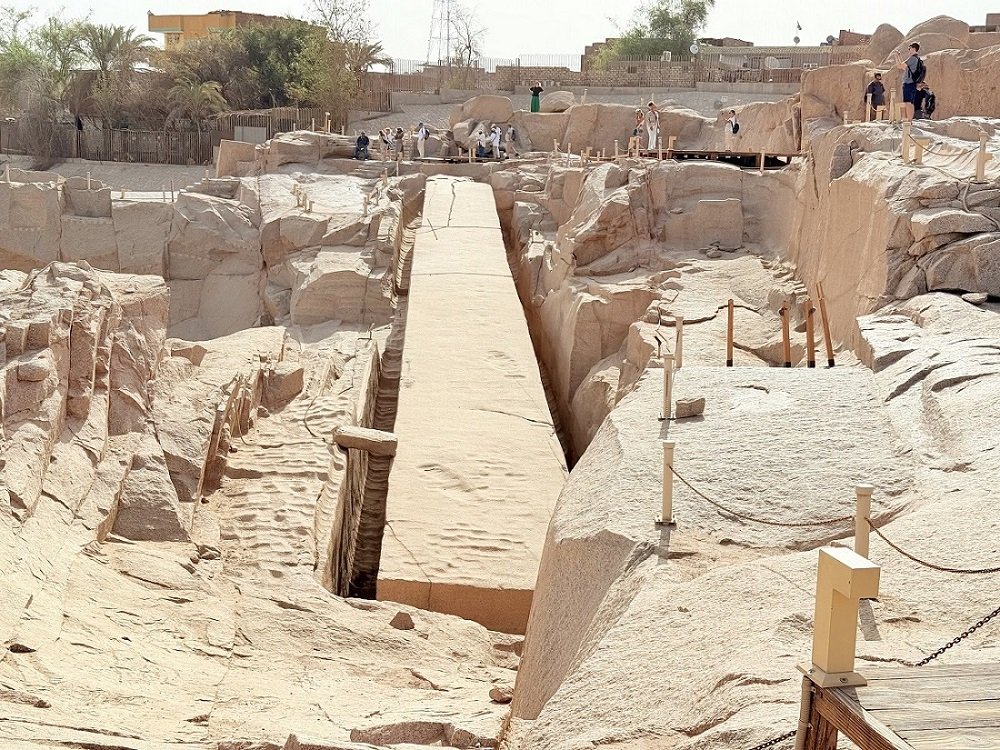
Breakfast, then your Aswan day. The High Dam, built through the 1960s to end the annual flood and power the country — and, in doing so, creating Lake Nasser and forcing the rescue of Philae and Abu Simbel. Then Philae itself, reached by a short boat ride across to Agilkia Island: the temple of Isis, known as the Pearl of Egypt, and the last place in the ancient world where the old religion was still practiced. You finish at the Unfinished Obelisk, still lying where it cracked in the granite quarry; at nearly 42 metres it would have been the largest ever cut, and the tool marks around it show exactly how the work was done.
Transfer to Aswan airport, the railway station or your Aswan hotel.
Optional: Abu Simbel by road. It means a pre-dawn start, so tell us in advance if you want it added.
Meals: breakfast
1285 USD per person in a twin room (from 1st of May till 30 September)
1400 USD per person in a twin room (from 1st of October till 15 December)
1950 USD per person in a twin room (from 16 December till 10 January: Christmas & New Year)
1400 USD per person in a twin room (from 11th of January till 25 March)
1700 USD per person in a twin room (from 26th of March till 10 April: Easter Holidays)
1400 USD per person in a twin room (from 11th of April till 30 April).
2185 USD per person in a single room (from 1st of May till 30 September)
2380 USD per person in a single room (from 1st of October till 15 December)
3300 USD per person in a single room (from 16 December till 10 January: Christmas & New Year)
2380 USD per person in a single room (from 11th of January till 25 March)
2880 USD per person in a single room (from 26th of March till 10 April: Easter Holidays)
2380 USD per person in a single room (from 11th of April till 30 April).
1400 USD per person in a twin room (from 1st of May till 30 September)
1550 USD per person in a twin room (from 1st of October till 15 December)
2200 USD per person in a twin room (from 16 December till 10 January: Christmas & New Year)
1550 USD per person in a twin room (from 11th of January till 25 March)
1900 USD per person in a twin room (from 26th of March till 10 April: Easter Holidays)
1550 USD per person in a twin room (from 11th of April till 30 April).
2380 USD per person in a single room (from 1st of May till 30 September)
2600 USD per person in a single room (from 1st of October till 15 December)
3700 USD per person in a single room (from 16 December till 10 January: Christmas & New Year)
2600 USD per person in a single room (from 11th of January till 25 March)
3200 USD per person in a single room (from 26th of March till 10 April: Easter Holidays)
2600 USD per person in a single room (from 11th of April till 30 April).
2200 USD per person in a twin room (from 1st of May till 30 September)
2500 USD per person in a twin room (from 1st of October till 15 December)
3600 USD per person in a twin room (from 16 December till 10 January: Christmas & New Year)
2500 USD per person in a twin room (from 11th of January till 25 March)
3200 USD per person in a twin room (from 26th of March till 10 April: Easter Holidays)
2500 USD per person in a twin room (from 11th of April till 30 April).
3740 USD per person in a single room (from 1st of May till 30 September)
4250 USD per person in a single room (from 1st of October till 15 December)
6120 USD per person in a single room (from 16 December till 10 January: Christmas & New Year)
4250 USD per person in a single room (from 11th of January till 25 March)
5440 USD per person in a single room (from 26th of March till 10 April: Easter Holidays)
4250 USD per person in a single room (from 11th of April till 30 April).
All our prices are quoted in USD per person per trip. You can also make your payment online through a secure payment gateway with no additional fees or surcharges. We accept USD, Euros, GBP, CAD, AUD and NZD. The starting price is for one adult in a twin room on a group tour. It shows the lowest price during the low season. There’s a single supplement for single accommodation.
Tipping is not included in our tour packages and is left entirely to your discretion. While it is not mandatory, it is greatly appreciated by the people who assist you during your journey.
Here is a suggested tipping list:
Driver – full day $3-5 per person per day.
Driver – transfer $1-3 per person per day.
Tour guide – full day $15-20 per person per day.
Tour guide – half day $10-15 per person per day.
Representative / tour leader $3-5 per person per day.
Dahabiya Nile cruise crew $10-20 per person per night at the end of the cruise.
We do not charge cancellation fees for tours canceled due to ‘force majeure’ events such as natural disasters or other uncontrollable circumstances. However, if you cancel for personal or business reasons after we have incurred booking costs on your behalf, these costs will be charged to you.
A deposit between 25-50% is required to secure your booking through a payment link. The remaining balance will also be paid through payment links.
We don’t provide a travel insurance. We recommend to buy it beforehand if you want
Our tours do not include entrance fees for special archaeological sites such as:
These attractions require an additional fee. Please contact us if you would like to add or adjust anything in your itinerary.
Other personal expenses during your trip may include:
Four nights aboard the dahabiya, twelve meals, all entrance fees listed in the itinerary, the horse and carriage at Edfu, airport transfers at both ends, all transport by air-conditioned vehicle, and a licensed Egyptologist guide throughout. Water, soft drinks and hot drinks are included. Alcohol, tipping, travel insurance and optional tours are not.
Five days and four nights. It starts at Luxor airport or railway station and ends in Aswan, where we drop you at your hotel, the airport or the railway station.
Because that is the direction a sailing boat wants to go. The prevailing wind on the Nile comes from the north and the current runs north, so a boat heading south sails while a boat heading north drifts. This route spends more time under sail than either of our northbound cruises. The ancient Egyptians wrote the difference into the language — their sign for travelling south is a boat with its sail up, and the sign for travelling north is a boat with the sail down.
This one is longer, sails southbound, and gives you two full days in Luxor plus a full day in Aswan. The 4 days Dahabiya cruise from Aswan to Luxor is shorter and cheaper and includes the Temple of Khnum at Esna, which this route does not. The 3 night Dahabiya cruise from Aswan to Esna adds the quarries at Gebel el-Silsila but finishes with a road transfer into Luxor. The table above sets the three side by side.
|
|
Luxor to Aswan (this cruise) |
Aswan to Luxor |
Aswan to Esna |
|
Duration |
5 days / 4 nights |
4 days / 3 nights |
4 days / 3 nights |
|
Direction |
South |
North |
North |
|
Time in Luxor |
Two full days |
Split over two days |
One full day |
|
Edfu Temple |
Yes |
No |
Yes |
|
Also on this route |
Full Aswan day |
Temple of Khnum at Esna |
Gebel el-Silsila |
|
Ends |
Aswan, by river |
Luxor, by river |
Luxor, by road from Esna |
|
From |
$1.285 |
$1.050 |
$1.075 |
Our group is capped at 16. The boat itself is larger: the dahabiyas we use have between 8 and 14 cabins, so with every cabin taken as a twin there can be 8 to 28 people on board in total, and some of them may have booked through other agents. Even full, that is a fraction of a cruise ship carrying 100 to 150.
Yes. Most of our dahabiyas sell cabin by cabin, like a hotel, but the entire boat can be chartered privately for a family or a group. That gives you the deck, the crew and the schedule to yourselves, and some flexibility over the itinerary. Ask us for a charter quote with your dates and numbers.
A dahabiya is a traditional twin-sailed wooden boat. A cruise ship on this route carries between 100 and 150 guests across four or five decks; a dahabiya carries 16 to 28 across two. It sails rather than motors, moors at sandbanks and islands rather than concrete quays, and the rhythm of the day is quieter. The trade-off is fewer facilities — no pool, no evening entertainment, no shop.
From $1,285 per person in a twin room. Three things move it: the season, the class of dahabiya (Standard, Deluxe or Luxury), and whether you are sharing. A single room is priced with a single supplement — see the rates below for the exact figure in each season and class.
Yes. The compulsory gala dinner is already inside the 16 December to 10 January rate. There is nothing extra to pay on board — the price you see is the price you pay.
Twelve meals are included, from lunch on day one to breakfast on day five: four breakfasts, four lunches and four dinners. Water, soft drinks and hot drinks come with them. Alcohol is charged separately and can be bought on board. Tell us in advance about vegetarian, vegan, gluten-free or other dietary needs and the kitchen will handle it.
The cruise finishes after the Aswan sightseeing and you transfer on from there, so the tour ends before lunch. If your flight or train is late in the day and you would like lunch added, tell us and we will arrange it.
Every Saturday and Monday. With so few cabins the high season fills early — book one to three months ahead for October through April.
Yes, on the final day in Aswan as an optional extra. It means a pre-dawn start, so let us know in advance rather than on the day so we can arrange the vehicle and guide.
October to April is the classic window: warm days, cool evenings, and the reason it is the expensive season. May and September are hotter but good value. June to August is genuinely hot in Upper Egypt — mornings and evenings on deck are lovely, the middle of the day is not.
Children under 6 travel free, 6 to 11 pay half the adult rate, and 12 and over pay the adult rate. That said, a dahabiya is a calm, adult-paced boat with no pool and no children’s club. It suits curious children who enjoy history and does not suit toddlers. Some vessels set a minimum age or require a private charter, so ask us before booking.
Both. It is a popular honeymoon choice, and solo travelers are welcome. With so few people on board, everyone tends to eat together and get on.
Seti I (KV17), Tutankhamun (KV62) and Ramses V/VI (KV9) are ticketed separately at the Valley of the Kings and are not included in the tour price. Your guide will tell you on the day which are open and which are worth the fee. Seti I is the most expensive and, in our view, the most extraordinary tomb in Egypt.
Light cotton or linen, a hat, sunglasses and high-factor sun cream. Closed walking shoes for the temples, where the ground is uneven. A warm layer for evenings on deck between November and February. Something smart-casual for dinner, modest cover for shoulders and knees at religious sites, and swimwear if your boat has a plunge pool or arranges a swim stop.
WhatsApp us