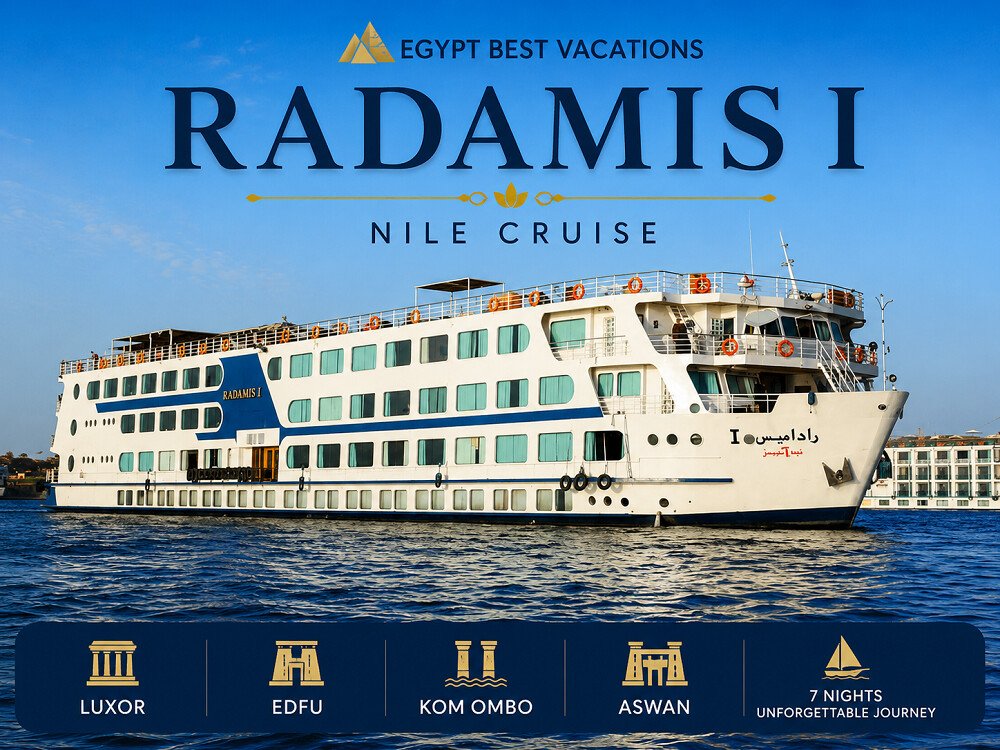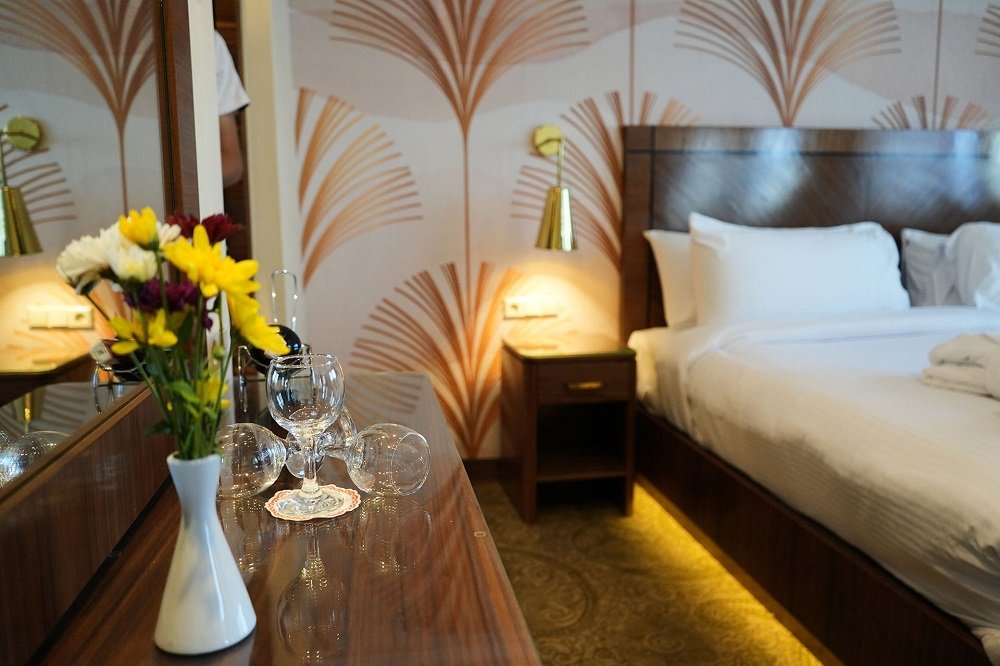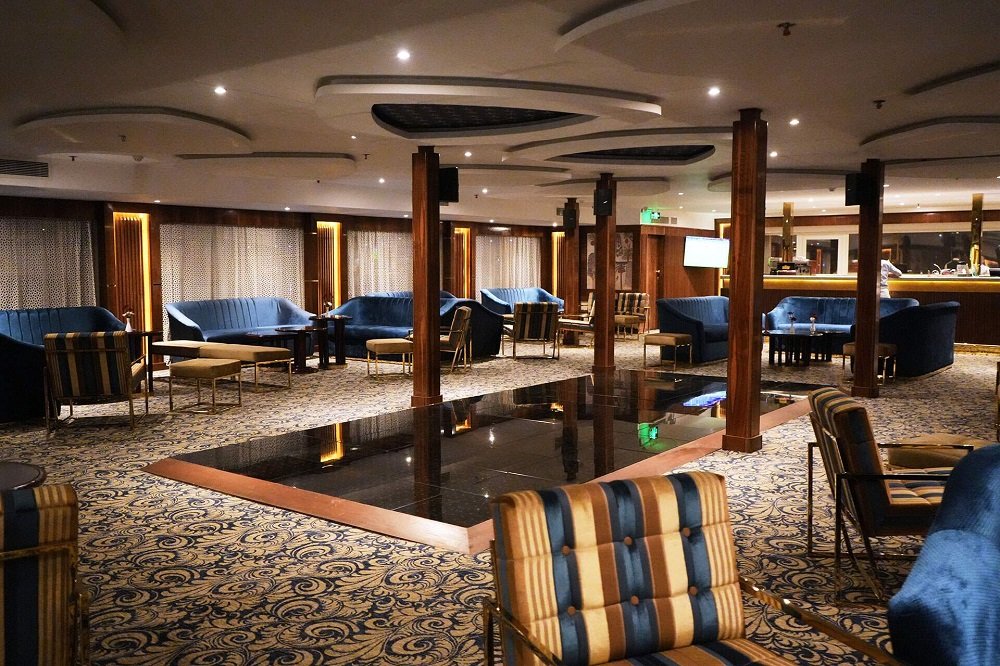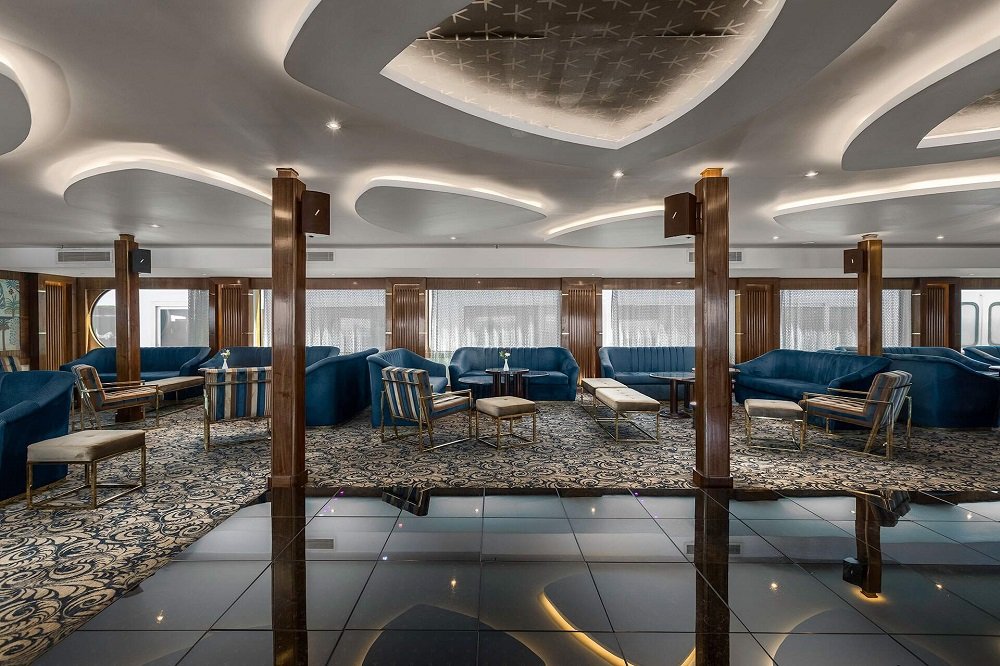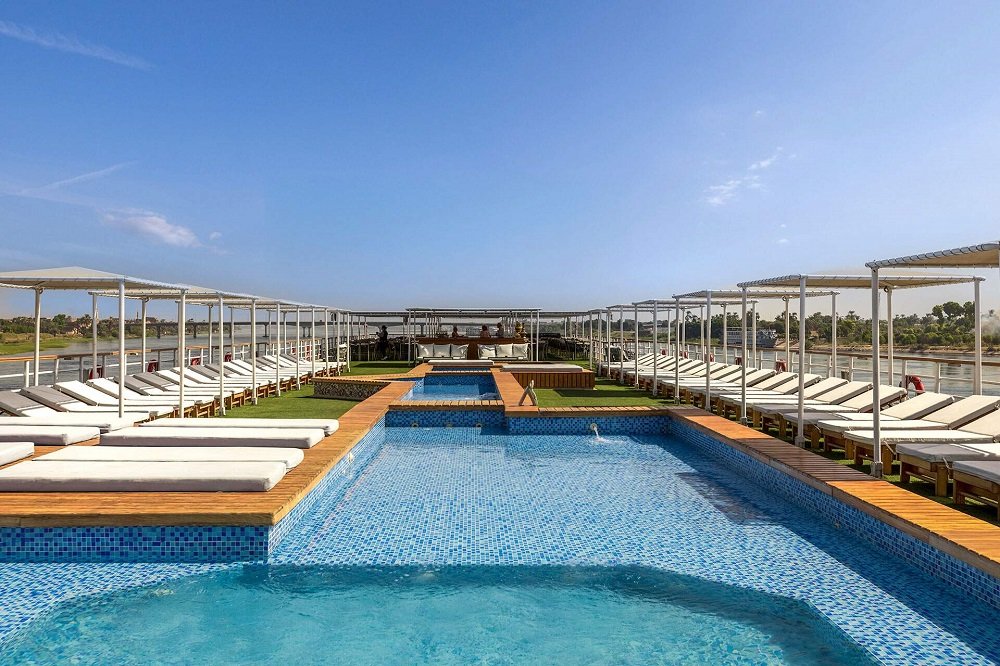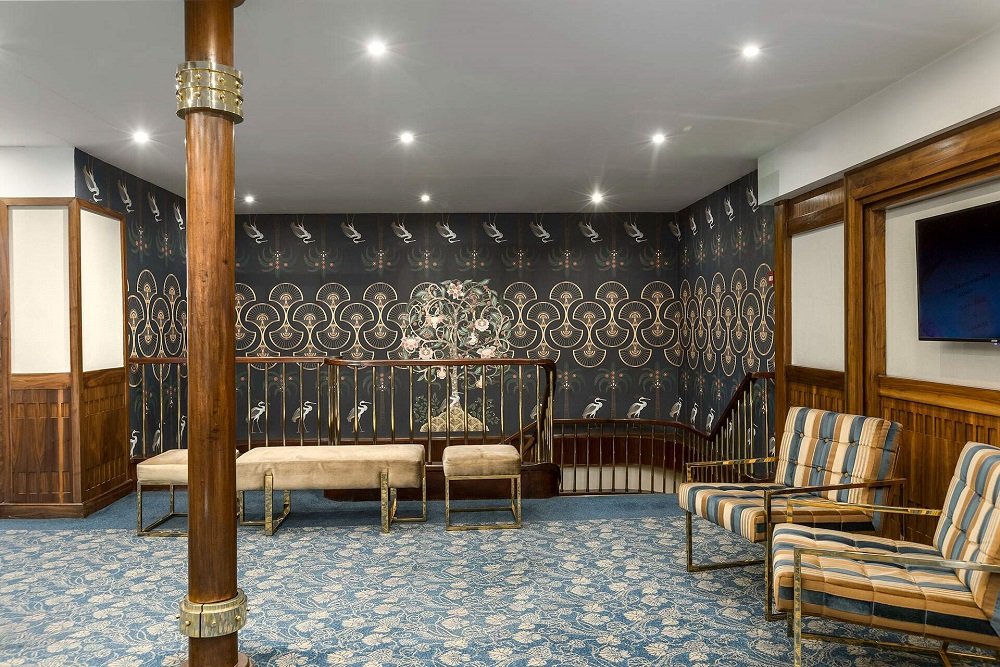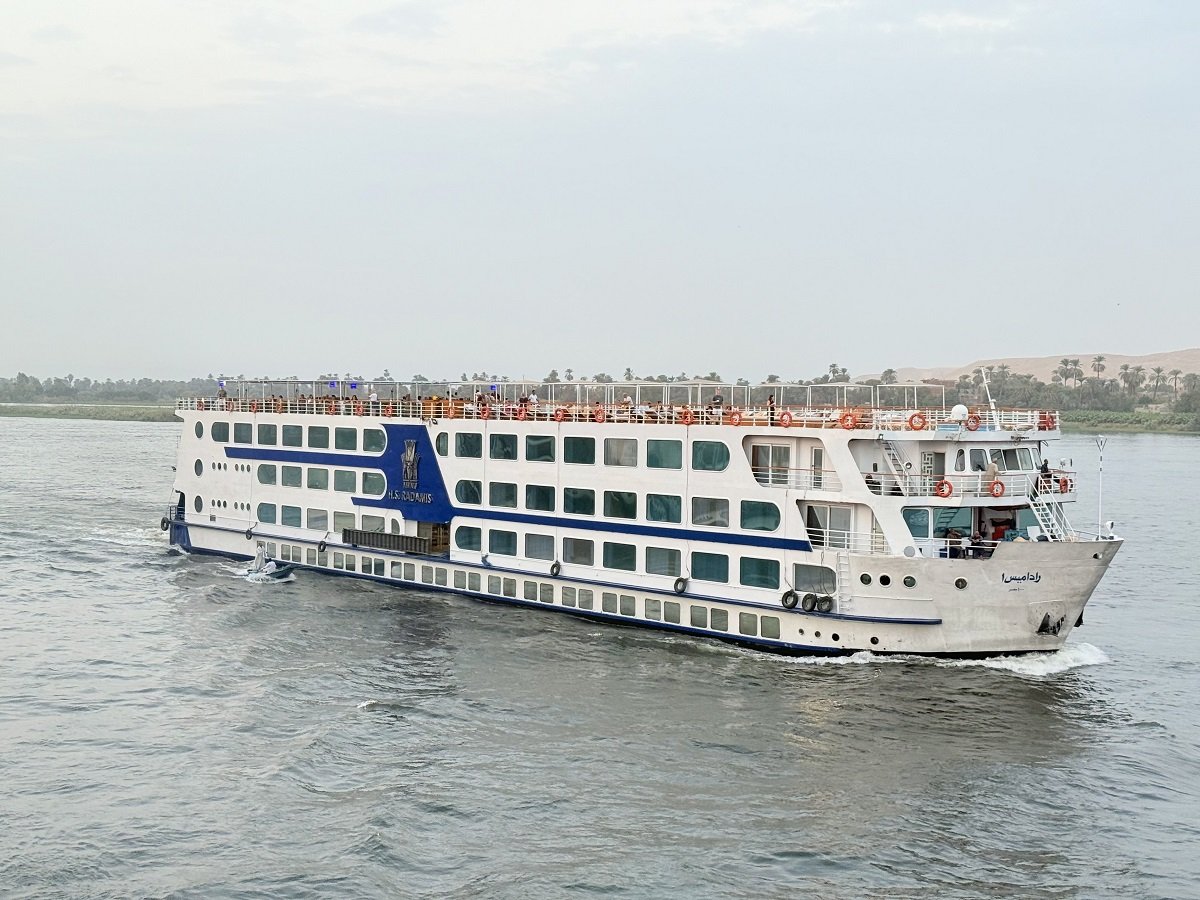
The H.S Radamis I Nile Cruise is a deluxe-class ship — the equivalent of four stars by Western standards — sailing the stretch of river between Luxor and Aswan. Sixty-three cabins, five suites, a heated pool, and private moorings at both ends so you’re not walking across three other boats to reach the gangway.
We run three itineraries on her. A three-night sailing from Aswan down to Luxor, departing every Wednesday. A four-night sailing from Luxor up to Aswan, departing every Saturday. And a seven-night round trip from Luxor, also on Saturdays, which covers the same temples at half the pace with two full days in Aswan and a free day built in.
Every itinerary is guided by a licensed Egyptologist, and the sightseeing is the same on all three: Karnak and Luxor Temple on the east bank, the Valley of the Kings, Hatshepsut’s temple and the Colossi of Memnon on the west, then Edfu, Kom Ombo, the High Dam, Philae and the Unfinished Obelisk at Aswan. What changes between itineraries is how much room you have to breathe between them.
Egypt Best Vacations is a licensed Egyptian tour operator based in Luxor, and we hold cabins on this ship directly rather than booking through a middleman. If you want to know what the food is actually like or which deck is quietest, ask — we’re on these boats regularly.
| Class | Deluxe (4-star equivalent by Western standards) |
| Cabins | 63 standard cabins, 20 m² each |
| Suites | 5 suites, across several decks |
| Route | Luxor – Aswan |
| Moorings | Private docks at both Luxor and Aswan |
| Board basis | Full board — breakfast, lunch and dinner |
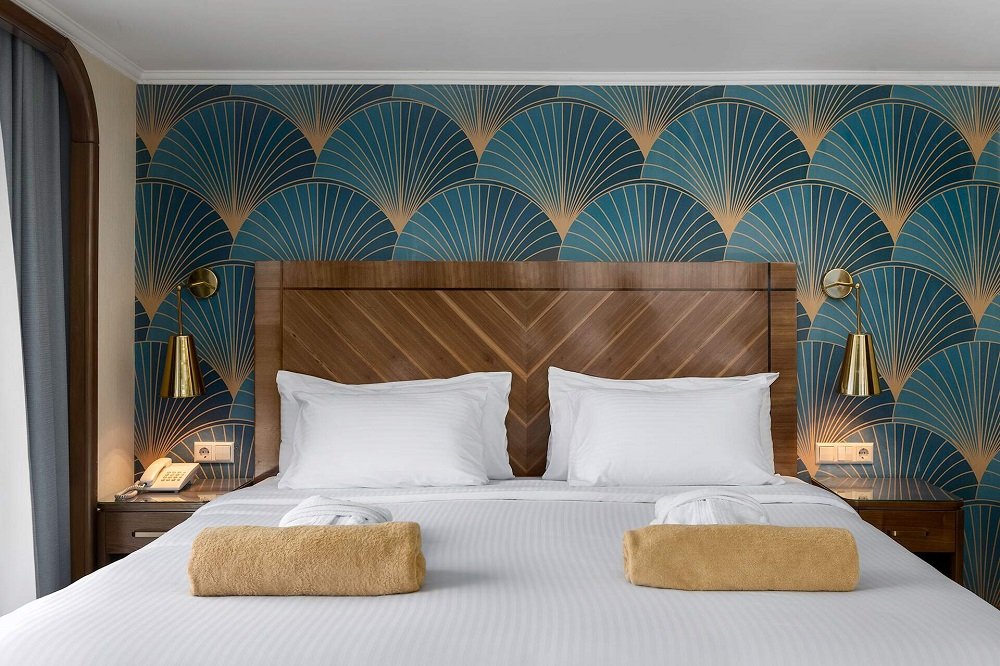
In every cabin: panoramic window over the river, private bathroom with a bath tub and hair dryer, individual climate control, 32″ satellite television, safety deposit box, tea and coffee tray, minibar stocked on request, and contactless door locks. All cabins are non-smoking.
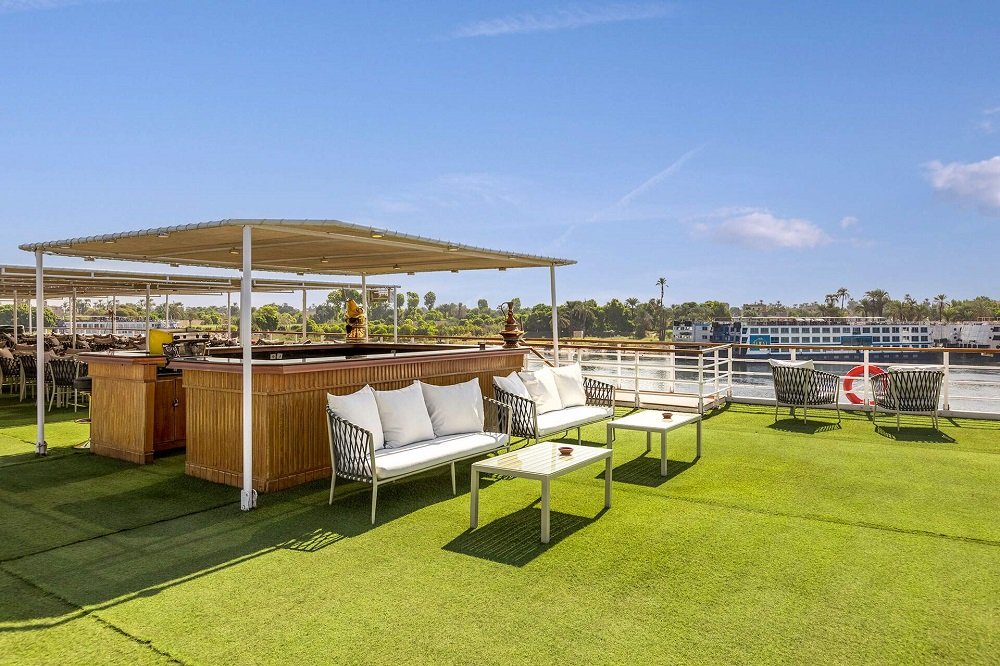
On board: heated swimming pool with jets, sundeck, gym, steam room and sauna, lounge bar, gaming room, interactive dance floor, laundry service, and free Wi-Fi — though signal quality varies while sailing, which is true of every ship on this river.
Evening entertainment runs most nights: a Galabeya party, Nubian music, and a belly dance performance. None of it is compulsory and the sundeck stays quiet.
| Nights | Direction | Departs | Twin, from |
|---|---|---|---|
| 3 nights | Aswan → Luxor | Every Wednesday | $750 |
| 4 nights | Luxor → Aswan | Every Saturday | $900 |
| 7 nights | Luxor → Aswan → Luxor | Every Saturday | $1,480 |
Prices are per person in a twin cabin in low season. Triple cabins are cheaper; single occupancy carries a 70% supplement. Full seasonal rates for all three cabin types are in the price section below.
Which to choose. The three-night is the efficient one — you land in Aswan, tour the same afternoon, and disembark in Luxor having seen everything. The four-night reverses the direction and adds a second night, which mostly buys you a calmer Aswan day at the end rather than a rushed one at the start. The seven-night is a genuinely different trip: two days in Aswan, a free day, and two long sailing days where nothing is scheduled. On the return leg the ship stops at Kom Ombo and Edfu for newly boarding guests, so you’ll have already seen those temples and can stay on deck.
If you’d rather sail on a smaller boat, a Dahabiya carries six to twelve cabins under sail and reaches moorings the large ships can’t. Or browse all our Nile cruise ships to compare.
If you want Abu Simbel, this is the morning for it — a road trip of about three hours each way, leaving before dawn, timed to get you back before the ship sails. Ramses II cut both temples into the cliff face, and the whole complex was raised sixty-five metres up the hillside in the 1960s to escape the rising lake. Twice a year, in late February and late October, the sunrise reaches through the entire length of the temple to light the statues in the sanctuary. Otherwise the sundeck is yours until lunch.
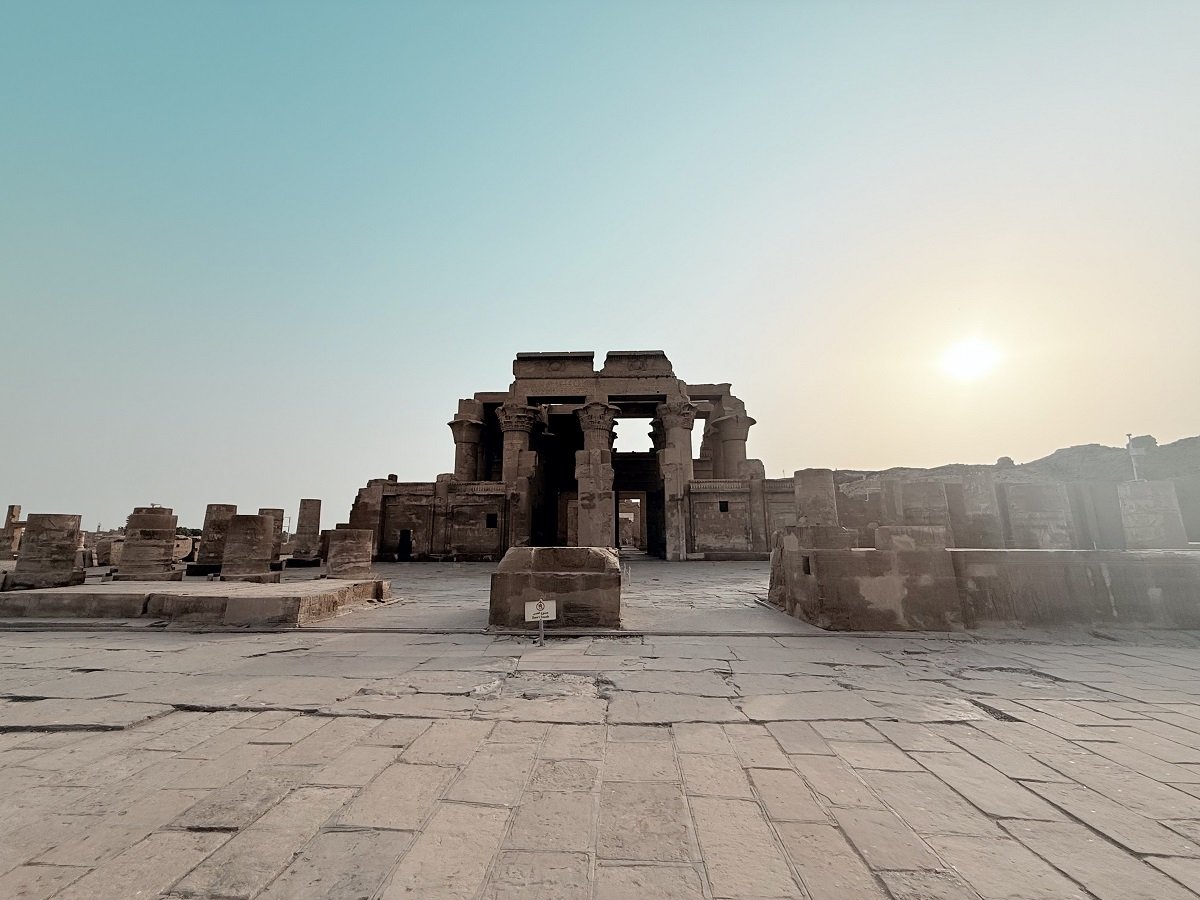
The ship sails north after lunch and moors at Kom Ombo in the late afternoon. The temple sits directly above the bank, so you walk up from the gangway rather than taking a coach — it’s the easiest site access on the river. Kom Ombo is a double temple, split precisely down its axis: Sobek the crocodile god on one side, Horus the Elder on the other, two of everything, two sanctuaries. Worth finding on the outer wall: the relief showing surgical instruments, and the calendar. The Crocodile Museum next door holds mummified crocodiles recovered from the site.
Sailing on to Edfu after the visit. Overnight moored at Edfu.
Meals Included: Breakfast, Lunch & Dinner
An early start. Horse-drawn carriages run the two kilometres from the mooring to the Temple of Horus, and going early means arriving before the other ships’ groups and while the light is still low.
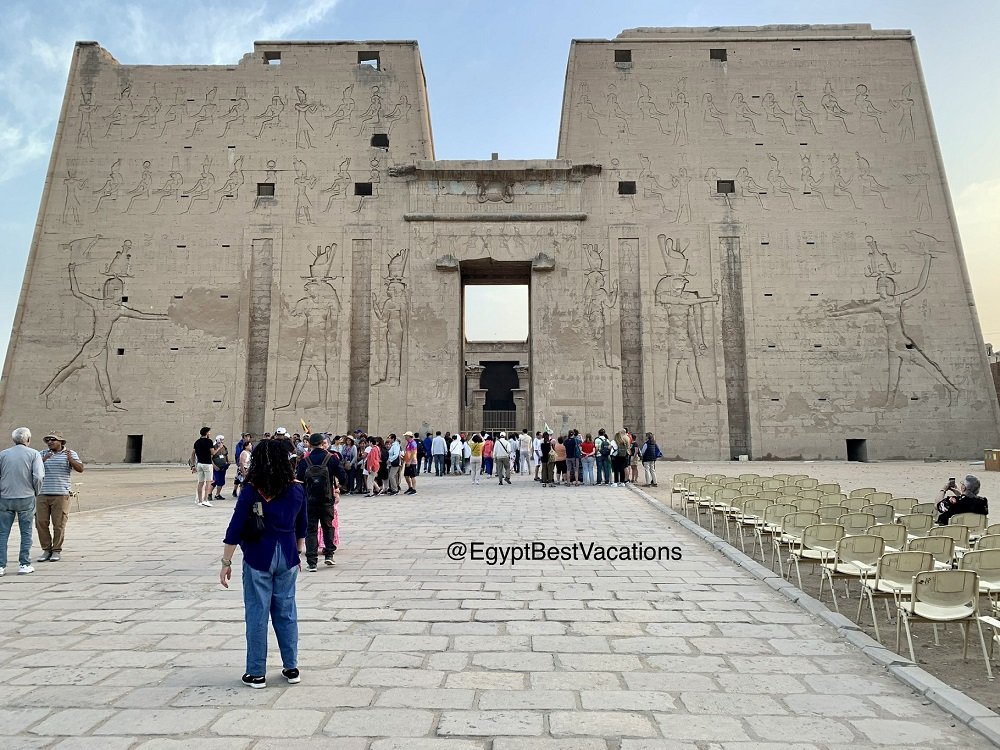
Edfu is the most completely preserved temple in Egypt. The roof is intact, both pylons stand, and the sanctuary still holds its granite shrine. It survived because it spent centuries buried in silt and drifting sand, with a village built on top, until it was cleared in the 1860s. Ptolemaic throughout — begun under Ptolemy III, finished roughly 180 years later.
Back by carriage, then the ship sails for Luxor through the Esna Lock. Be on deck for it. It’s a genuine bottleneck, ships queue to transit, and traders in rowing boats throw galabeyas up to the sundeck and haggle by shouting. How long it takes depends entirely on the queue.
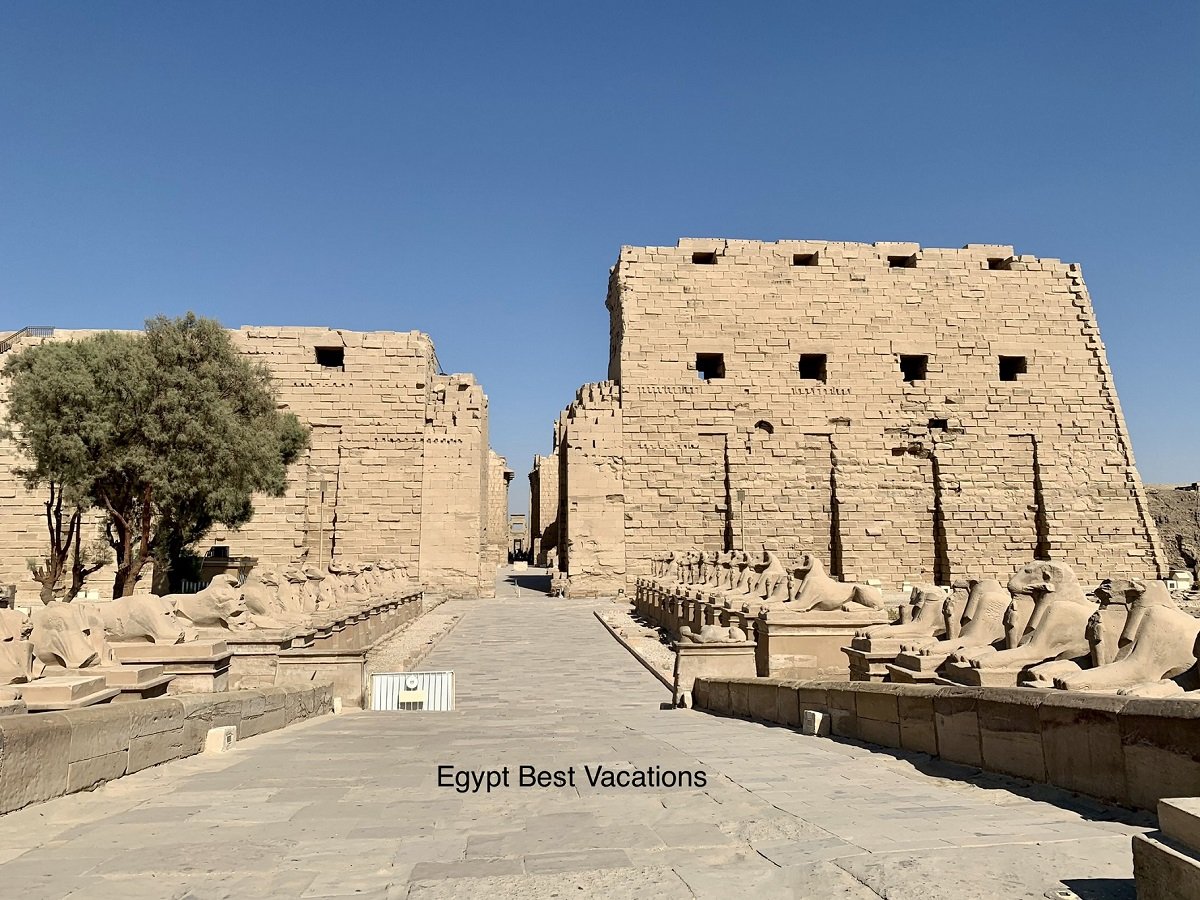
Luxor in the afternoon, for the east bank. Karnak first — roughly 1,500 years of continuous building, thirty-odd pharaohs, and construction still going under the Ptolemies. Then Luxor Temple, which is best late, when the light drops and the floodlights come up. The two were joined by the Avenue of Sphinxes, now excavated along its full length and walkable end to end.
Final night on board, moored at Luxor.
Meals Included: Breakfast, Lunch & Dinner
You’ll be met outside the arrivals terminal at Luxor airport, or on the platform at Luxor railway station, by an Egypt Best Vacations tour guide holding a signboard with your name. They’ll help with passport and visa formalities before the transfer into town.
Straight to Karnak, which is not really one temple but a hundred hectares of them, built and rebuilt over roughly 1,500 years. The Great Hypostyle Hall is the part nobody is prepared for: 134 columns in sixteen rows, the central twelve standing about 21 metres, carved and once painted top to bottom. Hatshepsut’s surviving obelisk is nearby, just under 30 metres and the tallest still standing in Egypt. The sacred lake at the back is where you get the scale of the place, because you can finally see it whole.
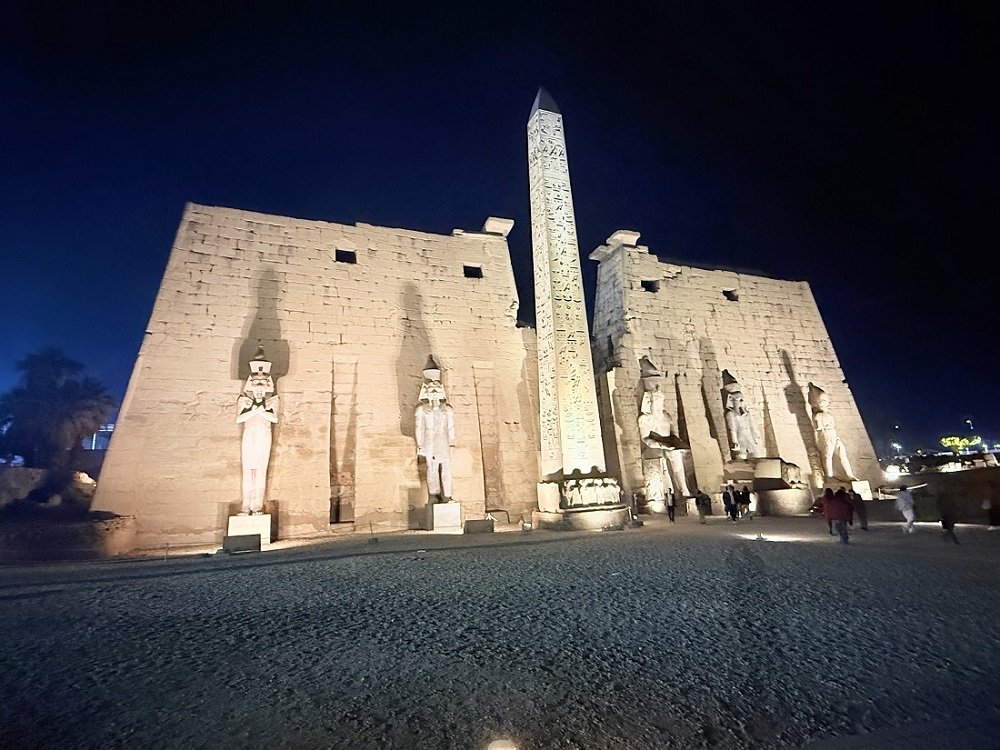
Then Luxor Temple, three kilometres south and best in the last hour of light. Amenhotep III built the core, Ramses II added the pylon and the colossi. It has never really stopped being used: there is a 13th-century mosque still in service, built high in the courtyard when the temple was buried to that depth, and a chapel with Roman frescoes painted over the pharaonic reliefs. The Avenue of Sphinxes runs from here back to Karnak, now excavated end to end — the processional route for the Opet festival, when Amun’s statue travelled between the two.
Board in the evening. The ship stays moored at Luxor overnight.
Optional tour available: Karnak Sound & Light Show
Meals Included: Lunch & Dinner
An early start, deliberately — the west bank is unshaded and it gets hot by ten.
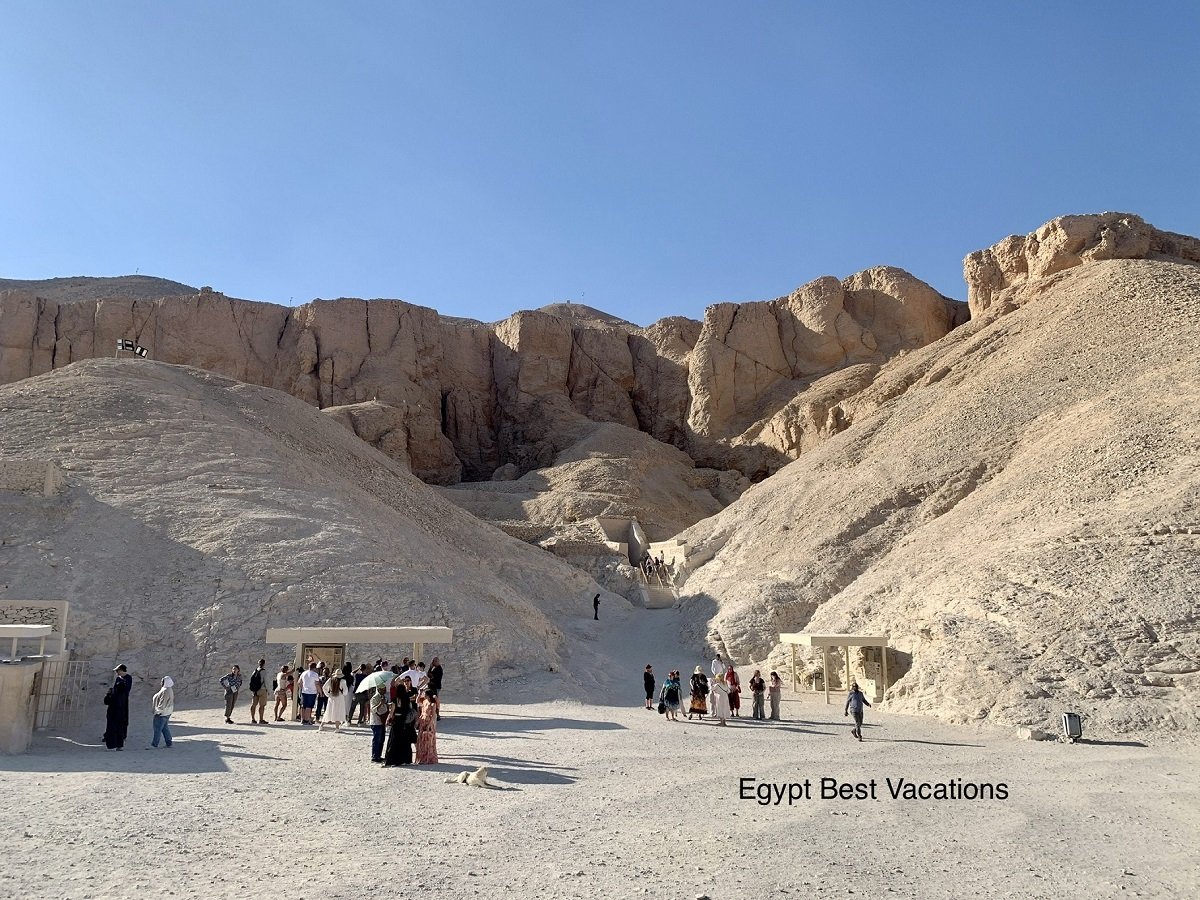
The Valley of the Kings holds more than sixty tombs cut into the rock over five centuries. The pharaohs abandoned pyramids for this precisely because pyramids advertised where the treasure was; hiding the tombs in a valley behind the cliffs was meant to solve that, and it didn’t. Your standard ticket covers three tombs, chosen on the day from whichever are open on the rotation. Tutankhamun, Seti I and Ramses V/VI are ticketed separately at the gate — Seti I is the finest thing in the valley and priced accordingly.
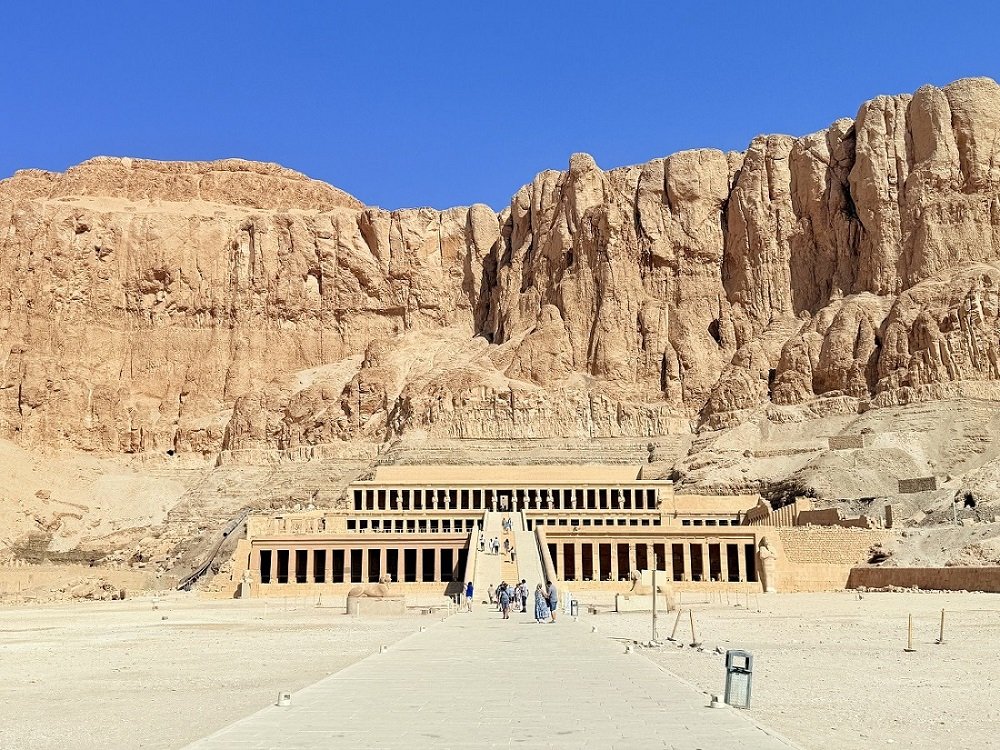
Then the Temple of Hatshepsut at Deir el-Bahari, three terraces set back into a natural amphitheatre in the cliff. The colonnade on the middle terrace carries the reliefs of her expedition to Punt — ships loaded with incense trees, the Punt villages on stilts, and a portrait of the Punt queen that the artists clearly enjoyed. She had living myrrh trees carried back and planted on these terraces; the pits they stood in are still visible. Hatshepsut ruled about two decades as senior co-ruler alongside her stepson Thutmose III, who long afterwards had her name and face chiselled off the walls.
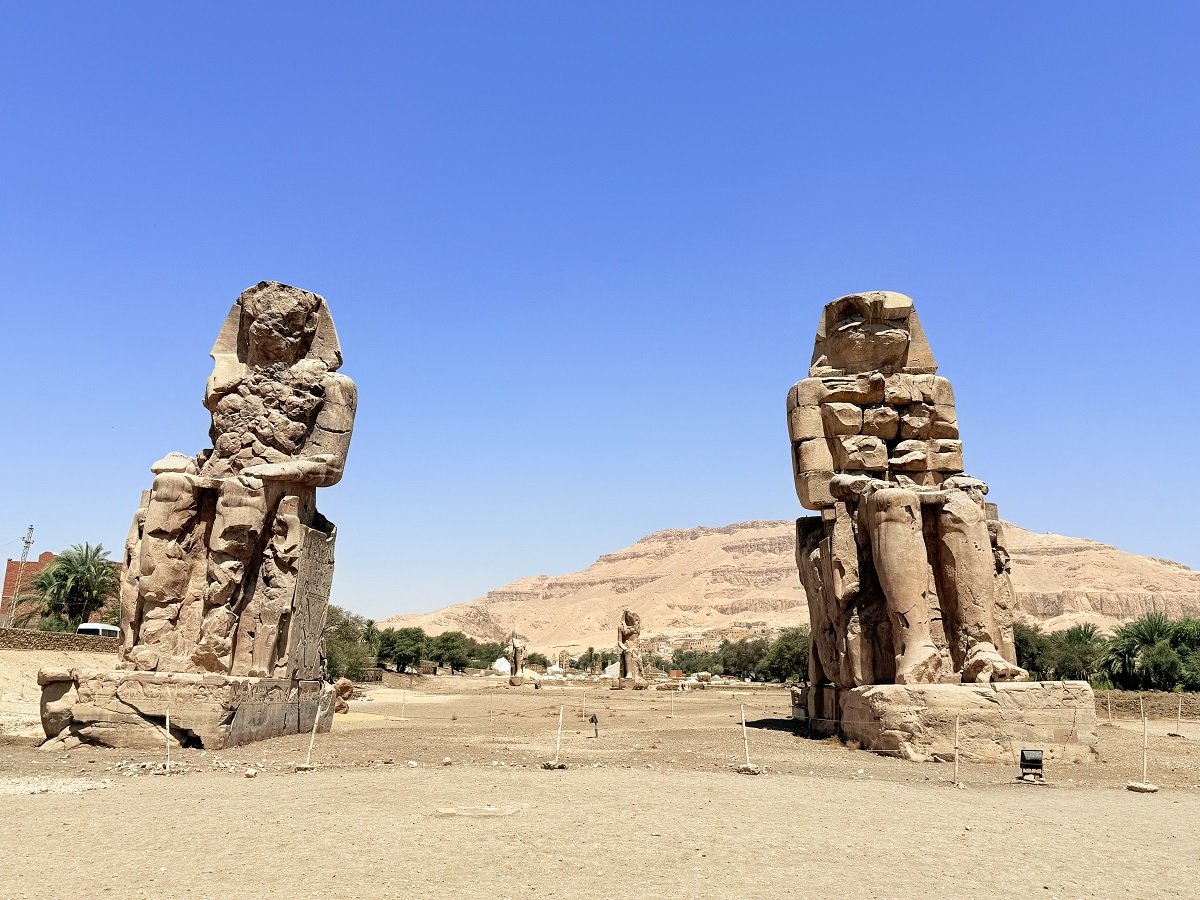
A photo stop at the Colossi of Memnon on the way back — ten minutes, no ticket. All that survives of what was once the largest mortuary temple on the west bank.
Back aboard for lunch as the ship leaves Luxor and sails south through the Esna Lock. Be on deck for the lock: ships queue to transit, and traders in rowing boats throw galabeyas up to the sundeck and haggle by shouting. Overnight moored at Edfu.
Optional experience available: Sunrise Hot Air Balloon Ride over Luxor
Meals Included: Breakfast, Lunch & Dinner
Horse-drawn carriages run the two kilometres from the mooring to the Temple of Horus. Go early: the courtyard is at its best before the sun is high, and the other ships arrive at the same hour you do.
Edfu is the most completely preserved temple in Egypt, roof intact and both pylons standing, because it spent centuries buried in silt with a village built on top of it. The black granite falcon at the entrance is the one everybody photographs. Inside, look for the small side room that served as the temple library, with its catalogue of holy books carved into the wall, and the nilometer in the outer corridor. The walls carry the full script of the annual sacred drama in which Horus defeats Seth — effectively a play text, preserved because nobody could get at it to deface it.
Back by carriage, then a few hours of sailing to Kom Ombo, where the temple sits directly above the bank and you walk up from the gangway. It is a double temple split precisely down its axis, Sobek the crocodile god on one side and Horus the Elder on the other, with two sanctuaries, two sets of doors, two of everything. The calendar on the rear wall lists the festival days; there is a deep circular nilometer beside the forecourt; and the Crocodile Museum next door holds mummified crocodiles recovered from the site.
Sailing on to Aswan after the visit. Overnight moored at Aswan.
Meals Included: Breakfast, Lunch & Dinner
The day the extra night pays for. Aswan gets a proper morning rather than the compressed arrival the 3-night gives it.
The Aswan High Dam first, finished in 1970 after a decade of building. It ended the Nile’s annual flood, generates a large share of Egypt’s power, and created Lake Nasser behind it — roughly 500 kilometres of water, which drowned Nubia and forced the international rescue campaign that cut Abu Simbel into blocks and moved it up the cliff.
The Temple of Philae was rescued by the same campaign, and needs a ten-minute motorboat crossing to reach on Agilkia Island, where it was rebuilt. It is worth knowing what you are standing in: this was the last working temple of the old religion anywhere in Egypt. The final hieroglyphic inscription ever carved was cut here in 394 AD, and the sanctuary stayed open until Justinian closed it in the sixth century. The Christians who took it over carved crosses into the hypostyle hall — they are still there, next to the reliefs of Isis.
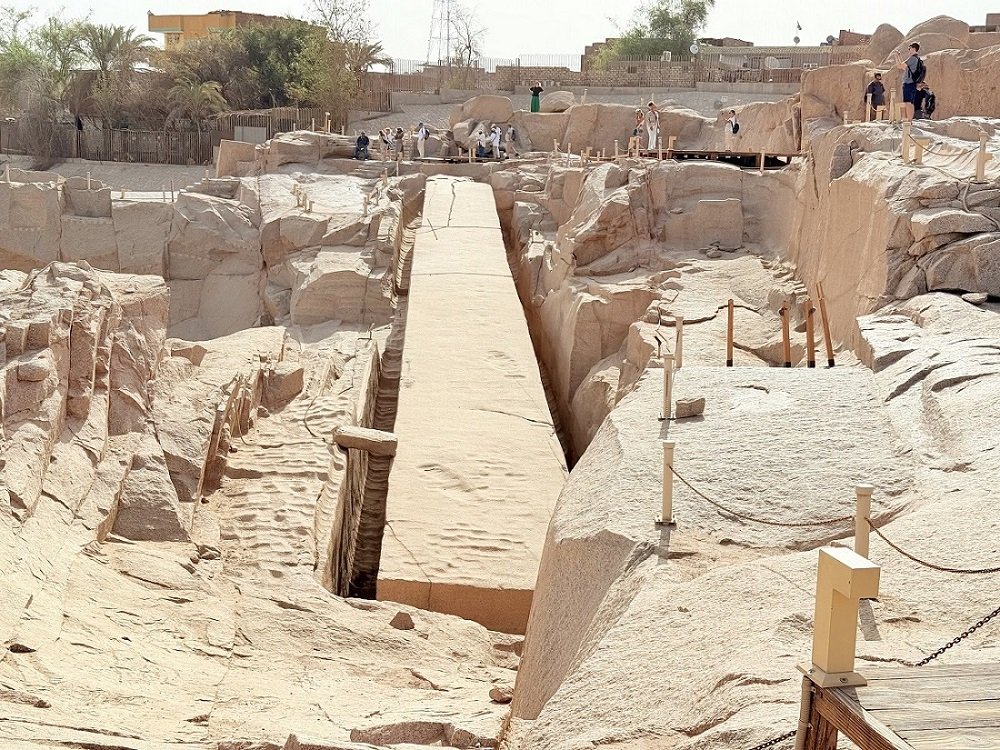
Then the granite quarry holding the Unfinished Obelisk, abandoned mid-cut when the stone cracked. Had it been finished it would have stood nearly 42 metres and weighed something over a thousand tonnes, larger than any obelisk ever raised. Because it was left in the bedrock, it is the clearest evidence anywhere of how the work was actually done.
Afternoon free on board or in town. Final evening moored at Aswan.
Optional experience available: Nubian Village Tour
Meals Included: Breakfast, Lunch & Dinner
Breakfast aboard, then disembark and transfer to Aswan airport, the railway station, or your hotel.
If you are staying on in Aswan, Abu Simbel is the obvious addition — about three hours by road each way, leaving before dawn, and the single most impressive thing in the south. Tell us when you book and we will arrange it around your onward flight.
Meals Included: Breakfast
An early start, deliberately — the west bank is unshaded and hot by mid-morning.
The Valley of the Kings holds more than sixty tombs cut over five centuries. Your ticket covers three, and which three depends on the rotation: the authorities close and reopen tombs to manage humidity, because breath and sweat are what destroy the paint. Your guide will pick based on what is open and what is quiet. Tutankhamun, Seti I and Ramses V/VI are ticketed separately at the gate. With a week you can afford Seti I, which is the deepest and best-decorated tomb in the valley and worth the extra on its own.
Then the Temple of Hatshepsut at Deir el-Bahari, three terraces set into the cliff by her steward Senenmut. The middle colonnade carries the reliefs of the expedition she sent to Punt, including the incense trees being carried aboard by their root balls. She had them planted on these terraces; the pits are still there. Hatshepsut ruled around two decades as senior co-ruler alongside her stepson Thutmose III, who long afterwards had her image cut out of the walls.
A ten-minute photo stop at the Colossi of Memnon, then back aboard for lunch as the ship leaves Luxor and sails south through the Esna Lock. Worth being on deck for — ships queue to transit, and traders in rowing boats throw galabeyas up to the sundeck. Overnight moored at Edfu.
Optional, before breakfast: sunrise balloon flight over the west bank.
Meals Included: Breakfast, Lunch & Dinner
Horse-drawn carriages run the two kilometres from the mooring to the Temple of Horus, early, before the sun is high.
Edfu survived intact — roof on, both pylons standing — because it lay buried in silt with a village on top until the 1860s. The granite falcon at the entrance is the photograph everyone takes. Inside, ask your guide for the temple library with its catalogue of books carved into the wall, and for the walls carrying the script of the sacred drama in which Horus defeats Seth. It is effectively a preserved play text, which exists nowhere else in this condition.
A few hours’ sailing to Kom Ombo, where the temple stands directly above the bank and you walk up from the gangway. A double temple, split down its axis: Sobek the crocodile god on one side, Horus the Elder on the other, two sanctuaries, two of everything. The calendar is on the rear wall, there is a deep circular nilometer beside the forecourt, and the Crocodile Museum next door holds mummified crocodiles from the site.
Sailing on to Aswan, where the ship stays for the next three nights.
Meals Included: Breakfast, Lunch & Dinner
The Aswan High Dam first, finished in 1970. It ended the annual flood, generates a large share of Egypt’s power, and created Lake Nasser — about 500 kilometres of water that drowned Nubia and triggered the rescue campaign that cut Abu Simbel into blocks and lifted it up the cliff.
The Temple of Philae was saved by the same campaign and rebuilt on Agilkia Island, reached by a ten-minute motorboat crossing. This was the last working temple of the old religion in Egypt: the final hieroglyphic inscription ever carved was cut here in 394 AD, and the sanctuary stayed open until Justinian shut it in the sixth century. The Christians who converted it carved crosses into the hypostyle hall, still visible beside the reliefs of Isis.
Then the granite quarry holding the Unfinished Obelisk, abandoned mid-cut when the stone split. Finished, it would have stood nearly 42 metres and weighed over a thousand tonnes — bigger than any obelisk ever raised. Because it was never freed from the bedrock, it shows the method more clearly than any standing obelisk can.
Afternoon free on board. Moored at Aswan.
Optional experience available: Nubian Village Tour in Aswan
Meals Included: Breakfast, Lunch & Dinner
Nothing scheduled. The ship stays at its mooring in Aswan all day, and this is the day the 7-night exists for.
The obvious use of it is Abu Simbel — about three hours by road each way, leaving before dawn, back by mid-afternoon. Ramses II cut both temples into the cliff face, and the entire complex was sawn into blocks and reassembled sixty-five metres higher when the lake rose. Twice a year, in late February and late October, the sunrise reaches the full length of the great temple and lights the statues in the sanctuary. On a shorter sailing this trip has to be squeezed in; here it has a whole day to itself.
If you would rather stay in Aswan, it is the most pleasant city on the river to do nothing in. A felucca around Elephantine Island and Kitchener’s Island takes a couple of hours under sail. The Nubian villages on the west bank are bright blue and genuinely lived in rather than staged. The souk is the best in Upper Egypt for spices. And the terrace of the Old Cataract hotel, above the cataract itself, is worth the price of a drink for the view alone.
Meals Included: Breakfast, Lunch & Dinner
A sailing day with nothing on it.
The ship leaves Aswan and works back north, calling at Kom Ombo to land the guests who are joining for the shorter legs. You have already been, so you have the run of a mostly empty ship for a couple of hours — which, if you have ever wanted a sundeck to yourself, is the best two hours of the week.
The stretch between Kom Ombo and Edfu is the part of the river people remember. Sugarcane and banana plantations to the water’s edge, water buffalo, kids swimming off the bank, ferries crossing under sail. There is no commentary and nothing to see that needs explaining; that is the appeal.
Overnight moored at Edfu.
Meals Included: Breakfast, Lunch & Dinner
The new guests go ashore to Edfu in the morning. You have the ship to yourself again until it sails.
North through the Esna Lock to Luxor, arriving in the afternoon for the east bank — the two sites the outbound leg did not cover.
Karnak is not one temple but around a hundred hectares of them, built and rebuilt across roughly 1,500 years by some thirty rulers, with work still going under the Ptolemies. The Great Hypostyle Hall is the part nobody is prepared for: 134 columns in sixteen rows, the central twelve standing about 21 metres, carved and once painted from base to architrave. Hatshepsut’s obelisk is just under 30 metres, the tallest still standing anywhere in Egypt. Walk to the sacred lake at the back — it is the only place you can see the whole complex at once.
Then Luxor Temple, three kilometres south, in the last hour of light. Amenhotep III built the core and Ramses II added the pylon and the colossi. It has never stopped being used: a 13th-century mosque still holds services high in the courtyard, at the level the sand had reached when it was built, and a Roman chapel has frescoes painted straight over the pharaonic reliefs. The Avenue of Sphinxes runs from here back to Karnak, excavated end to end — the processional road for the Opet festival, when Amun’s statue made the journey between the two.
Final night aboard, moored at Luxor.
Meals Included: Breakfast, Lunch & Dinner
Breakfast aboard, then disembark and transfer to Luxor airport, the railway station, or your hotel.
If you are continuing in Egypt, the natural additions from Luxor are Dendera and Abydos to the north, or a flight to Cairo for the pyramids and the Grand Egyptian Museum. Tell us when you book and we will build it around the cruise.
Meals Included: Breakfast