11 Day Solo Nile Cruise from Luxor to Cairo

0
Price
From$7,600
Full Name*
Email Address*
Nationality*
Mobile Number
Arrival Date*
No. of Adults ( +11.99 years )*
No. of Children
Additional Notes
* I agree with Terms of Service and Privacy Statement.
Please agree to all the terms and conditions before proceeding to the next step
Save To Wish List

Adding item to wishlist requires an account

174

Get a Question?

Do not hesitate to give us a call or WhatsApp.

+20-155-1580-786

info@egyptbestvacations.com

  • Duration11 Days / 10 Nights
  • AvailabilityUpon Request
  • PickupLuxor Airport
  • Tour TypeSmall group
    (max 16 people)

Overview

The River Nobody Else Sails

Almost every Nile cruise sold in the world covers the same 200 kilometres between Luxor and Aswan. This one goes the other way, and it goes much further.

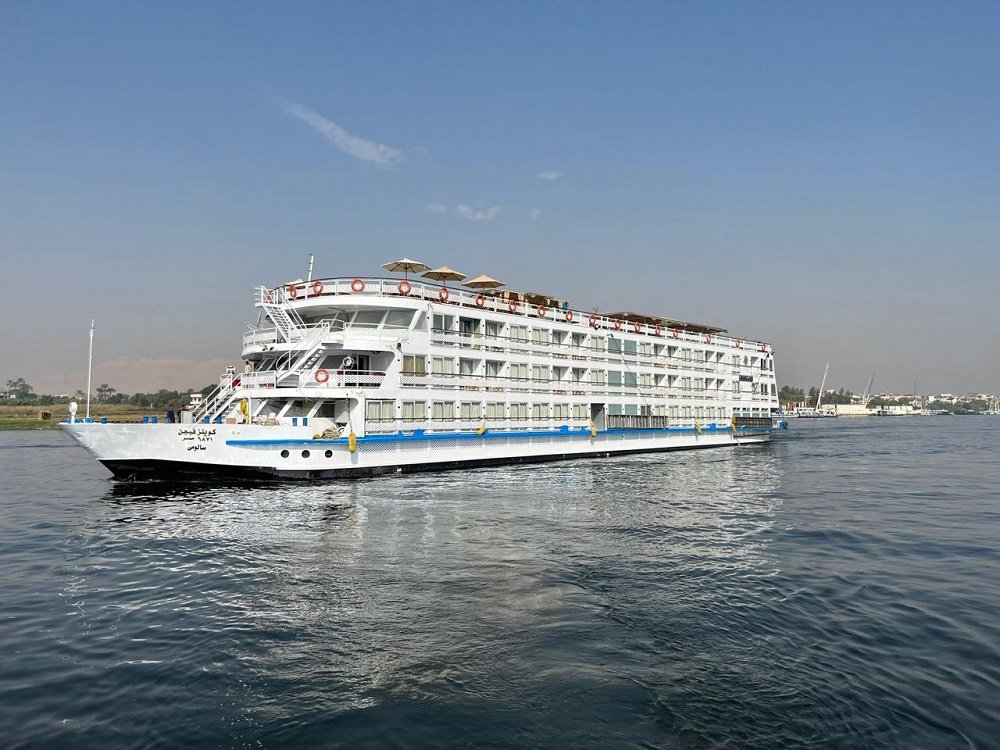
solo Nile cruise Luxor to Cairo runs ten nights downstream through Middle Egypt — the stretch north of Luxor that tour buses do not reach and that almost no cruise ship can navigate, because the locks and bridges between Luxor and Cairo rule out most of the fleet. The result is a route with genuine scarcity behind it: Dendera, Abydos, Tell el-Amarna, Ashmunein, Tuna el-Gebel and Beni Hasan, then Coptic Cairo and Giza at the end of it.

These are not lesser sites. Abydos holds the finest relief carving that survives anywhere in Egypt. Dendera has the best-preserved temple ceiling in the country. Amarna is the only purpose-built royal city Egypt ever raised and abandoned inside twenty years. They are simply hard to reach, which is why you will often have them nearly to yourself.

The solo part is not a marketing label. You get your own cabin for all ten nights, and the price you see is what one person pays — there is no single supplement layered on top, which is the charge that makes most cruises punishing to book alone. You travel in a small group with an Egyptologist, so there are people to eat with and talk to, but the cabin door closes behind you at the end of the day.

One honest note before you read further. This is a fixed-departure product. The long route runs a handful of times a year rather than weekly, and the sailings fill months ahead. If your dates are firm, tell us early.

Please keep in mind that slight changes might occur due to circumstances beyond our control.

Tour Highlights

  • Ten nights sailing the full navigable Nile from Luxor to Cairo, a stretch most cruise ships cannot enter and most travellers never see
  • Your own cabin throughout, with no single supplement — the price is what one solo traveller pays
  • The Temple of Seti I at Abydos, whose painted raised relief is the finest surviving anywhere in Egypt, and the Osireion behind it
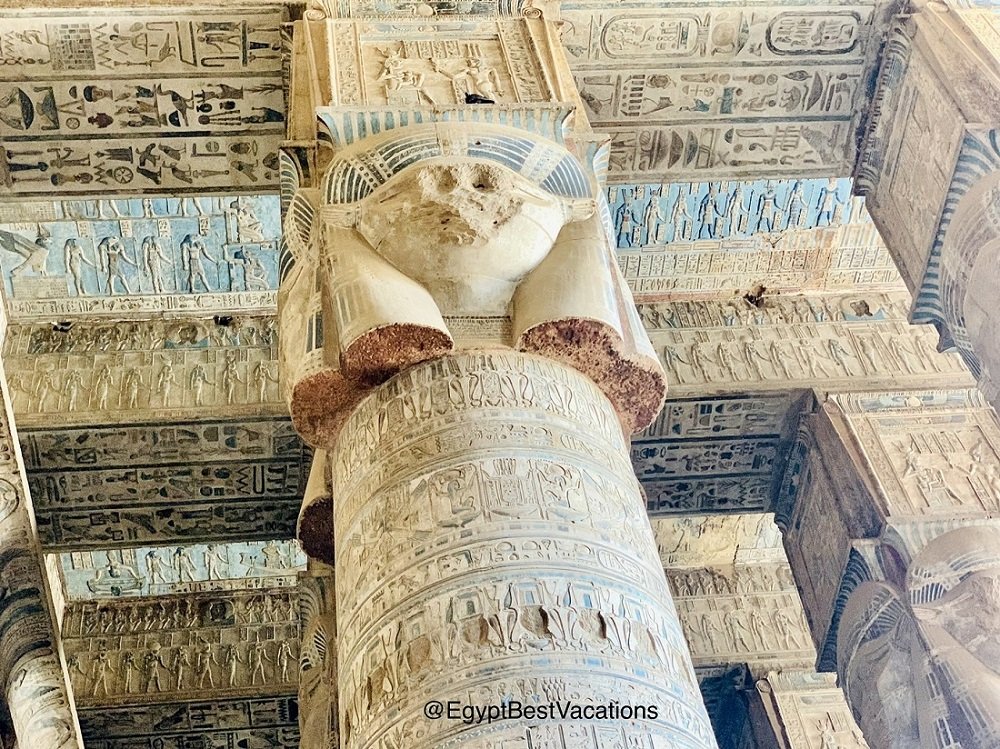
  • The Temple of Hathor at Dendera, with the best-preserved astronomical ceiling in the country and its colour still on the stone
  • Tell el-Amarna, the city Akhenaten built from nothing for a single god and abandoned within a generation
  • The Middle Kingdom tombs at Beni Hasan, painted with wrestling, weaving and hunting rather than gods
  • The Valley of the Kings, Deir el-Bahari, Karnak and Luxor Temple before you sail north
  • The Giza pyramid field and the Sphinx at the end of the river, reached the way the stone itself arrived

Tour Itinerary

Day 1 Arrive in Luxor and Board

Your Egypt Best Vacations representative meets you inside the arrivals terminal at Luxor International Airport, holding a signboard, and stays with you through passport and visa formalities. A short transfer takes you to the ship, where you board, find your cabin and meet the others travelling with you.

Lunch and dinner are on board. Overnight moored at Luxor.

Meals: lunch and dinner

Day 2Valley of the Kings, Deir El-Bahari and the Colossi

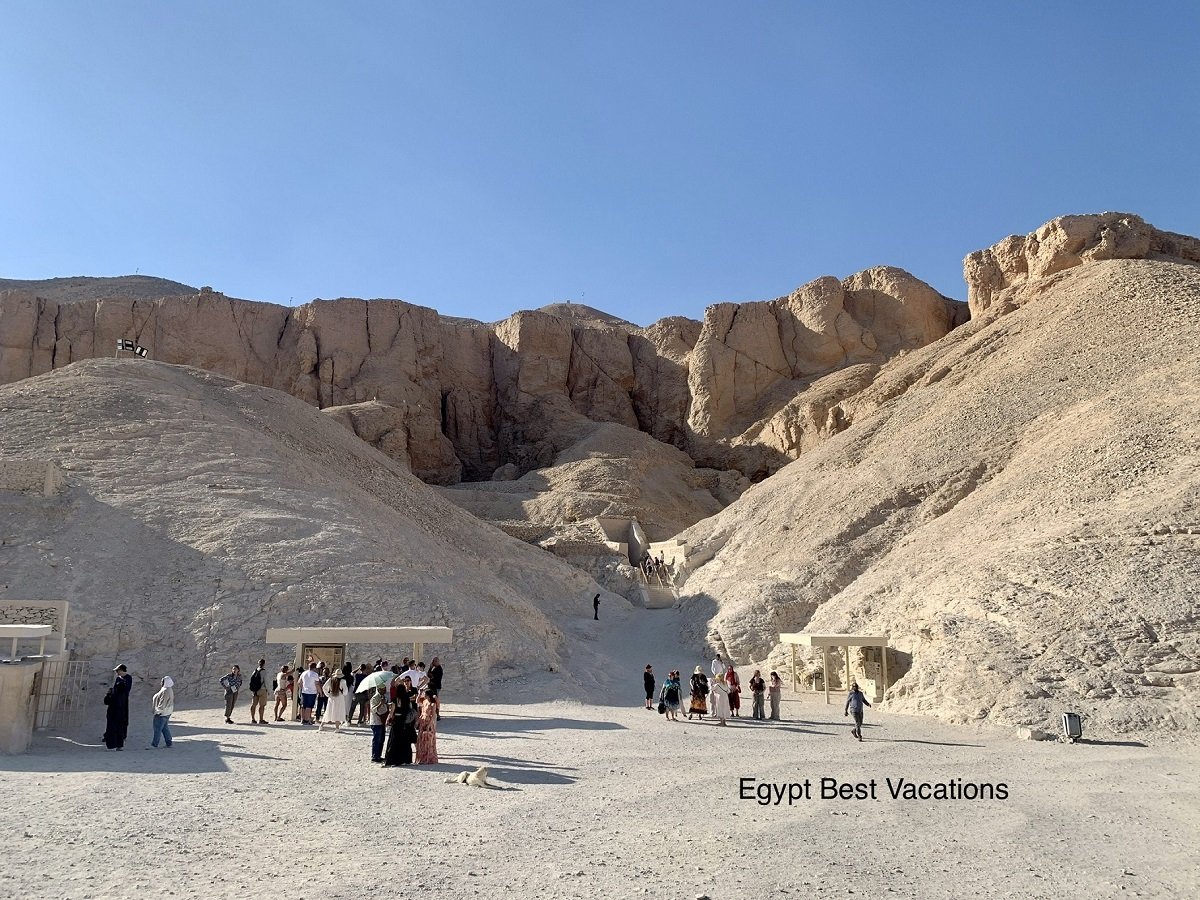
Cross to the west bank for the Valley of the Kings, where the New Kingdom pharaohs gave up pyramids for tombs cut deep into the rock beneath el-Qurn, the natural pyramid that dominates the valley. Your ticket admits you to three tombs. The painted ceilings and the underworld texts running along the corridor walls are the reason to come, and your Egyptologist will read them for you rather than leaving you to guess.

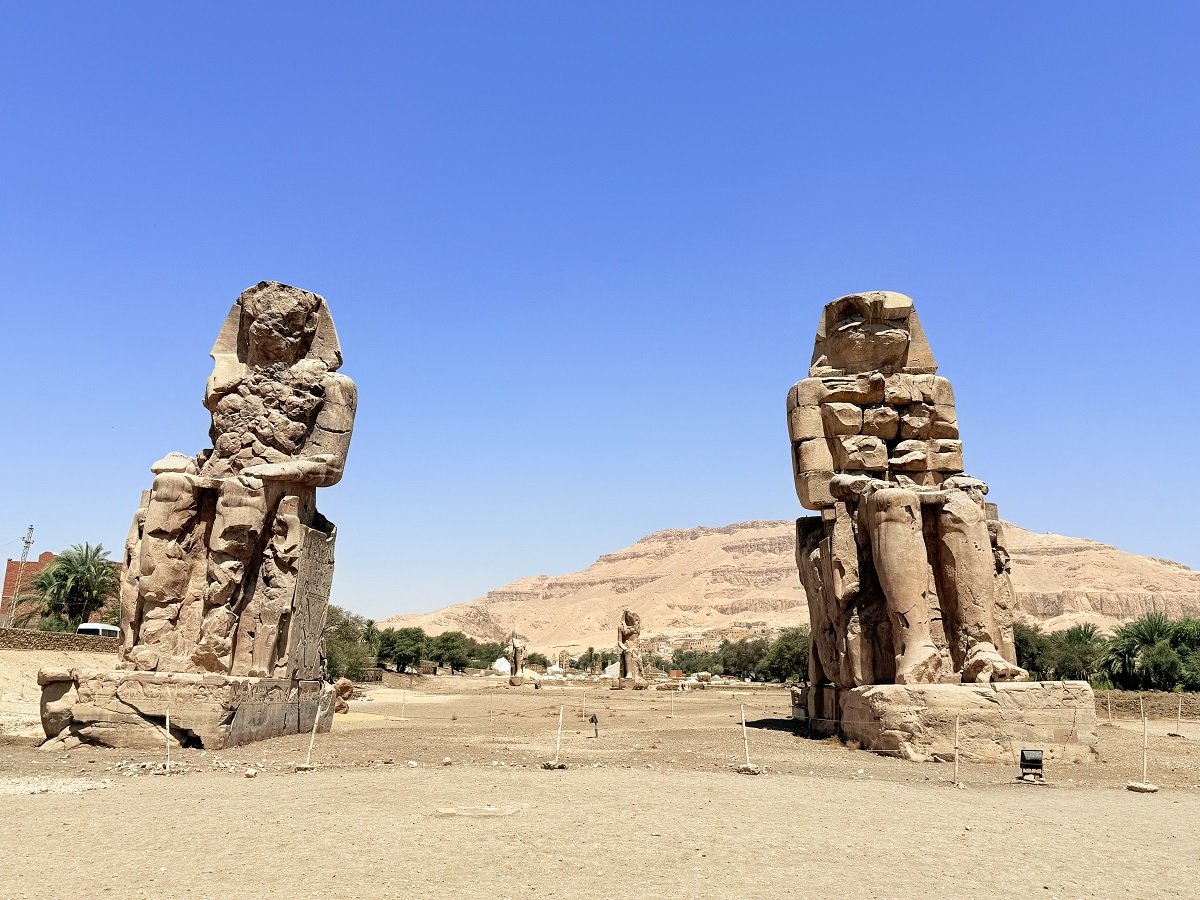
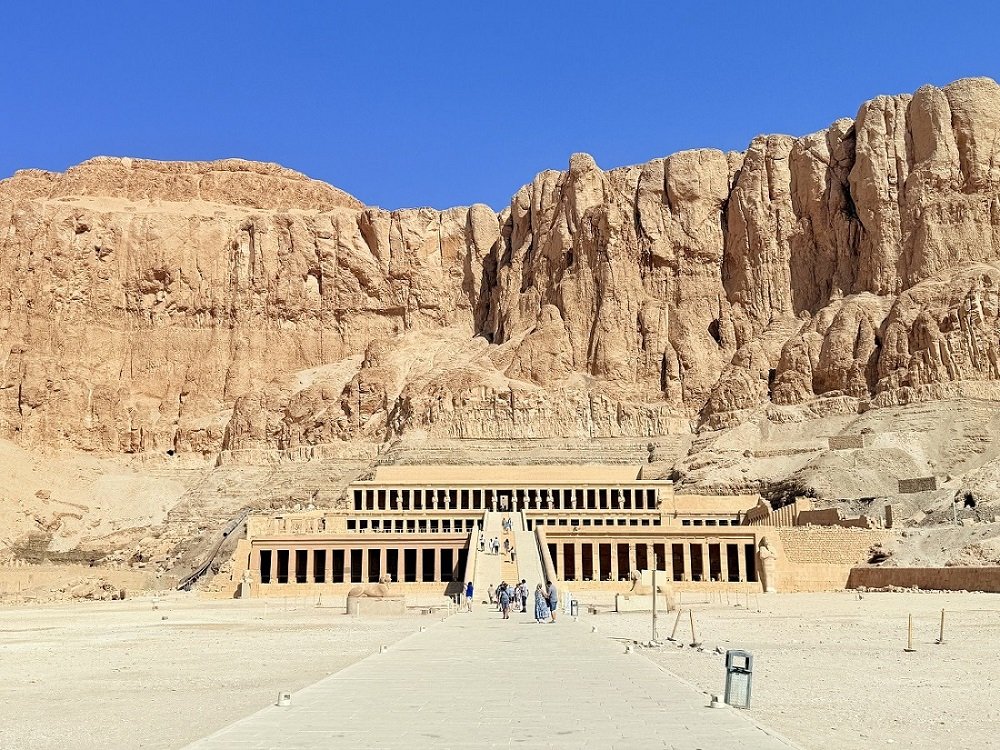
Then Deir el-Bahari, the terraced temple of Hatshepsut built against the cliff. She ruled as senior co-ruler alongside her nephew Thutmose III for around twenty years, and the reliefs recording her trading expedition to Punt survive on the middle colonnade. Finish at the Colossi of Memnon, two seated statues of Amenhotep III and all that stands above ground of what was once the largest temple on the west bank.

Back on board for a free evening moored at Luxor.

Optional: Sunrise hot air balloon over the west bank

Meals: breakfast, lunch and dinner

Day 3Karnak and Luxor Temple

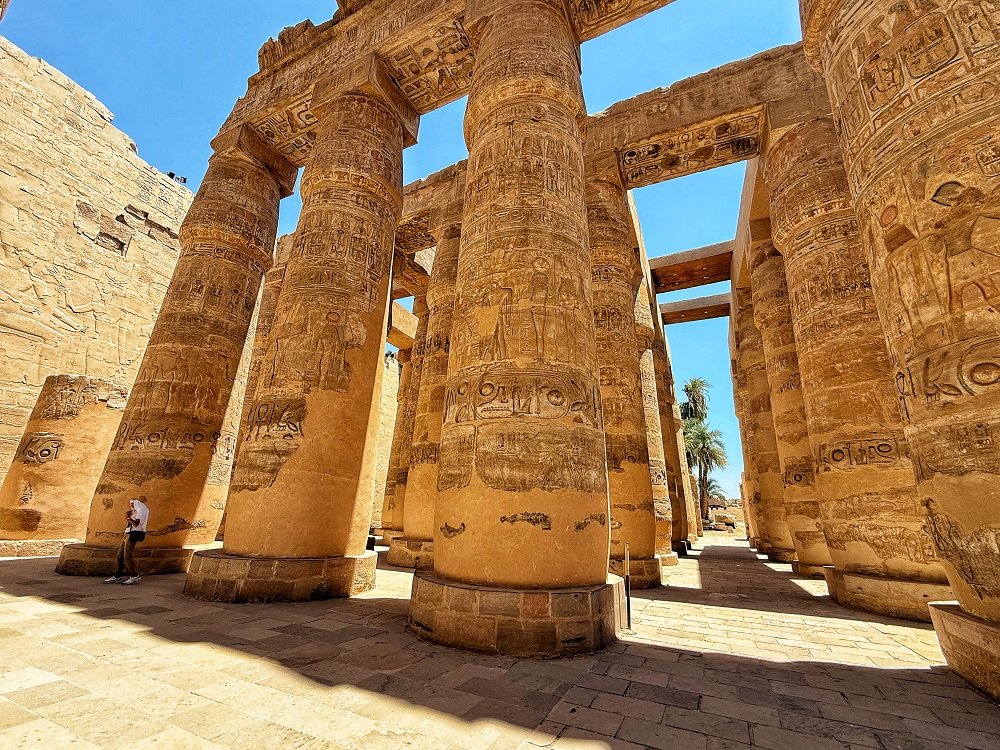
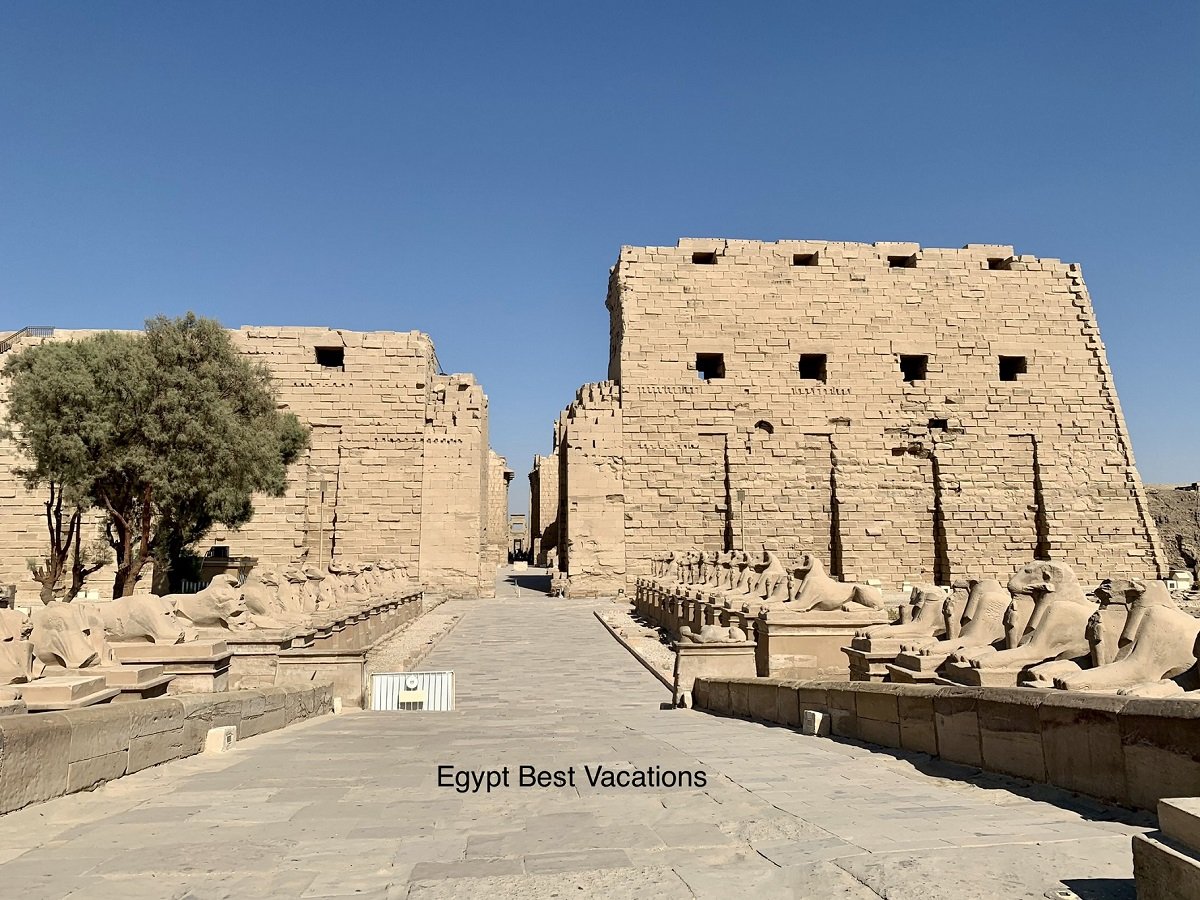
The east bank today, starting at Karnak. Around a hundred hectares of pylons, courts, sanctuaries and processional ways, built and rebuilt across some two thousand years from the Middle Kingdom through to the Ptolemies — the largest temple complex in Egypt, and the chief sanctuary of Amun-Re through the whole of the New Kingdom. The hypostyle hall alone carries one hundred and thirty-four columns.

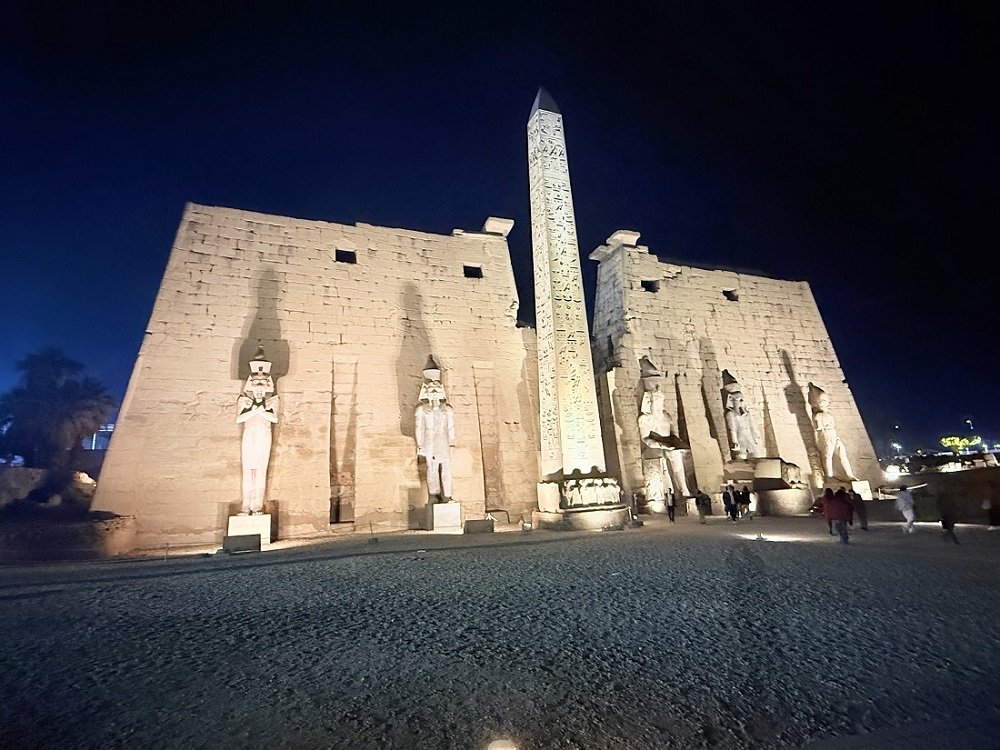
Then Luxor Temple, begun under Amenhotep III in the Eighteenth Dynasty and extended by Ramesses II two centuries later, connected to Karnak by the avenue of sphinxes that has now been cleared along its full length. It is the better temple to see late, when the floodlights are on.

Final evening moored at Luxor before the ship turns north.

Meals: breakfast, lunch and dinner

Day 4Sail to Qena for Dendera

The ship casts off and heads downstream. From here you are on the river almost nobody sails.

At Qena, the Temple of Hathor at Dendera. The standing building is Ptolemaic and Roman, finished under emperors whose names are cut into the walls in hieroglyphs, though the site itself was sacred as far back as Pepi I in the Old Kingdom. What makes it extraordinary is the ceiling: cleaned over the last two decades, the paint has come back an astonishing blue and gold, and the astronomical panels showing the sky goddess Nut swallowing and rebirthing the sun are the best-preserved of their kind in Egypt. The crypts and the roof chapels are open, and the Roman-era mammisi stands in the forecourt.

Overnight moored at Qena.

Meals: breakfast, lunch and dinner

Day 5Abydos, Then on to Sohag

A drive inland from El-Balyana to Abydos, which for most Egyptologists is the single best temple in Egypt, and the one that justifies the whole route.

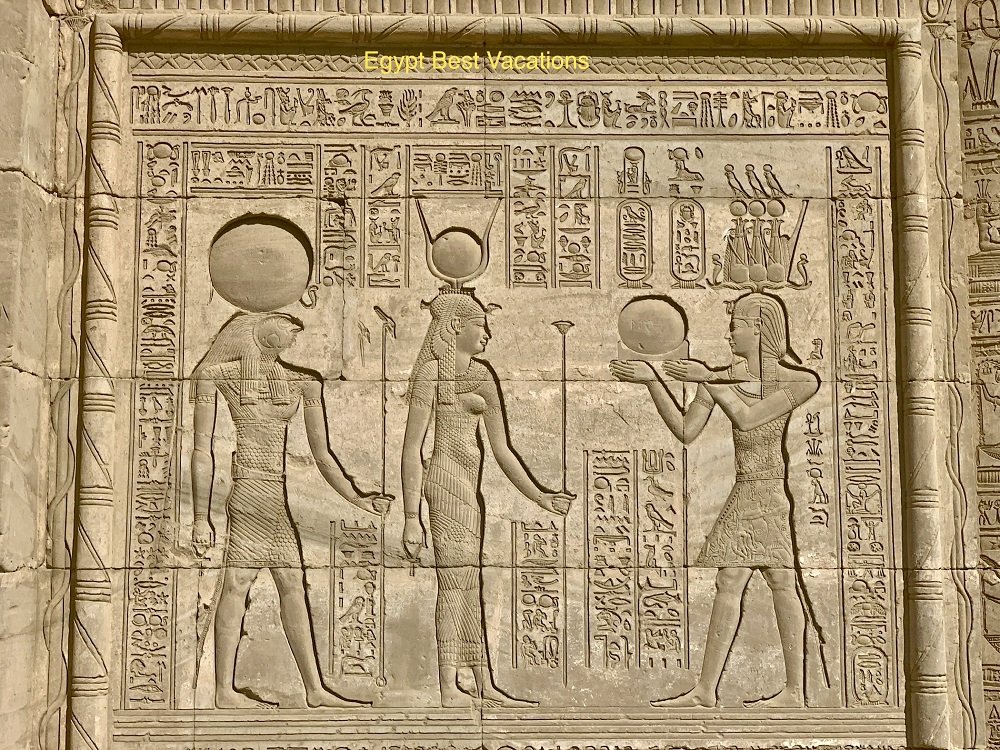
The Temple of Seti I is unusual before you even enter — L-shaped rather than rectangular, with seven doorways leading to seven sanctuaries for Osiris, Isis, Horus, Amun-Re, Ra-Horakhty, Ptah and the deified Seti himself. Inside is the reason people come: painted raised relief of a delicacy that survives nowhere else, cut in the reign of a king who wanted to be seen restoring what Akhenaten had torn down. The Abydos King List runs along one corridor, seventy-six cartouches naming the kings Seti chose to acknowledge — with the Amarna rulers pointedly missing.

Behind the temple is the Osireion, a massive megalithic structure built below the water table and reached by a descending passage, laid out as the symbolic tomb of Osiris.

Back aboard and on to Sohag. Overnight there.

Meals: breakfast, lunch and dinner

Day 6A Day on the River

Nothing scheduled today, and that is deliberate.

The ship sails north through Middle Egypt: sugar cane and date palm along both banks, water buffalo in the shallows, brick kilns, ferries, children who will wave at you for as long as you are in sight. This is the stretch nineteenth-century travellers wrote about and the one no road journey shows you, because the road runs well back from the water.

Use the sun deck, sleep, read the ship’s library, or sit with your Egyptologist and ask the questions the site visits never leave time for. Overnight moored near Tell el-Amarna.

Meals: breakfast, lunch and dinner

Day 7 Tell El-Amarna, Ashmunein and Tuna El-Gebel

Amarna is the strangest site in Egypt, and the most revealing.

Akhenaten founded it on empty desert in the fifth year of his reign, on ground he said belonged to no god before — a purpose-built capital for the worship of the Aten alone. The city held perhaps thirty thousand people. Within about four years of his death the court had gone back to Thebes and the place was abandoned, then quarried for stone. What survives is the ground plan of a whole Egyptian city, which exists nowhere else, and the rock-cut tombs of the officials in the cliffs, carved in the distorted Amarna style with the king’s family under the rays of the sun disc.

Then Ashmunein, Greek Hermopolis Magna, cult centre of Thoth: two colossal baboon statues of Amenhotep III still stand there, and the ruins of an early Christian basilica raised from the columns of a Ptolemaic temple.

Finish at Tuna el-Gebel, the necropolis, where the tomb-chapel of Petosiris carries reliefs in a hybrid Egyptian-Greek style, and the catacombs hold the mummified ibises and baboons buried in Thoth’s honour by the hundred thousand.

Sail on to El-Minya. Overnight there.

Meals: breakfast, lunch and dinner

Day 8Beni Hasan, Then on to Beni Suef

The rock-cut tombs at Beni Hasan belong to the Middle Kingdom nomarchs — the provincial governors of the Oryx nome, the sixteenth of Upper Egypt — and they are painted with something you will not see in a royal tomb.

Instead of gods and underworld texts, the walls show daily life: wrestlers in more than two hundred paired positions, weavers, potters, hunters in the desert, and the much-argued-over procession of Asiatic traders arriving with eye paint, a scene that has been used to date contact between Egypt and the Levant for a century and a half. Four tombs are open, cut with bronze chisels to a standard that still looks improbable up close.

Back aboard and on to Beni Suef. Overnight there.

Meals: breakfast, lunch and dinner

Day 9Arrive in Cairo — Coptic Cairo

The ship reaches Cairo, which after eight days of villages and cane fields is a genuine shock.

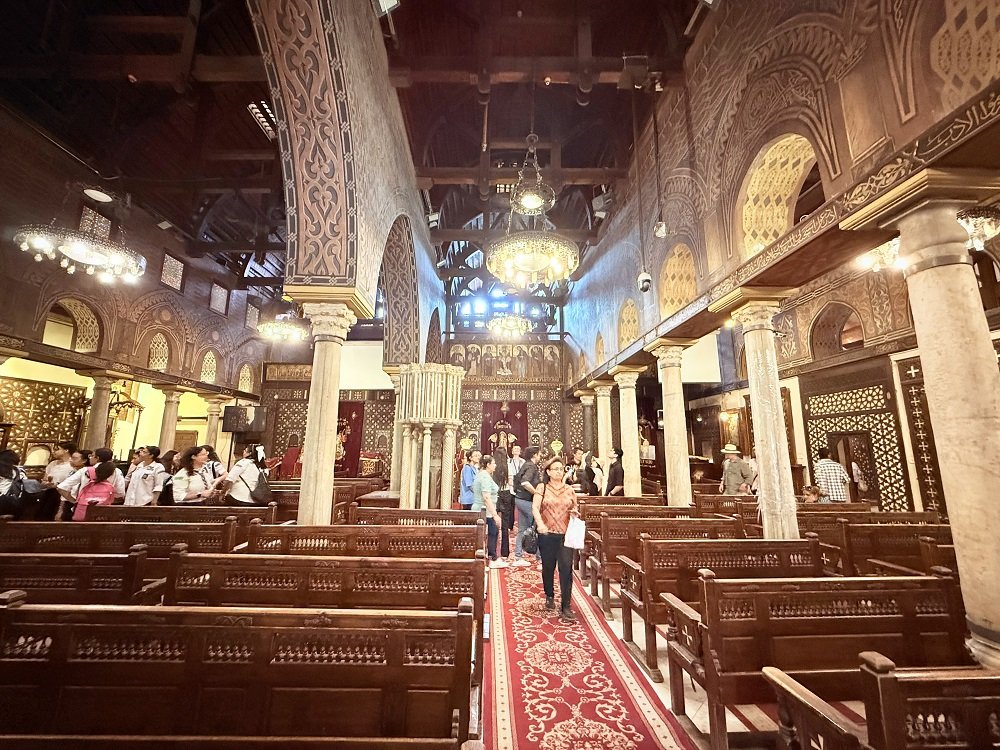
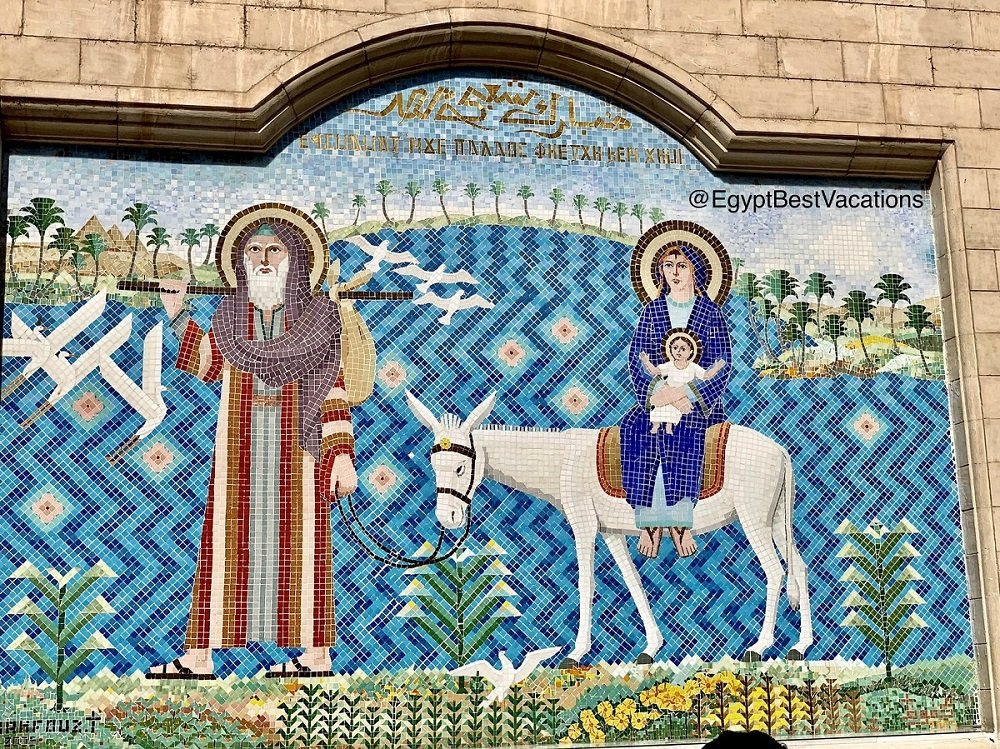
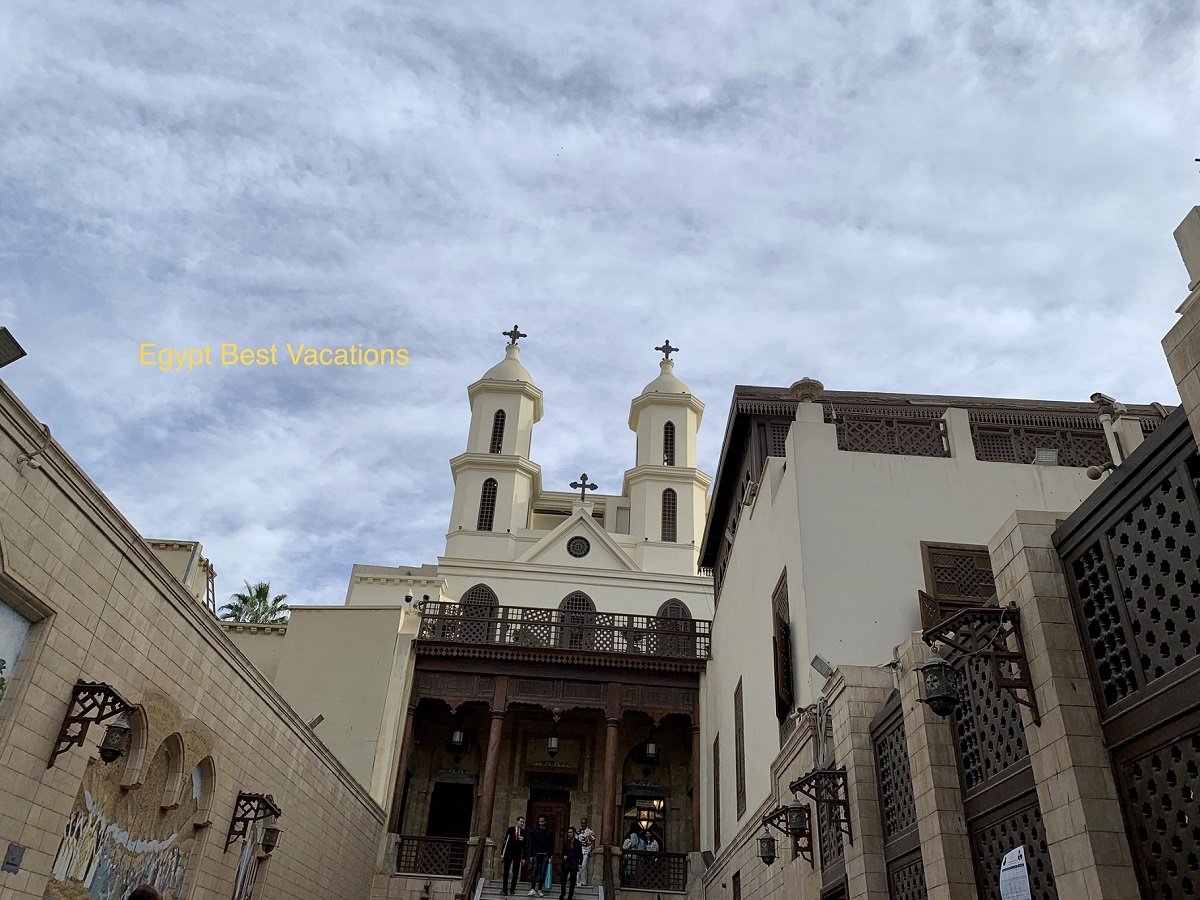
Ashore for Coptic Cairo, inside the walls of the Roman fortress of Babylon. The Hanging Church, founded in the third century and rebuilt from the seventh, is suspended over the fortress gatehouse — hence the name, and hence the glass floor panel that lets you look down through it. Abu Serga stands above the crypt where tradition places the Holy Family’s refuge during the flight into Egypt. The Ben Ezra Synagogue, a few steps further, is where the Cairo Geniza was found in the 1890s: a sealed store of nearly three hundred thousand medieval manuscripts that rewrote what historians knew about Mediterranean trade, law and daily life.

Back aboard for the evening, moored in Cairo.

Meals: breakfast, lunch and dinner

Day 10Giza Pyramids, the Sphinx and the Grand Egyptian Museum

The last full day, and the one every other Egypt itinerary starts with. Arriving at Giza by river after nine days of Middle Egypt puts it in an order that makes sense.

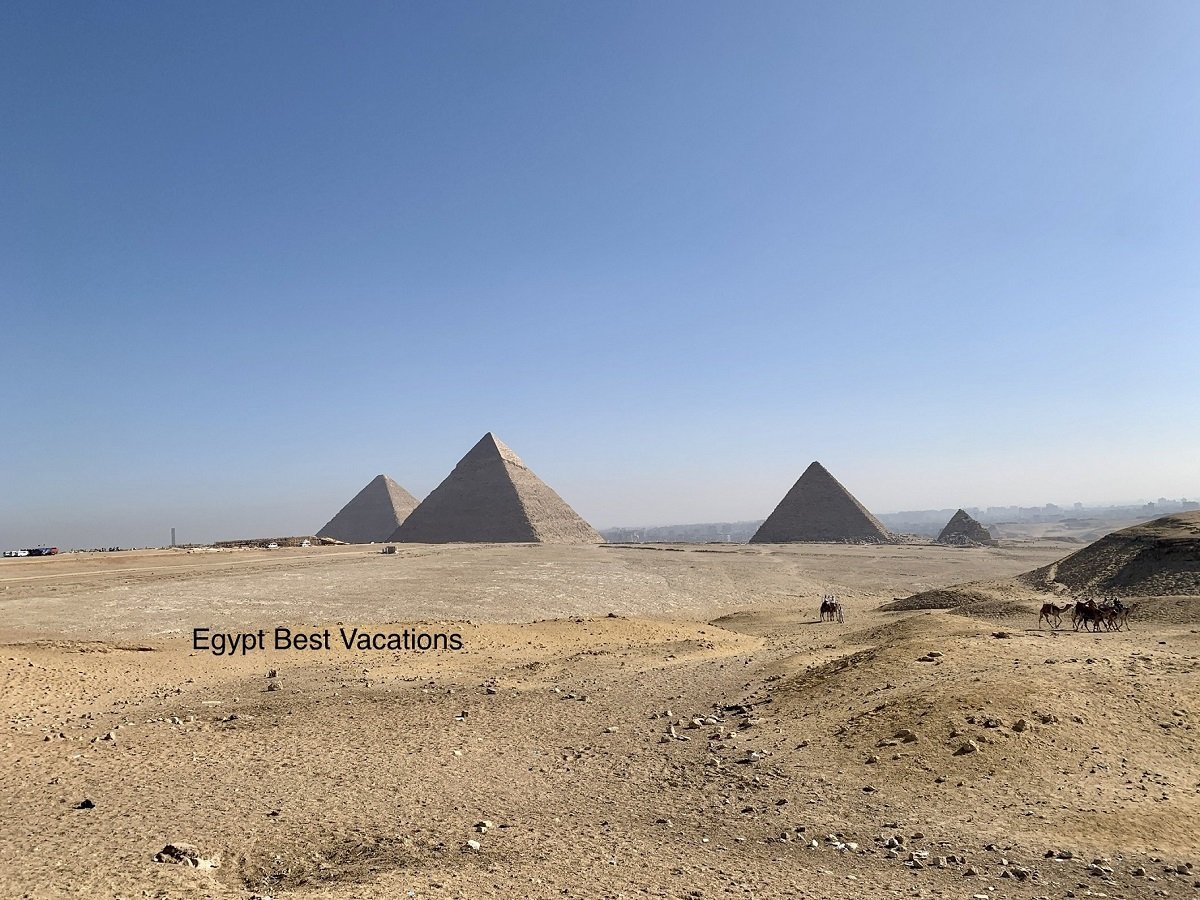
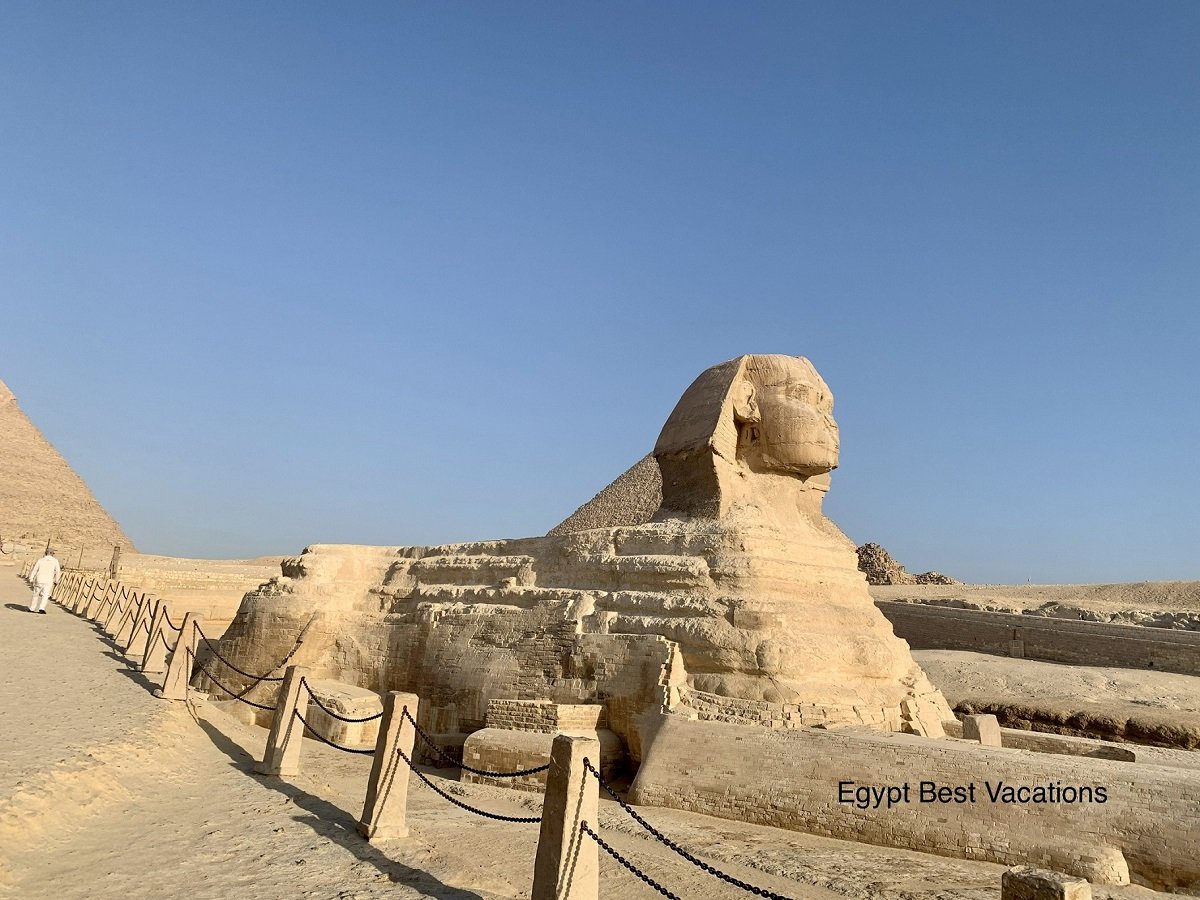
The pyramids of Khufu, Khafre and Menkaure went up within roughly eighty years of each other in the Fourth Dynasty, and Khufu’s is the only one of the seven wonders of the ancient world still standing. Your Egyptologist will show you where the casing survives near Khafre’s apex, why the three differ in size, and what the boat pits and queens’ pyramids were for. Then the Sphinx, cut from a single outcrop of bedrock left behind when Khufu’s builders quarried the plateau.

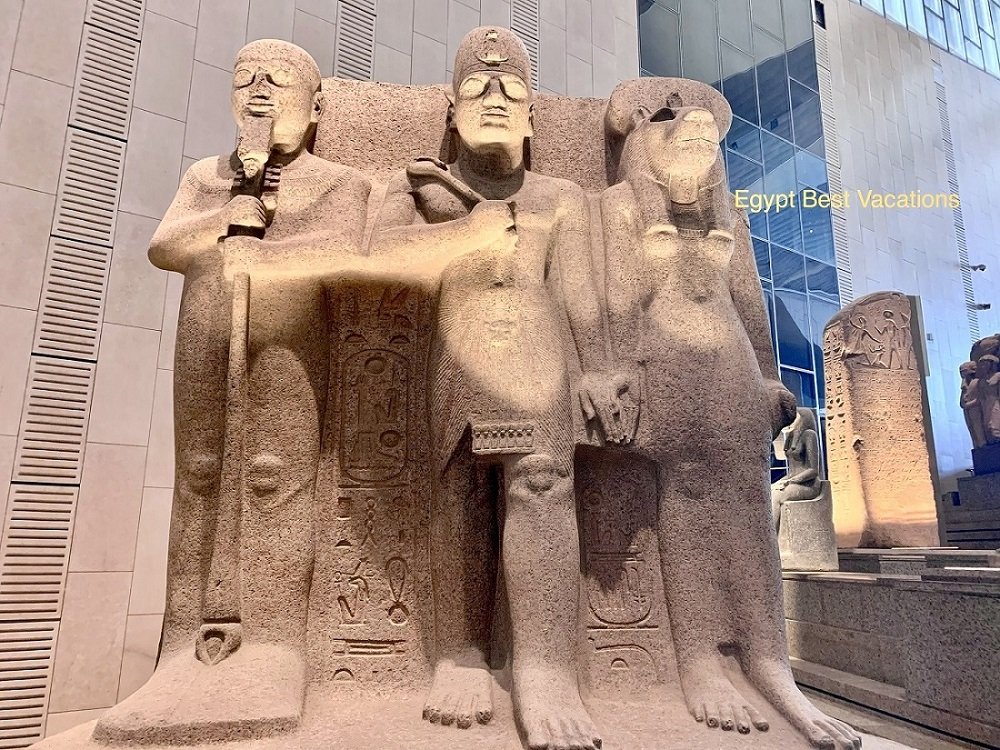
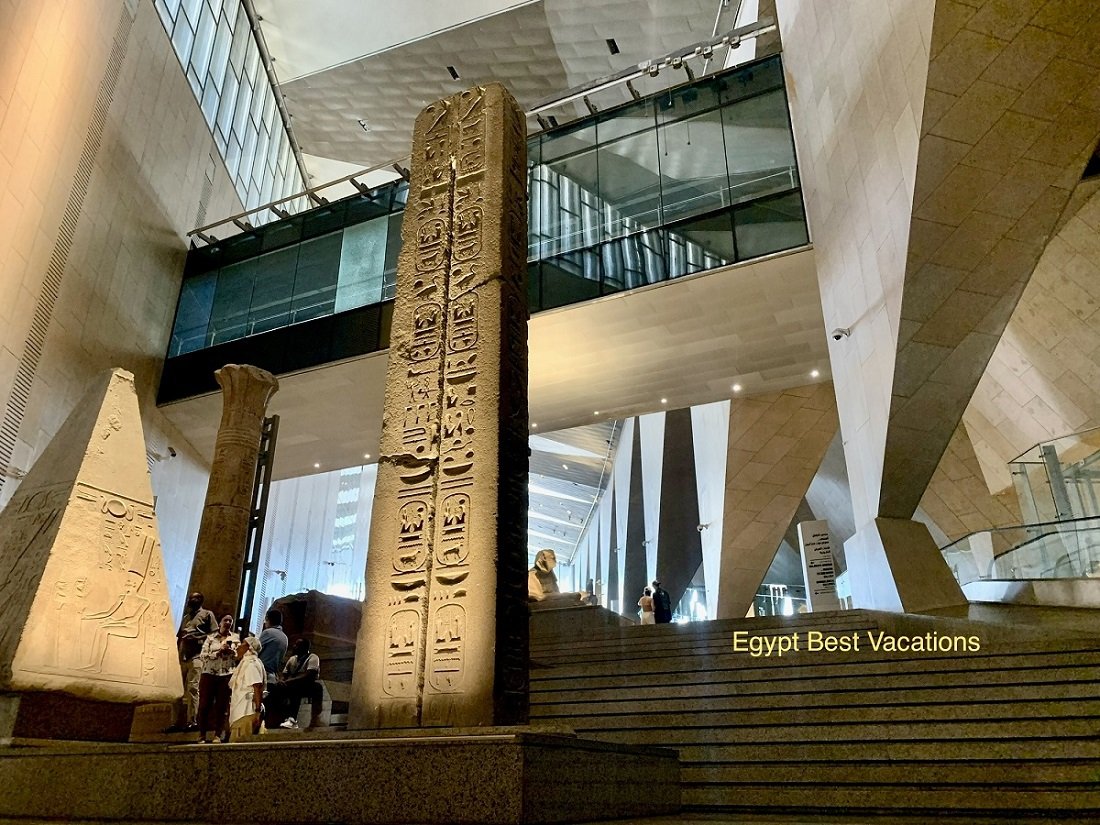
Lunch, then the Grand Egyptian Museum, where your guide puts the whole river you have just sailed into one room. Admire the complete collection of Tutankhamun in one single hall. 

Final night aboard, moored in Cairo.

Optional: Going inside the Great Pyramid

Meals: breakfast, lunch and dinner

Day 11 Disembark and Depart

Breakfast on board, then disembark and transfer to Cairo International Airport for your flight home.

You will have covered close to eight hundred kilometres of river and about three thousand years of it. Most people who do this route come back for the Western Desert oases or Abu Simbel and Lake Nasser — tell us when you are ready.

Meals: breakfast

Price Per Season & Ship Category

All prices are in US dollars, per solo traveller, for sole occupancy of a cabin for ten nights. There is no single supplement.

The long Nile route does not operate all year. Water levels, lock maintenance and summer heat close the river to these ships for roughly half the calendar, so sailings run in two windows: late winter into spring, and early autumn.

Season Standard Deluxe Ultra Deluxe Luxury
1 Feb – 25 March $7,600 $8,800 $11,000 $13,500
26 March – 10 April $8,500 $10,000 $12,500 $15,500
11 April – 10 May $7,600 $8,800 $11,000 $13,500
10 September – 16 November $8,000 $9,300 $11,500 $14,000

Standard is a 3.5 star by US and European standards, Deluxe a 4 star, Ultra Deluxe a 4.5 star and Luxury a 5 star. Egyptian ship licensing is more generous than the system you know at home, so we publish the honest equivalent alongside it.

Not operating: 17 November to 31 January, and 11 May to 9 September. For around 198 days of the year these ships do not sail the route at all.

Every price includes ten nights full board, all guided tours and entrance fees in the itinerary, all transfers, and a licensed Egyptologist throughout. Because only a small number of vessels can pass the locks and bridges between Luxor and Cairo, not every category runs on every departure — ask us which ships are scheduled for your dates.

Price Includes

  • Meet and assist by an Egypt Best Vacations representative inside the arrivals terminal at Luxor Airport
  • All transfers by air-conditioned vehicle as per the itinerary
  • 10 nights aboard your chosen Nile cruise ship on a full-board basis, in a single cabin for sole occupancy
  • 30 meals: 10 breakfasts, 10 lunches and 10 dinners
  • All guided tours and sites as per the itinerary
  • All entrance fees as per the itinerary
  • Licensed English speaking Egyptologist guide throughout
  • All service charges and local taxes

Price Excludes

  • International & domestic flights
  • Arrival visa
  • Gratuities
  • Drinks
  • Any optional tour
  • Travel insurance

Things to Know

Pricing Policy

All prices are in US dollars, per person, per trip, for sole occupancy of a cabin. See the price table on this page for the four ship categories.

There is no single supplement on this tour. The published price is what one solo traveller pays for their own cabin for all ten nights.

We publish an honest Western equivalent alongside every Egyptian ship category, because Egyptian licensing is more generous than the system you know at home and almost every Nile vessel markets itself as five star:

Standard  3.5 star
Deluxe  4 star
Ultra Deluxe  4.5 star
Luxury  5 star

Because very few vessels can navigate the full Luxor to Cairo route, the categories available on any given departure are narrower than on a standard Luxor to Aswan cruise. Ask us what is actually sailing your dates.

Prices vary by season. See the price table on this page for all four categories across the four operating bands.

Payment can be made online through a secure gateway with no surcharge. We accept USD, EUR, GBP, CAD, AUD and NZD.

Departures

This is a fixed-departure product, and the route is closed for around half the year.

Sailings run in two windows only: 1 February to 10 May, and 10 September to 16 November. Outside those dates the ships do not work this route at all — water levels, lock maintenance and summer heat in Middle Egypt rule it out.

  • Operating: 1 February to 10 May
  • Closed: 11 May to 9 September
  • Operating: 10 September to 16 November
  • Closed: 17 November to 31 January

Within the operating windows the long route still runs to a published schedule rather than a weekly pattern, because only a small number of ships can pass the locks and bridges between Luxor and Cairo. Sailings routinely sell out months in advance. Contact us with your dates before booking flights.

Tipping

Tipping is not included in our tour packages and is left entirely to your discretion. While it is not mandatory, it is greatly appreciated by the people who assist you during your journey.

Here is a suggested tipping list:

Driver – full day             $3-5 per person per day.

Driver – transfer           $1-3 per person per day.

Tour guide – full day     $15-20 per person per day.

Tour guide – half day    $10-15 per person per day.

Representative / tour leader    $3-5 per person per day.

Standard & Deluxe Nile cruise crew        $5–10 per person per night paid at the end of the cruise.

Ultra Deluxe & luxury Nile cruise crew        $10–20 per person per night paid at the end of the cruise.

Cancellation Policy

We do not charge cancellation fees for tours canceled due to ‘force majeure’ events such as natural disasters or other uncontrollable circumstances. However, if you cancel for personal or business reasons after we have incurred booking costs on your behalf, these costs will be charged to you.

  • From the date of booking up to 75 days before the date of your arrival, 10% of the total tour price will be charged.
  • Between 74 and 61 days before your arrival date, 25% of the total tour price will be charged.
  • Between 60 and 30 days before your arrival date, 50% of the total tour price will be charged.
  • Between 29 and 15 days before your arrival date, 75% of the total tour price will be charged.
  • Between 14 and 08 days before your arrival date, 90% of the total tour price will be charged.
  • Between 07 and 1 day before your arrival date, 100% of the total tour price will be charged.

Deposit and Payment

A deposit between 25-50% is required to secure your booking through a payment link. The remaining balance will also be paid through payment links.

Travel Insurance

We don’t provide a travel insurance. We recommend to buy it beforehand if you want.

Extra Expenses & Additional Entry Tickets

Our tours do not include entrance fees for special archaeological sites such as:

  • Walking inside the pyramids.
  • Tombs of Seti I and Ramses V in the Valley of the Kings
  • Entering the Tomb of Tutankhamun in the Valley of the Kings in Luxor.

These attractions require an additional fee. Please contact us if you would like to add or adjust anything in your itinerary.

Other personal expenses during your trip may include:

  • Food tours and alcoholic beverages.
  • Tipping for guides, drivers, and hotel staff.
  • Visa fees and recreational activities.
  • Additional transportation.
  • Unexpected costs due to bad weather, flight cancellations, or extra hotel nights and meals.

FAQs

What makes a long Nile cruise different from a normal one?

Route, ships and scarcity.

A standard Nile cruise sails the 200 kilometres between Luxor and Aswan, where the famous temples sit close together. Hundreds of ships work that stretch and it is where every four to seven night cruise goes.

A long Nile cruise sails north of Luxor instead, down through Middle Egypt to Cairo — close to 800 kilometres. There are locks and low bridges on that stretch, and only a small number of vessels in the whole Nile fleet can physically make the passage. The road infrastructure is thin, the coaches do not come, and the sites are correspondingly empty.

That is the trade. You give up Aswan, Philae, Edfu and Kom Ombo. You get Dendera, Abydos, Amarna, Ashmunein, Tuna el-Gebel and Beni Hasan, generally without a crowd in sight.

How often does this cruise depart?

A handful of times a year, on fixed dates, and it is not a weekly service.

Because so few ships can sail the full route, the long cruise runs to a published annual schedule rather than a rolling departure pattern, and sailings routinely book out months in advance. Water levels and lock maintenance also shape which months are possible.

Contact us with your target dates and we will tell you what is actually sailing. If your dates are fixed, ask early — this is the one Egypt product where late booking usually means no.

Is this really suitable for someone travelling alone?

It is built for it, in the way that matters financially.

You get your own cabin for all ten nights and the published price is what one person pays. There is no single supplement, which on most cruises adds anywhere from 50 to 100 per cent to a solo booking and is the single biggest reason people give up on cruising alone.

Socially, it works because the group is small and the format is communal by nature — meals on board, a shared Egyptologist, the same faces on the sun deck for ten days. Solo travellers on this route tend to be curious, well-read and travelling alone by choice rather than by accident. You are not going to be the only one.

And when you have had enough of company, you close your cabin door.

Which ship will I be on?

It depends on the tier you book and on which vessel is scheduled for your departure date.

We publish four ship categories and rate each one honestly against what a Western traveller expects:

Standard — 3.5 star. Deluxe — 4 star. Ultra Deluxe — 4.5 star. Luxury — 5 star.

Egyptian ship licensing is more generous than the system you are used to at home, and almost every Nile vessel markets itself as five star regardless of what is actually on board. We publish the honest calibration instead so that nobody is surprised at the gangplank.

Because so few ships can sail the Luxor to Cairo route, the choice on any given departure is narrower than on a standard cruise. Ask us which vessels are running your dates and we will tell you exactly what is available rather than quoting you a category in the abstract.

What sites does this cruise visit that a standard cruise does not?

Six that matter, and they are the reason to choose this route.

Dendera — the Temple of Hathor, with the best-preserved astronomical ceiling in Egypt, its colour cleaned back over the last twenty years.

Abydos — the Temple of Seti I, holding the finest painted raised relief anywhere in the country, plus the Abydos King List and the Osireion behind it.

Tell el-Amarna — Akhenaten’s purpose-built capital, the only complete ground plan of an Egyptian city that survives.

Ashmunein — Hermopolis Magna, cult centre of Thoth, with the colossal baboons of Amenhotep III.

Tuna el-Gebel — the necropolis, the tomb of Petosiris, and catacombs of mummified ibises and baboons.

Beni Hasan — Middle Kingdom nomarch tombs painted with wrestling, weaving and hunting rather than gods.

How fit do I need to be?

Moderately. This is a walking itinerary rather than a strenuous one, but it is ten days of it.

The tombs at Beni Hasan and Amarna sit above the flood plain and involve a climb — Beni Hasan in particular has a long stepped ascent to the upper cemetery. The Valley of the Kings means ramps and steps down into each tomb. Karnak is a lot of walking on uneven stone. The Osireion at Abydos is reached by a descending passage and is often partly flooded.

Ships have steps between decks and boarding is sometimes across a gangplank rather than a proper quay, and lifts are not standard.

Tell us honestly what you can manage and we will tell you which stops will work and which are better skipped. Nothing on this itinerary is compulsory.

When is the best time to sail this route?

October to April, and the shoulder months at either end are the best of it.

Middle Egypt is hot. From May to September daytime temperatures inland at Amarna and Beni Hasan regularly pass 40°C, and the desert sites there give you almost no shade.

October, November, March and April are the comfortable window — warm on deck, bearable at the tombs, and quieter than the December to February peak. Winter is pleasant during the day but genuinely cold on the water after dark, so bring a jacket.

Departure dates are fixed in any case, so in practice your choice is which of the published sailings suits you rather than which month you fancy.

Do I need a visa for Egypt?

Most nationalities do. A tourist visa on arrival costs $30 and is issued at the airport for a 30-day stay. Your representative helps you with it in the arrivals hall at Luxor on day one.

You can also apply in advance through the official Egyptian e-Visa portal if you would rather have it settled before you fly.

Your passport must be valid for at least six months from your arrival date. Requirements vary by nationality, so check against your own passport before you travel.

Is Wi-Fi available on board?

Usually, and not reliably.

Ships on this route carry Wi-Fi, but Middle Egypt has patchy mobile coverage and the signal drops for long stretches between towns. Expect it to work in Luxor, Minya and Cairo and to be unreliable in between.

An Egyptian SIM or eSIM will do better than the ship’s connection on most of the route. If you need to be genuinely contactable every day, this is worth planning for rather than assuming.

What should I pack?

Layers, and shoes you can climb in.

For the sites: breathable clothes covering shoulders and knees, a hat, sunglasses, high-factor sunscreen, and proper walking shoes rather than sandals — Beni Hasan and Amarna involve rough ground and steps.

For the ship: something warm for evenings on deck from November through February, and soft shoes for indoors. Dress on board is informal throughout.

Also worth having: a torch for the tombs, a refillable water bottle, a universal adapter (Egypt runs 220V on type C and F plugs), medication in its original packaging, and small notes in Egyptian pounds for tips. A pair of binoculars is more useful on this route than on any other Egypt trip, both for the bank and for high tomb ceilings.

Can I book this cruise as a couple or a family instead?

Yes, though this particular page is priced for sole occupancy.

The same sailings take couples and families in twin and double cabins, at a lower per-person rate than the solo price shown here. Triple cabins are available on some vessels but not all — ask before assuming.

Tell us who is travelling and we will quote the correct cabin configuration for the departure you want.

How much walking is there on a typical day?

Between two and four hours of it on a site day, broken up.

A normal pattern is an early start while it is cool, two to three hours at the site with your Egyptologist, back on board for lunch, and the afternoon sailing. Days 6 has no site visit at all, and days 4 and 5 involve a drive inland of thirty to sixty minutes each way.

The itinerary is paced for ten days rather than a sprint, which is one of the advantages of covering this much ground by river instead of by road.

From$7,600
Book Now