Do not hesitate to give us a call or WhatsApp.
+20-155-1580-786
info@egyptbestvacations.com
There is a short window in the Egyptian year when the weather is perfect and the country is celebrating at the same time. An Easter Nile cruise puts you in the middle of it.
The practical case first. Spring on the Nile means clear light, green banks, and temperatures that let you stand in the Valley of the Kings at midday without regretting the decision. By June that same walk is punishing. In January the mornings on deck are cold. Easter sits in the gap.
The better reason is what is happening on shore. The day after Coptic Easter is Sham El-Nessim, a national holiday that predates both Christianity and Islam in Egypt — the name comes from Shamo, the ancient Egyptian harvest season, and the festival goes back to at least the Old Kingdom. Every Egyptian celebrates it, whatever their religion, and they celebrate it outdoors. If you are on the river that week you will pass village after village of families picnicking on the bank with coloured eggs, fesikh and spring onions, doing more or less what people have done along this water for four and a half thousand years. It is the one week of the year when the Nile’s banks look the way the temple reliefs say they should.
Almost no visitor plans for this. Most people booking an Easter Nile cruise are booking around a school holiday and have no idea what they are about to sail through.
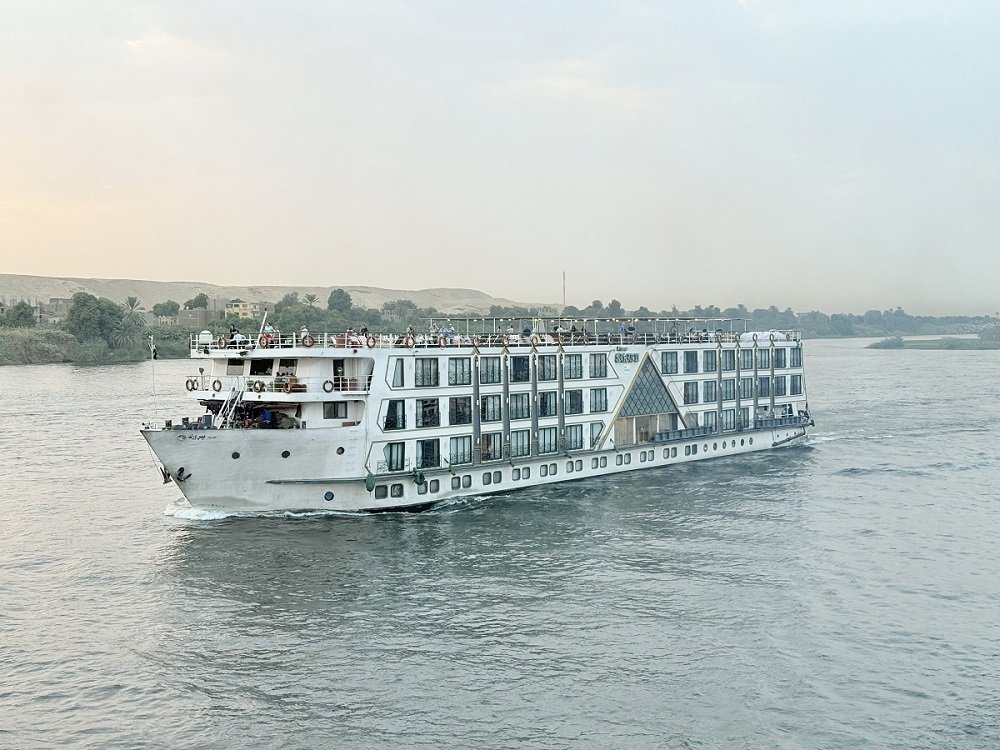
The route itself is the classic one, upstream from Luxor to Aswan — the direction the ancient boats travelled with the north wind behind them. Karnak and Luxor Temple on the first day, the Theban west bank on the second, Edfu and Kom Ombo on the third, Aswan on the fourth. You sail with a licensed Egyptologist and a maximum of sixteen travellers.
Choose from four categories of ship — Standard, Deluxe, Ultra Deluxe and Luxury — in a triple, twin/double or single cabin. The itinerary, the guiding and the sites are identical whichever you pick. What changes is the boat.
Not travelling at Easter? The same route runs year-round as our 4-night Luxor to Aswan Nile cruise.
Your Egypt Best Vacations guide meets you outside the arrivals terminal at Luxor International Airport with a signboard showing your name.
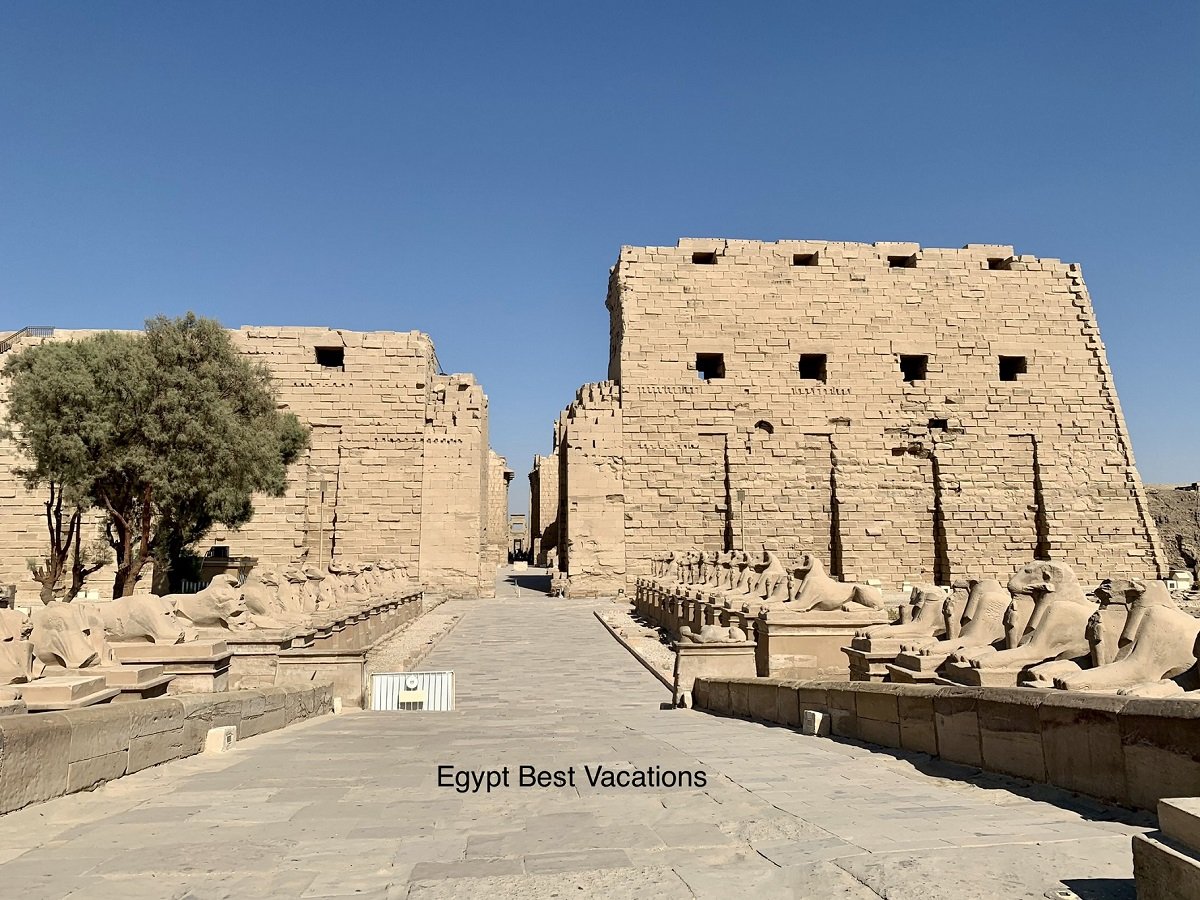
Begin at Karnak — not one temple but the largest religious complex ever built, around 100 hectares, added to by pharaoh after pharaoh for nearly two thousand years. The Great Hypostyle Hall alone holds 134 columns. The precinct is dedicated to the Theban triad: Amun, his consort Mut, and their son Khonsu.
Then Luxor Temple, three kilometres downriver and once joined to Karnak by an avenue of sphinxes, now excavated along its full length. Luxor Temple was where the Opet festival ended each year, when Amun’s statue travelled from Karnak to renew the king’s divine kingship.
Transfer to your ship and spend the night moored at Luxor.
Optional: Karnak sound and light show
Meals: Lunch & Dinner
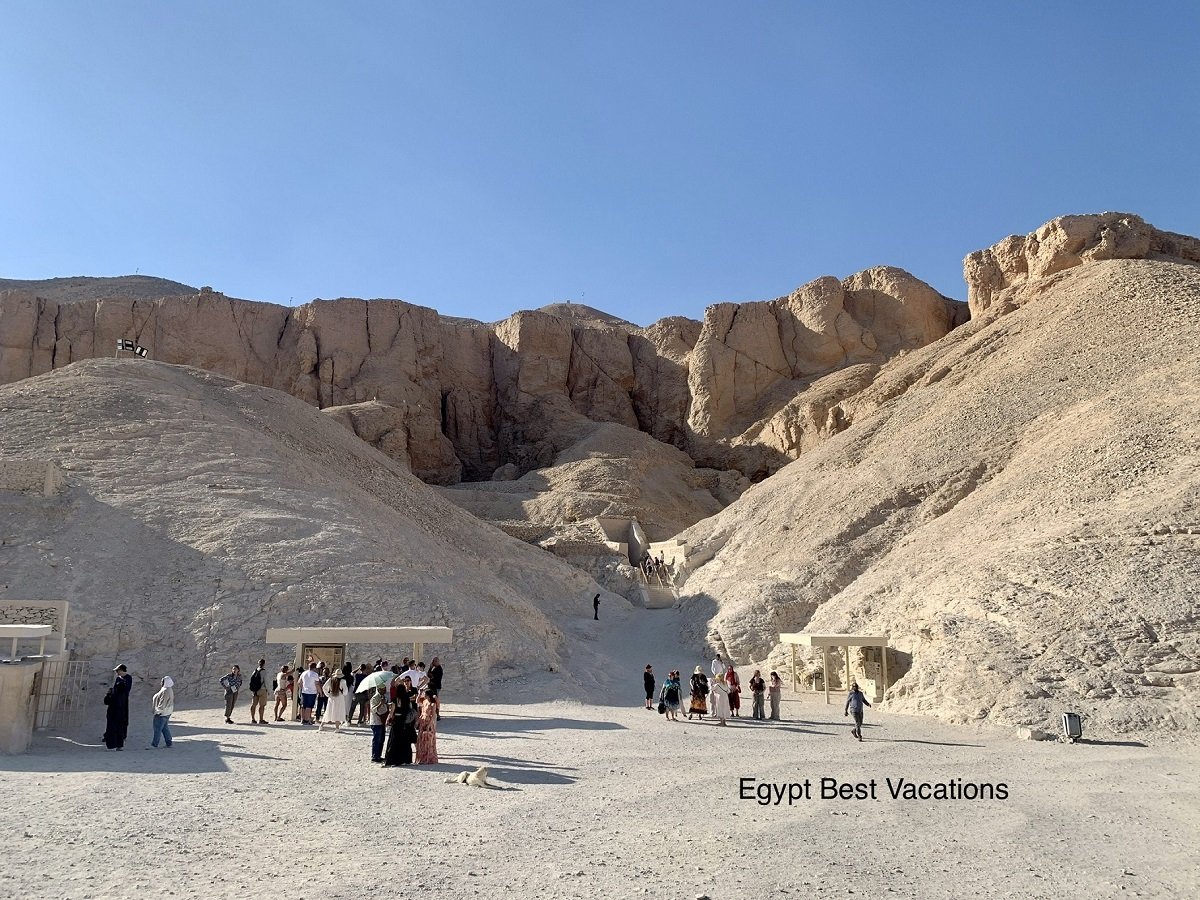
Cross to the west bank and the Valley of the Kings. From the New Kingdom onward, pharaohs stopped building pyramids — which advertised exactly where the treasure was — and cut their tombs deep into the rock of a remote valley instead. There are 65 numbered tombs here. A rotating handful are open, and your guide will steer you to the best three on the day.
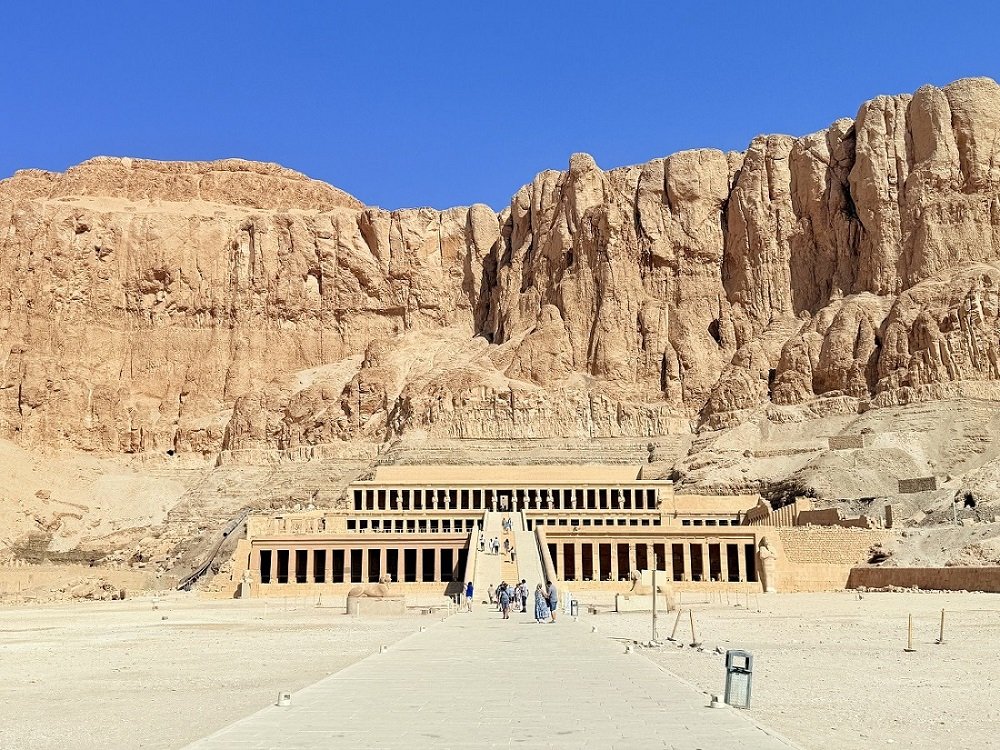
Next, the temple of Hatshepsut at Deir el-Bahari, terraced into the cliff face in three colonnaded tiers. Hatshepsut began as regent for Thutmose III and went on to rule as a crowned king in full pharaonic regalia, with his regnal years still running alongside hers. Her reliefs here record the trading expedition she sent south to Punt, complete with the incense trees they brought back.
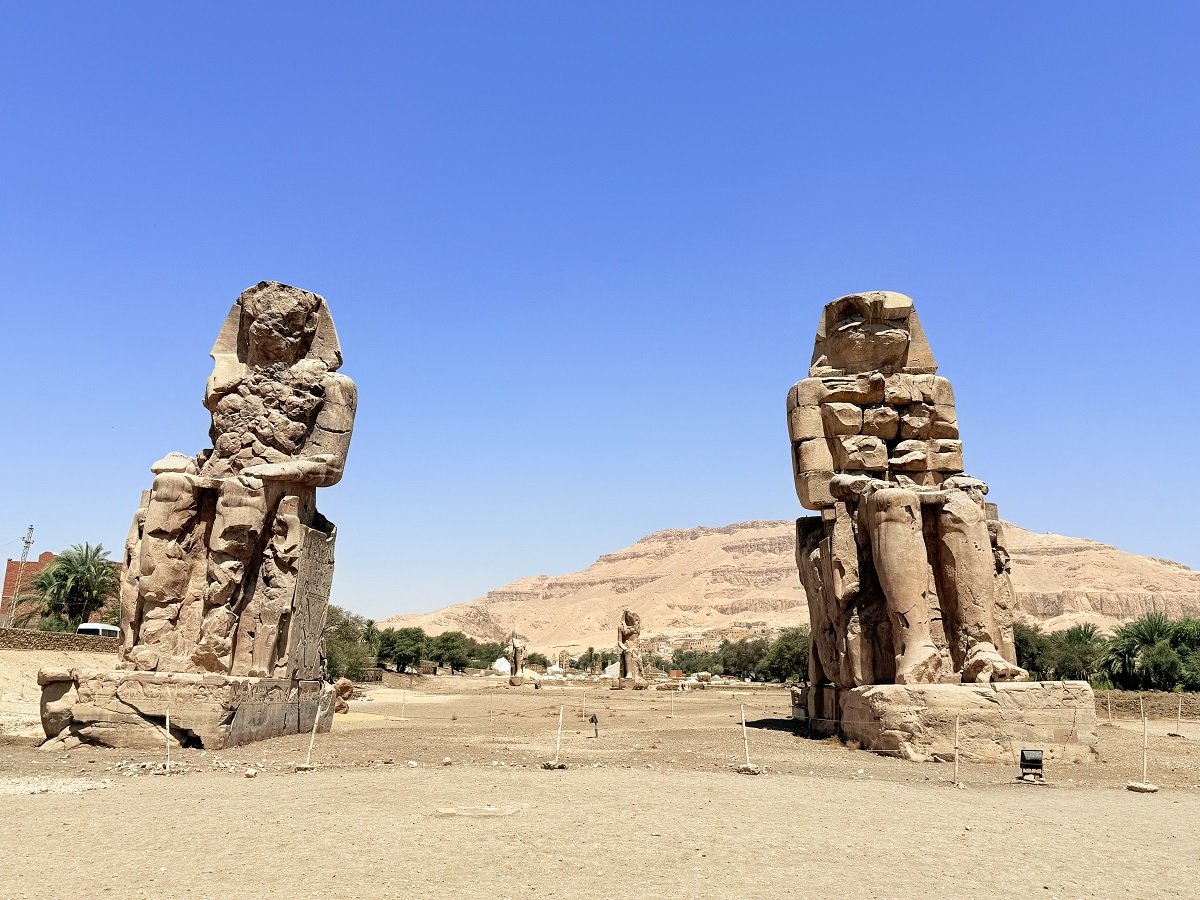
On the way out you pass the Colossi of Memnon, two seated statues of Amenhotep III that once flanked the entrance to his mortuary temple — the largest ever built in Egypt, and now almost entirely gone.
Back aboard, the ship sails south, passing through the Esna lock in the afternoon. Overnight at Edfu.
Optional: sunrise hot air balloon over Luxor
Meals: Breakfast, Lunch & Dinner
After breakfast, take a horse and carriage from the mooring to the Temple of Horus at Edfu. It is the most completely preserved temple in Egypt — Ptolemaic, built between 237 and 57 BC over a period of 180 years, and inscribed inside and out. Its walls carry the fullest surviving account of the myth of Horus and Seth, and of the rituals performed daily in an Egyptian temple.
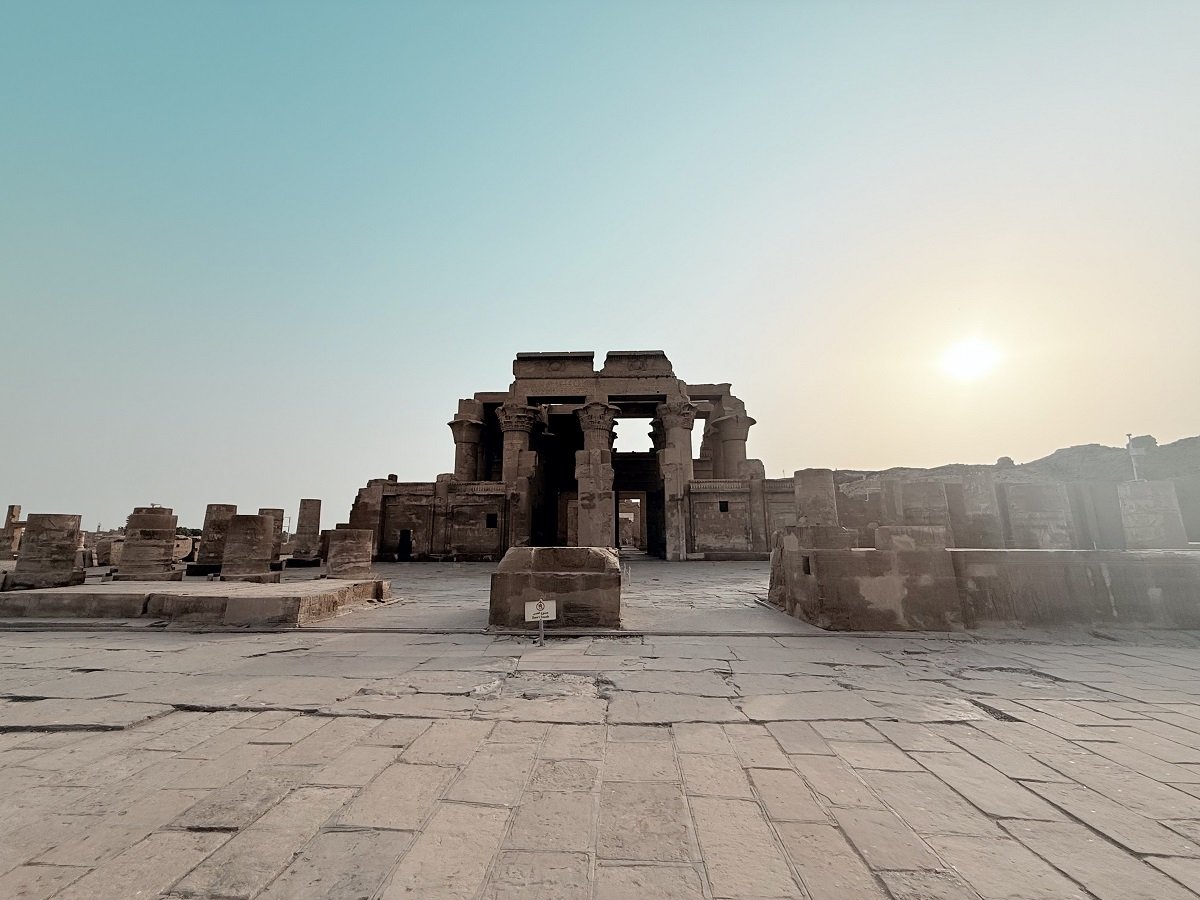
Carriage back to the ship and sail on to Kom Ombo, a temple unique in Egypt for being doubled: two entrances, two hypostyle halls, two sanctuaries, one half for Sobek the crocodile god and one for Horus the Elder. The crocodile museum beside it holds mummified crocodiles recovered nearby.
Sail on to Aswan. Overnight aboard.
Meals: Breakfast, Lunch & Dinner
Your Aswan day begins at the High Dam, built between 1960 and 1970 and one of the largest engineering projects of its era. It ended the Nile’s annual flood, created Lake Nasser, and forced the rescue of a dozen temples from the rising water.
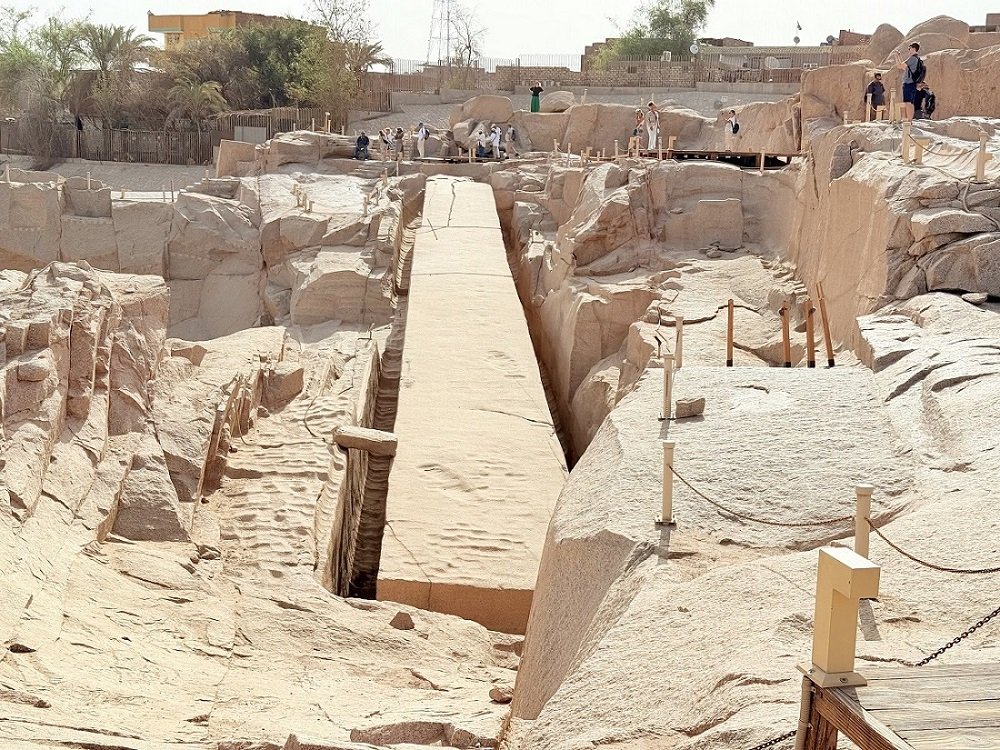
Then the granite quarry that holds the Unfinished Obelisk — a single shaft that would have stood nearly 42 metres and weighed over 1,000 tonnes, abandoned where it lies after a crack opened in the stone. It shows more about how obelisks were actually cut than any finished one does.
Finally Philae, the temple of Isis, goddess of magic and healing. Philae is one of the temples the dam threatened: the whole complex was dismantled and rebuilt on nearby Agilkia Island, which was reshaped to match the original. It was among the last places in Egypt where the old religion was still practised, into the sixth century AD.
Return to the ship for a free afternoon aboard, or explore Aswan on your own. Final night on the river.
Optional: Nubian village tour
Meals: Breakfast, Lunch & Dinner
Breakfast aboard, then disembark and transfer to Aswan Airport or Aswan railway station.
Optional: a day trip by road to Abu Simbel, if you have time before your onward journey — tell us in advance and we will arrange it.
Meals: Breakfast
|
Triple |
Twin |
Single |
|
$830 |
$900 |
$1,530 |
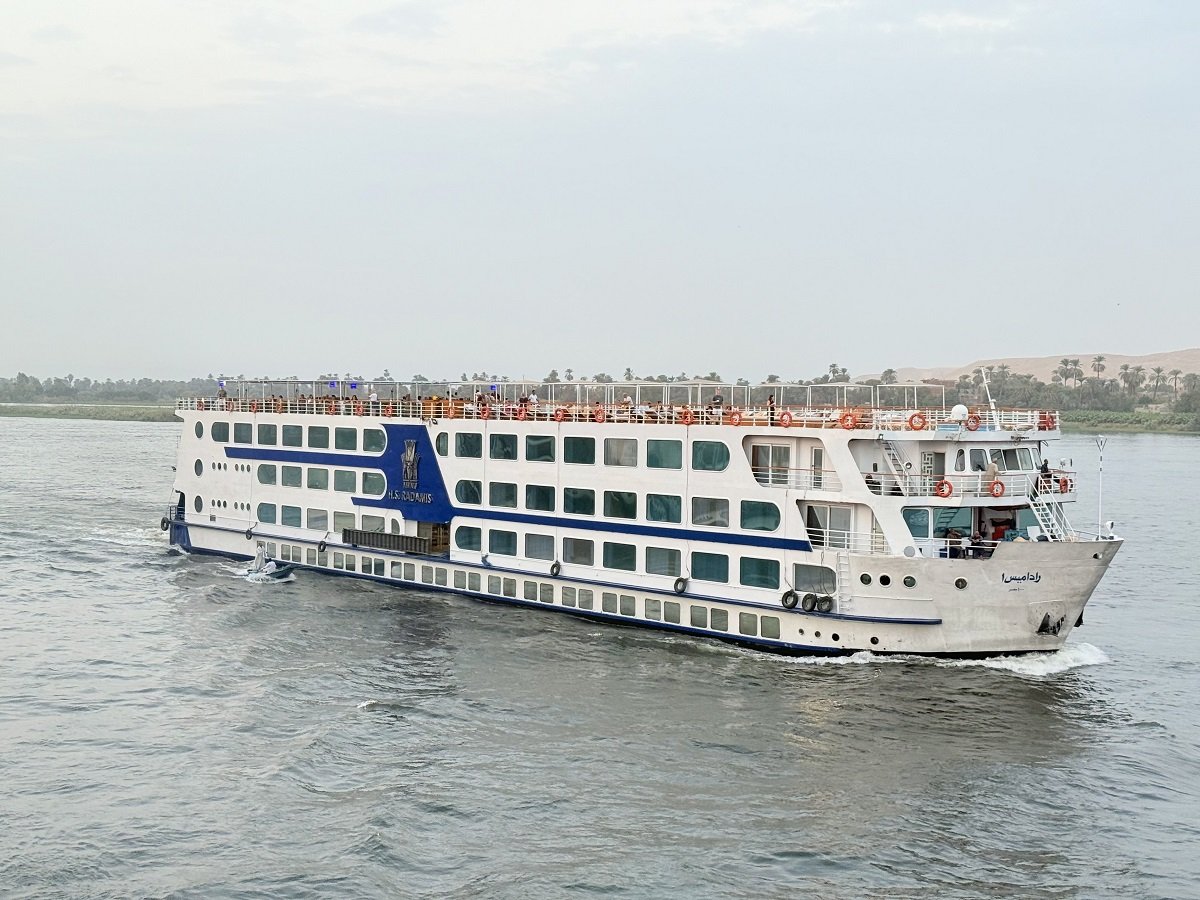
Standard Nile Cruise Ships: MS Nile Carnival. MS Semiramis. MS Nile Shams. MS Nile Dolphin. MS Nile Story. MS Princess Sarah. H.S Radamis II. MS Zeina and more of the similar category.
|
Triple |
Twin |
Single |
|
$1,150 |
$1,250 |
$2,125 |
Our Deluxe Nile Cruise Ships: MS Blue Shadow I. MS Blue Shadow II. MS Nile Paradise. H.S Radamis I. H.S Moon Dance. MS Concerto I. MS Nile Premium. MS Nile Style and more of the similar category.
|
Triple |
Twin |
Single |
|
$1,715 |
$1,840 |
$3,130 |
Our Ultra Deluxe Nile Cruise Ships: MS Movenpick Royal Lily. MS Movenpick Royal Hamees. MS Movenpick Royal Lotus. MS Le Fayan. MS MayFair. MS MayFlower. MS Esplanade. MS Acamar. MS Amwaj Livingstone. MS Esmeralda and more of the similar category.
|
Triple |
Twin |
Single |
|
$2,400 |
$2,550 |
$4,335 |
Our Luxury Nile Cruise Ships: MS Farah. MS Sonesta Sun Goddess. MS Sonesta Saint George. MS Mazaj Tulip. MS Mazaj Tamr. MS Le Fayan II Suites. MS Movenpick Sun Ray.MS Vice Roy and more of the similar category.
All our prices are in USD per person per trip. You can also make your payment online through a secure payment gateway with no additional fees or surcharges. We accept USD, Euros, GBP, CAD, AUD and NZD. The starting price is for one adult in a triple room on a group tour.
Tipping is not included in our tour packages and is left entirely to your discretion. While it is not mandatory, it is greatly appreciated by the people who assist you during your journey.
Here is a suggested tipping list:
Driver – full day $3-5 per person per day.
Driver – transfer $1-3 per person per day.
Tour guide – full day $15-20 per person per day.
Tour guide – half day $10-15 per person per day.
Representative / tour leader $3-5 per person per day.
Standard & Deluxe Nile cruise crew $5–10 per person per night paid at the end of the cruise.
Ultra deluxe & Luxury Nile cruise crew $10-20 per person per night at the end of the cruise.
A deposit between 25-50% is required to secure your booking through a payment link. The remaining balance will also be paid through payment links.
We do not charge cancellation fees for tours canceled due to ‘force majeure’ events such as natural disasters or other uncontrollable circumstances. However, if you cancel for personal or business reasons after we have incurred booking costs on your behalf, these costs will be charged to you.
We don’t provide a travel insurance. We recommend to buy it beforehand if you want.
Our tours do not include entrance fees for special archaeological sites such as:
These attractions require an additional fee. Please contact us if you would like to add or adjust anything in your itinerary.
Other personal expenses during your trip may include:
Whichever one you keep. The cruise departs every Monday, Thursday and Saturday, so there is a sailing in both Easter weeks — you choose the departure that fits your dates.
That matters in Egypt, because there are two Easters and they are often weeks apart. Western churches calculate Easter on the Gregorian calendar; the Coptic Orthodox Church still uses the Julian one.
— 2027: Western Easter is Sunday 28 March. Coptic Easter is Sunday 2 May, with Sham El-Nessim on Monday 3 May.
— 2028: the two fall together on Sunday 16 April, with Sham El-Nessim on Monday 17 April.
If you want to see Sham El-Nessim from the deck, sail around Coptic Easter — that is the week the riverbanks fill with families. Tell us your dates and we will confirm the nearest departure.
Weather and atmosphere. Spring gives you clear light, green banks and temperatures you can actually walk the Valley of the Kings in — by June that same walk is punishing, and in January the mornings on deck are cold. It also puts you on the river during Sham El-Nessim, when the whole country celebrates outdoors. The trade-off is that it is peak season: ships fill early and prices are at their highest.
Egypt’s spring festival, and one of the oldest continuously celebrated holidays anywhere. It falls the day after Coptic Easter, it is a national holiday observed by Egyptians of every religion, and it goes back to at least the Old Kingdom — the name comes from Shamo, the ancient Egyptian harvest season, rather than the Arabic phrase it sounds like. Egyptians spend it outdoors with coloured eggs, fesikh, lettuce and spring onions. From the deck of a cruise ship you see it happening along the whole length of the river.
Yes. Easter and the Christmas-New Year period are the two peaks of the Egyptian travel year, and cruise rates reflect that. If your dates are flexible, the same route in May or October costs meaningfully less. If they are not — and for most families they are not — book early, because the better cabins go first.
The boat, the cabin and the food. The route, the sites, the guiding and the group size are identical on all four. Every Nile cruise ship in Egypt is licensed as 5-star, which is why we also publish a Western equivalent for each category — a Standard ship is comfortable and well run; a Luxury ship is a different experience entirely. If you tell us your budget we will tell you honestly which one we would put you on.
Triple, twin/double and single, in all four categories. Cabins on Nile ships are smaller than hotel rooms, and a triple is a twin with a third bed added — it works well for a family and less well for three unrelated adults.
Upstream, which is the way the ancient boats travelled when the north wind was behind them. Practically, it means you get the two big Luxor days first, while you are freshest, and arrive into Aswan — the calmer, prettier end of the river — to finish. The reverse route is a three-night sailing and covers the same temples in the opposite order.
No. It is 280 km south of Aswan and needs a separate day. We can add it as a road trip on your final morning or as an extra night — tell us before you book so we can build it in.
You should be able to walk a couple of kilometres over uneven ground and manage steps and ramps in the tombs. The Valley of the Kings is hot and exposed. There is no lift on most ships, and the gangway can be steep depending on the mooring — tell us in advance if that is a concern and we will match you to a suitable ship.
Almost certainly not. The Nile is a river, the ships are flat-bottomed and the sailing is slow. Passing through the Esna lock is the most dramatic thing that will happen.
Light, loose clothing that covers shoulders and knees, a hat, sunscreen, sunglasses and shoes you can walk several kilometres in. Evenings on deck can be cool in spring, so bring a layer. Ships have laundry, so pack less than you think.
On most ships, yes, though it slows badly between towns. Egyptian mobile data is cheap and more reliable — buy a SIM at the airport if you need to stay connected.
You are on deck. Between Esna and Edfu, and again between Kom Ombo and Aswan, you pass villages, fields, palm groves and people doing what they have done along this river for a very long time. Most travellers say it was the part they remember.
WhatsApp us