2027 Solar Eclipse Nile Cruise: 5-Day Luxor to Aswan

0
Price
From$2,200
Full Name*
Email Address*
Nationality*
Mobile Number
Arrival Date*
No. of Adults ( +11.99 years )*
No. of Children
Additional Notes
* I agree with Terms of Service and Privacy Statement.
Please agree to all the terms and conditions before proceeding to the next step
Save To Wish List

Adding item to wishlist requires an account

543

Get a Question?

Do not hesitate to give us a call or WhatsApp.

+20-155-1580-786

info@egyptbestvacations.com

  • Duration5 Days / 4 Nights
  • Availability2 August 2027
  • PickupLuxor Airport
  • Tour TypeGroup Tour

Overview

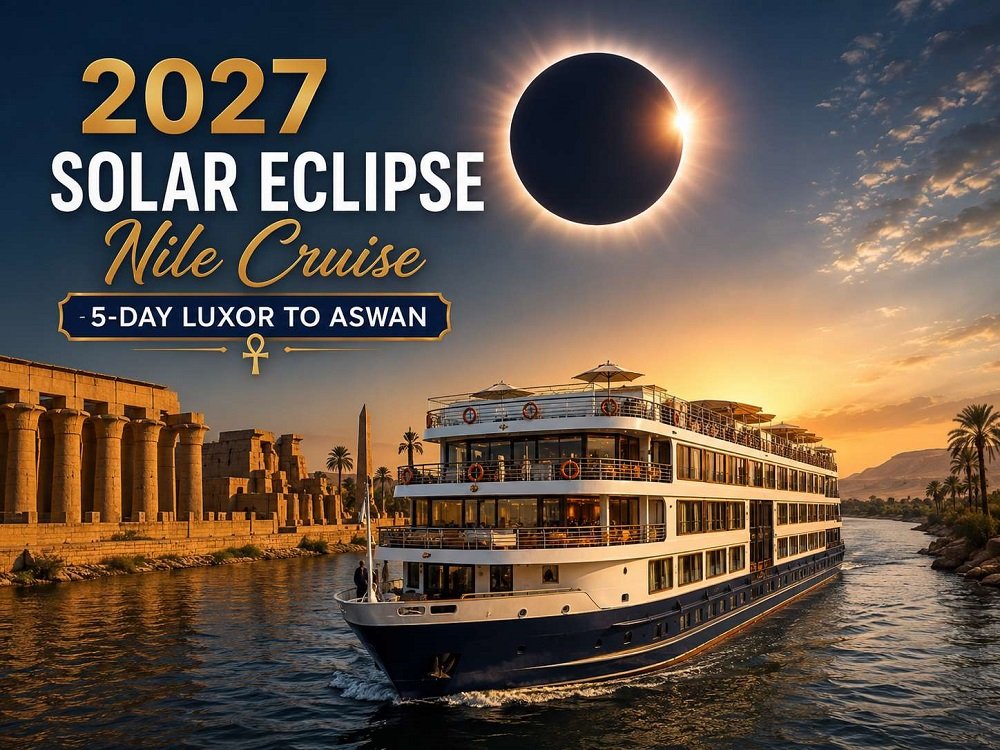
On Monday 2 August 2027 the moon’s shadow crosses the Nile Valley and lands almost squarely on Luxor. This 2027 solar eclipse Nile cruise puts you on the sun deck of a ship moored in Luxor for the whole of it: around 6 minutes and 22 seconds of totality, within a second of the longest duration available anywhere on the eclipse path, and the longest totality reachable from easily accessible land until June 2114.

Duration is not Luxor’s only advantage. At maximum eclipse the sun sits 82 degrees above the horizon, almost directly overhead, so nothing on the riverbank — palm, minaret or neighbouring moored ship — can come between you and the corona. And Upper Egypt in early August is about as close to a weather guarantee as eclipse chasing offers: the sky over Luxor on this date has been clear year after year on record.

The geography also explains the direction of travel. Luxor sits close to the centre line. Aswan, 210 kilometres upriver, falls outside the path of totality altogether and sees only a very deep partial eclipse. So the eclipse belongs to Day 1, in Luxor, before the ship moves anywhere. Only afterwards do you turn south — through the Esna Lock to the Ptolemaic temple of Horus at Edfu, the double sanctuary at Kom Ombo, the colossi of Abu Simbel and finally Philae.

Five days, four nights, full board, and a qualified Egyptologist with you at every site. One departure, one date, and no second chance in our lifetimes.

Planning around the eclipse? Read our full guide to the Luxor 2027 total solar eclipse, or compare this cruise with our 2027 Luxor eclipse day tours, and the 13-day Luxor eclipse tour with Cairo, Nile cruise and Sharm El-Sheikh.

Tour Highlights

  • Around 6 minutes 22 seconds of totality over Luxor — against the two or three minutes a typical total eclipse allows, and within one second of the maximum available anywhere on the 2 August 2027 path
  • The sun 82 degrees overhead at maximum — near vertical, so an open sun deck gives a clean view regardless of how the boats are moored along the corniche
  • Upper Egypt's August skies — historically among the most cloud-free conditions on the entire eclipse path, which is why observers have been booking Luxor since the 1990s
  • Eclipse day spent in Luxor, not en route — the ship stays moored for the full three hours of the event, so nothing depends on being in the right place at the right moment
  • Karnak at first light and Luxor Temple after dark on eclipse day itself, either side of totality
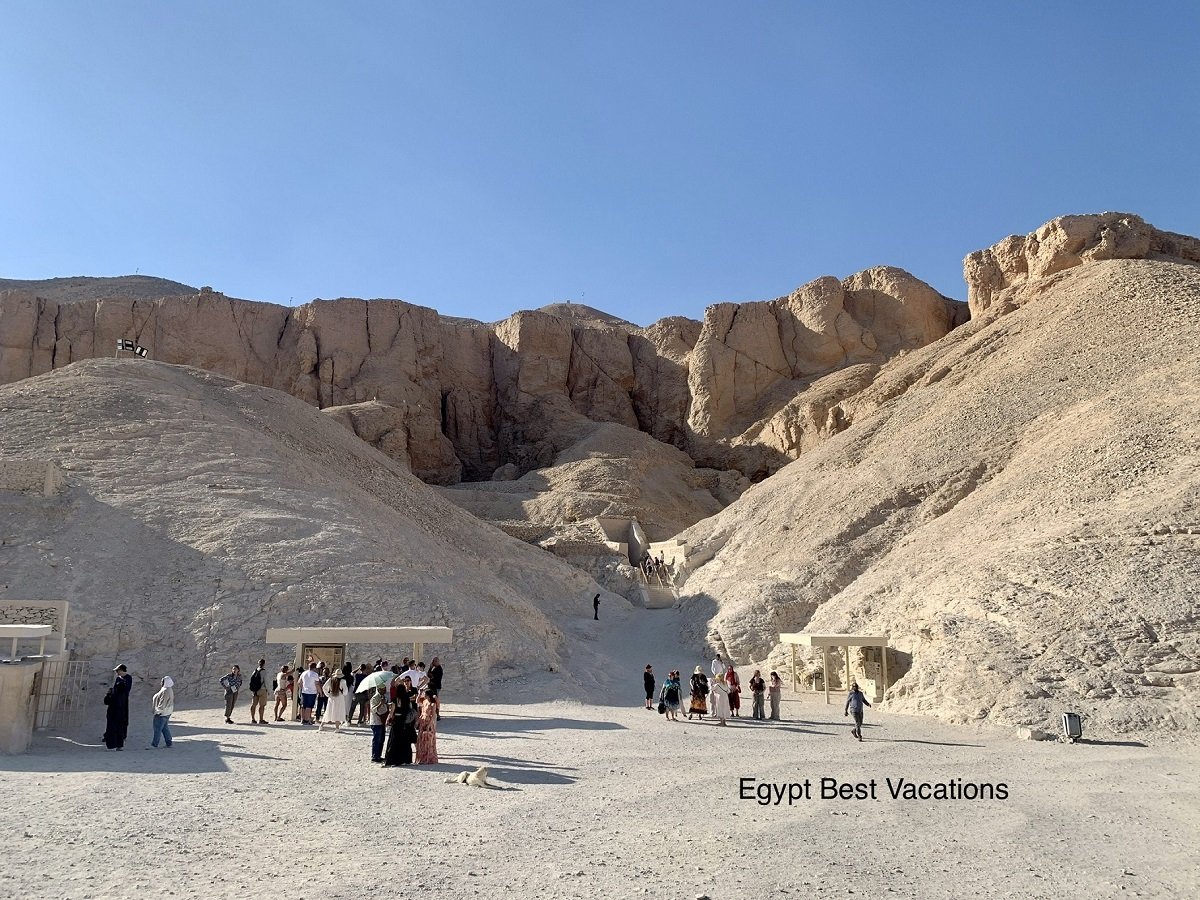
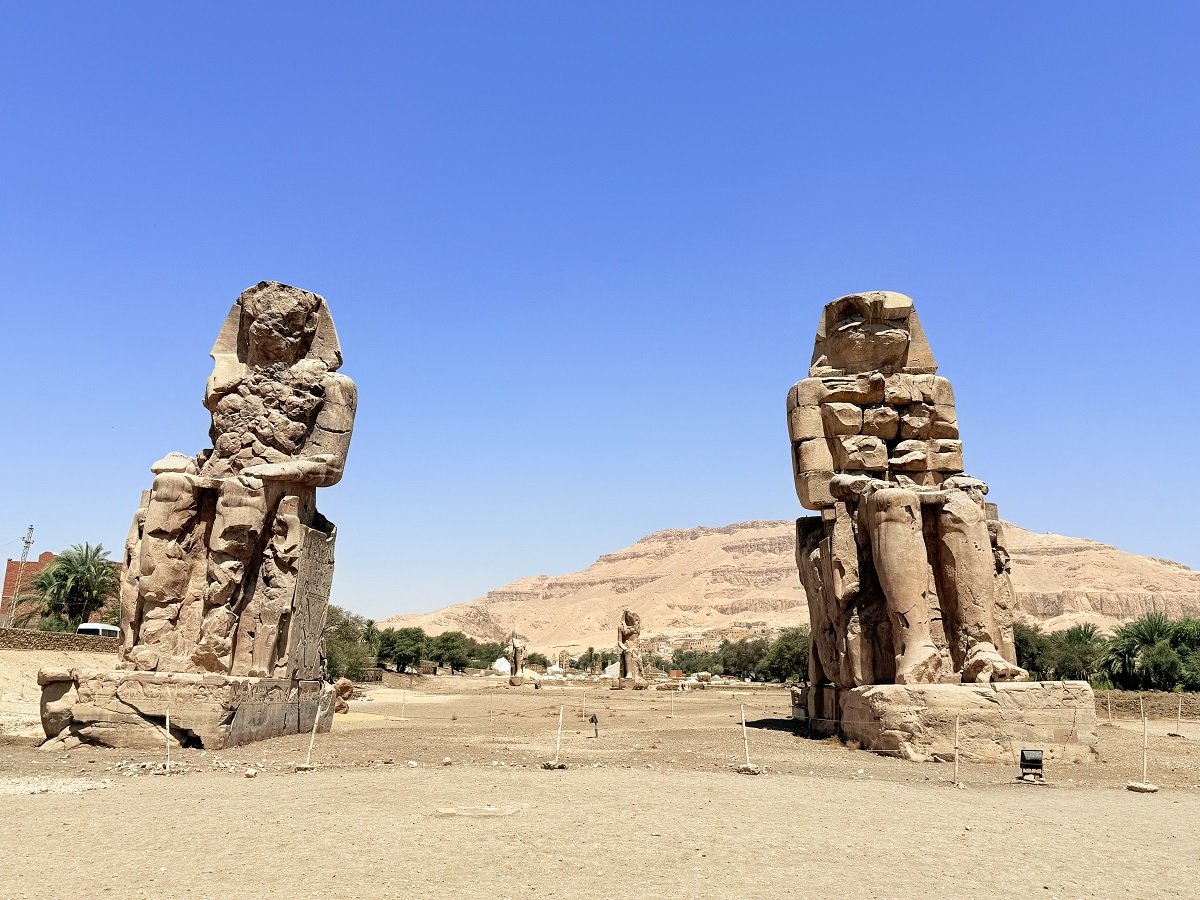
  • Valley of the Kings and Hatshepsut's temple on the Theban west bank, with the Colossi of Memnon
  • The temple of Horus at Edfu — the most completely preserved temple standing in Egypt, and the best surviving record of how a temple actually worked
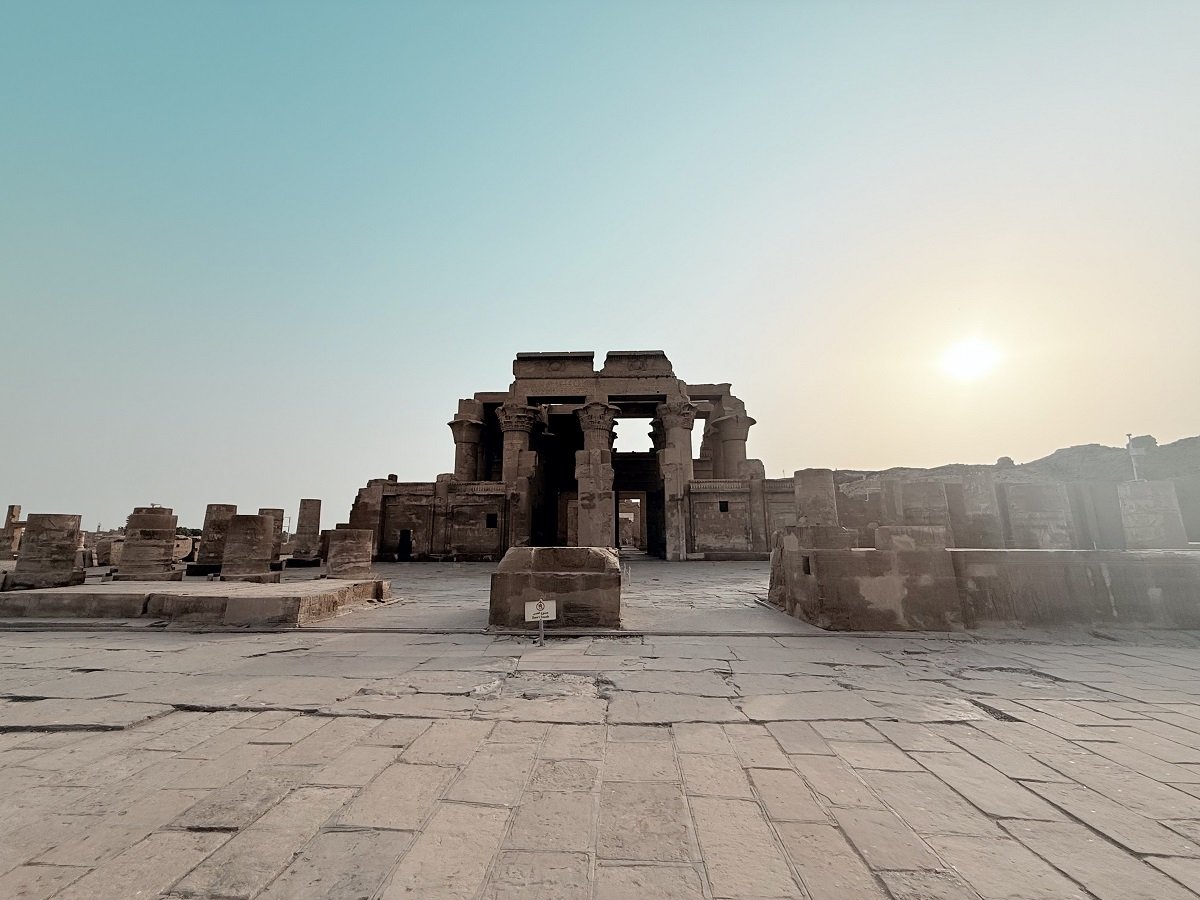
  • Kom Ombo's double temple — two mirrored sanctuaries under one roof, for Sobek and Haroeris, with the crocodile museum alongside
  • Abu Simbel by road from Aswan — Ramesses II's rock-cut temples, themselves built around a solar alignment
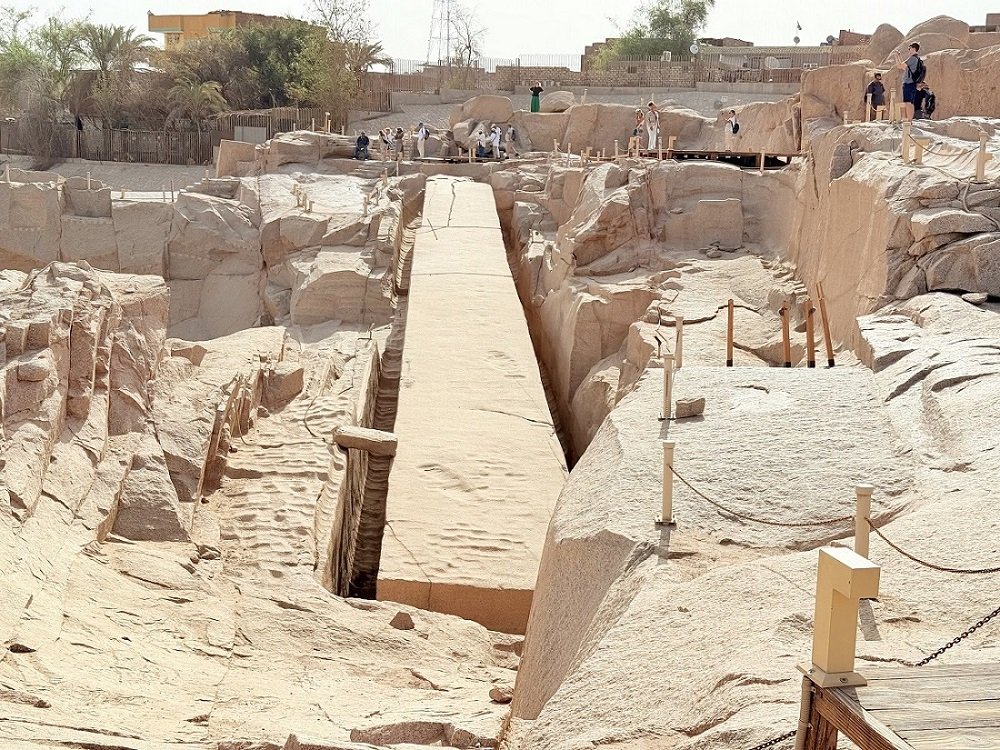
  • Philae, the High Dam and the Unfinished Obelisk on the final morning in Aswan
  • Full board throughout — four breakfasts, four lunches, four dinners, and one unpacking

Tour Itinerary

2 August 2027Luxor: Karnak, the eclipse, Luxor Temple

Our representative meets you inside the arrivals hall at Luxor International Airport, holding a signboard with your name, and will help you through visa and passport formalities before your transfer to the ship. Guests already in Luxor are collected from their hotel. Embarkation is early — this is the one morning of the trip where the clock genuinely matters.

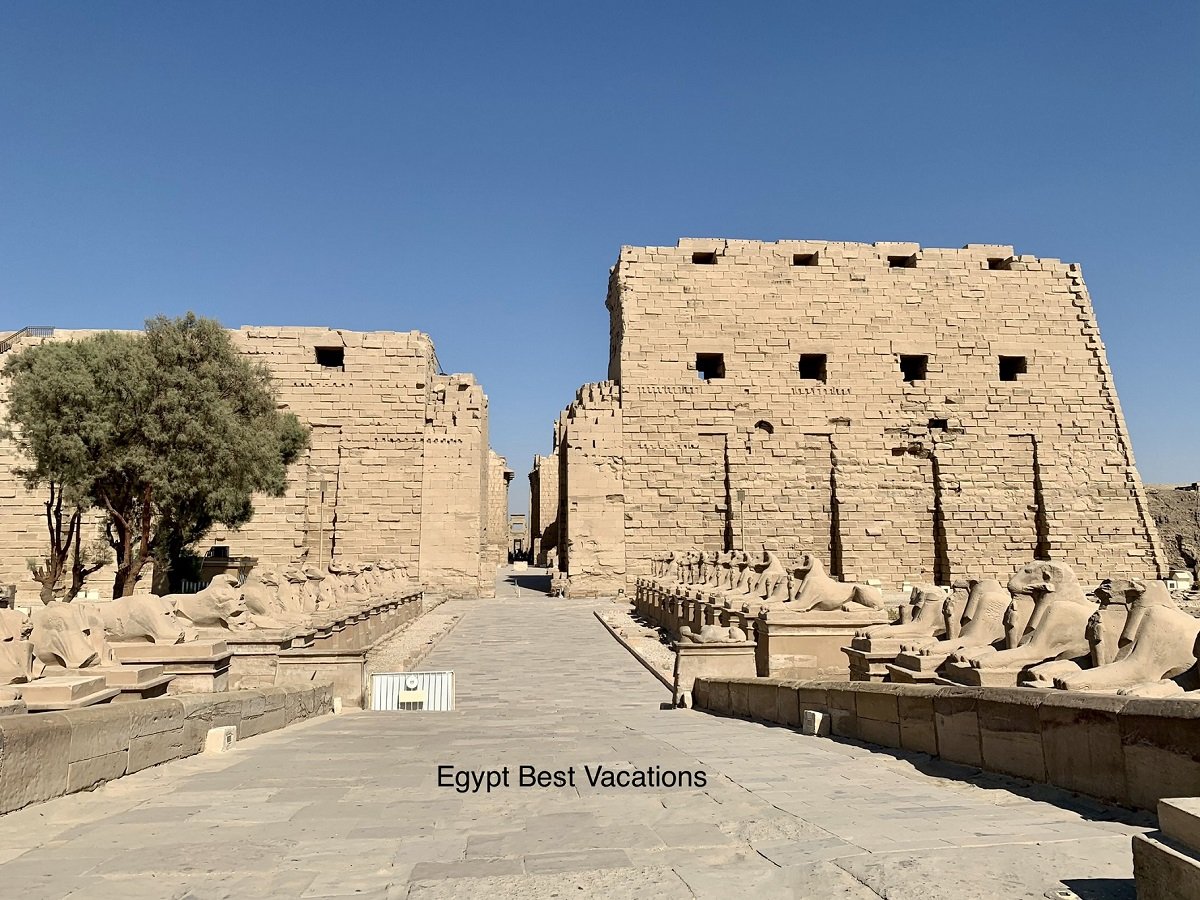
You go straight to Karnak, the largest religious complex ever raised in the ancient world and the work of roughly two thousand years of pharaohs. We start at opening time, partly for the temperature and partly because your guide wants you back aboard in good time. In the Great Hypostyle Hall, 134 columns still carry their architraves; the sun cuts through the clerestory openings much as it was designed to.

Back on board by late morning. Your guide runs through eclipse safety and the sequence of the event, and the sun deck is set up with shade and cold drinks. The partial phases begin around three quarters of an hour before midday and build slowly — the light goes strange and metallic long before anything looks obviously wrong.

Totality begins at about 1:02 in the afternoon and holds until roughly 1:08, with maximum eclipse at about 1:05. For those six minutes and twenty-two seconds the sun is completely covered, the corona is out, and it is safe to look with the naked eye. The sun is 82 degrees up — almost directly overhead — so you are looking nearly straight into the sky above the Nile. The partial phases finish in the early afternoon and lunch follows on board.

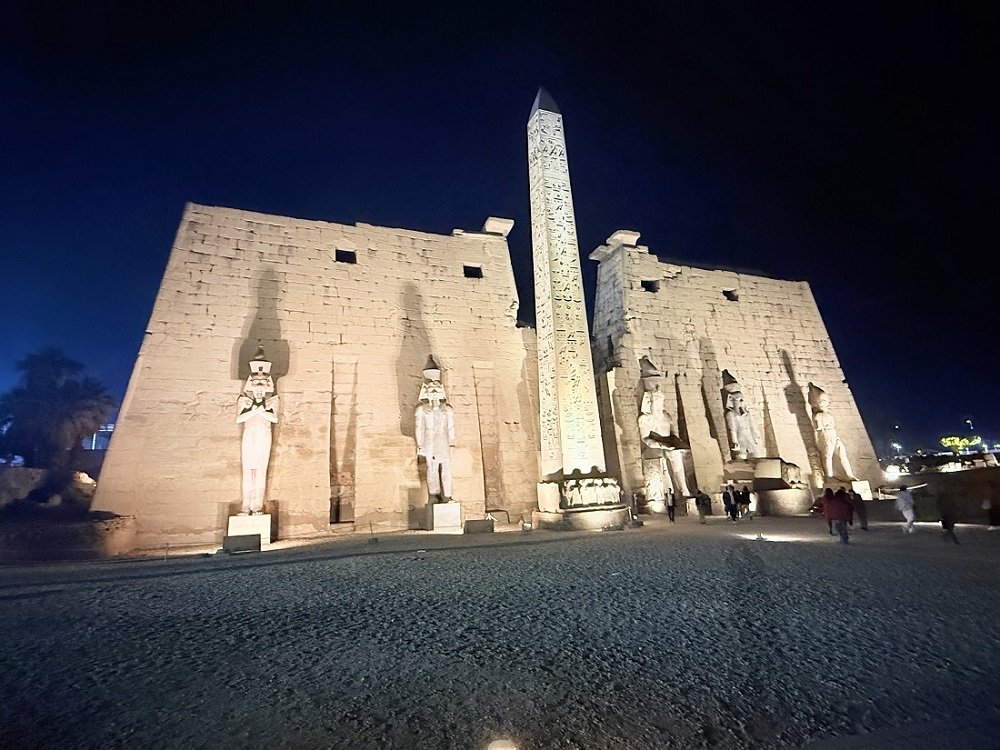
In the late afternoon, once the heat has broken, you walk to Luxor Temple. It is at its best after dark, when the floodlights pick out the colonnade of Amenhotep III and the Roman-period painting in the imperial cult chamber. Dinner and overnight aboard, moored in Luxor.

Meals Plan: Lunch & Dinner

3 August 2027Theban west bank, then south through the Esna Lock

An early breakfast, then across to the west bank while it is still bearable. In the Valley of the Kings your standard ticket admits you to three tombs from the group open on the day — the rotation protects the painted plaster, so nobody sees the same three. The tombs were emptied in antiquity, almost without exception; what survives is not treasure but decoration, and the decoration is the point: painted ceilings, the Book of Gates, colour that has held for three thousand years underground.

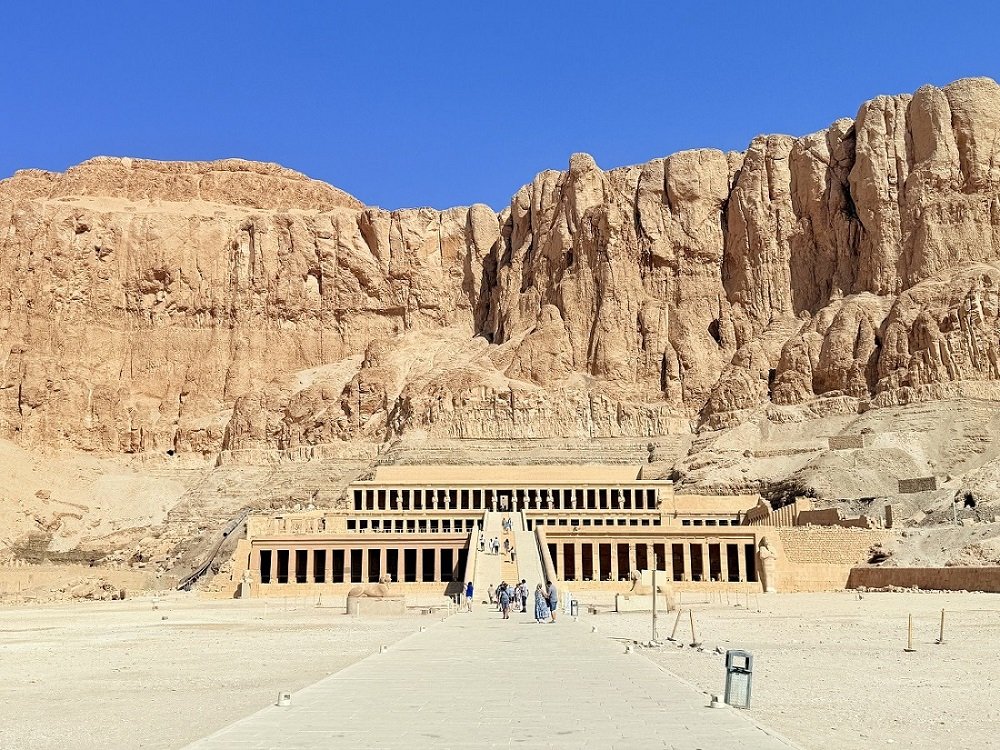
From there to Deir el-Bahari, where Hatshepsut’s terraced mortuary temple is built straight into the cliff face — the most architecturally radical building of the New Kingdom, and a deliberate statement by a woman ruling as king. On the way back, the Colossi of Memnon: two quartzite statues of Amenhotep III that once flanked the entrance pylon of the largest mortuary temple ever built on the west bank, now almost entirely gone.

Lunch aboard as the ship casts off and heads upriver. The afternoon is spent on deck watching the valley narrow, and in the evening the ship enters the Esna Lock. Overnight in Edfu.

Optional tour: Sunrise Hot Air Ballooning over Luxor

Meals Plan: Breakfast, Lunch & Dinner

4 August 2027Edfu - Kom Ombo - Aswan

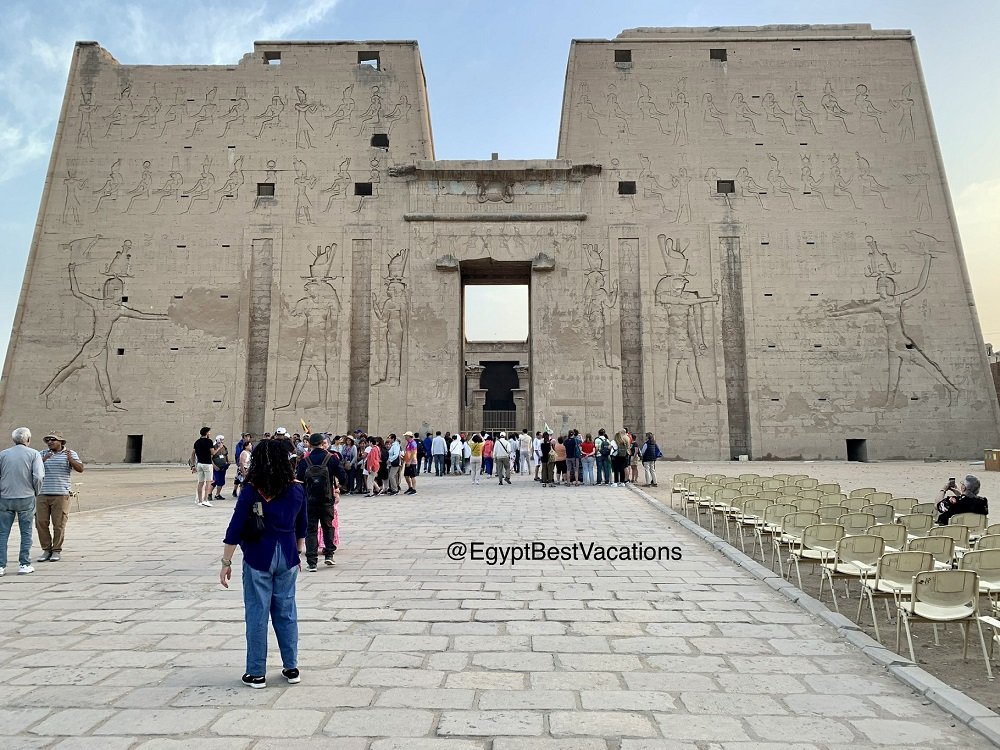
A horse-drawn caleche takes you from the mooring to the temple of Horus at Edfu. Built between 237 and 57 BC under the Ptolemies, it is the most completely preserved temple in Egypt — roof, pylon, sanctuary and the granite naos still standing — and its walls carry the fullest surviving account of temple ritual anywhere: the daily service, the festival calendar, the annual Feast of the Beautiful Meeting when Hathor sailed downriver from Dendera.

The ship sails on to Kom Ombo, which sits on a bluff directly above the river. It is the only major Egyptian temple built as a true double: two parallel axes, two sanctuaries, two sets of doorways, one half for Sobek the crocodile god and one for Haroeris — Horus the Elder. The small crocodile museum next door holds mummified crocodiles recovered from the site. Sail on to Aswan; overnight moored there.

Meals Plan: Breakfast, Lunch & Dinner

5 August 2027Abu Simbel Temple Tour by Car

A very early start — you leave Aswan before dawn for the three-and-a-half-hour drive south across the desert, timed so you are at the temples in the cooler part of the morning. Abu Simbel sits about 280 kilometres from Aswan, close to the Sudanese border.

Ramesses II cut both temples directly into the sandstone cliff in the thirteenth century BC: the Great Temple with its four seated colossi of the king, and the smaller temple for Nefertari and Hathor, where the queen is shown at the same scale as her husband — almost unheard of in Egyptian art. The Great Temple was built around a solar alignment: twice a year the rising sun reaches 60 metres into the rock to light three of the four gods in the sanctuary, while Ptah, a god of the underworld, is left in shadow. When the temples were cut up and moved to higher ground ahead of Lake Nasser in the 1960s, the alignment shifted by a day; it now falls on 22 February and 22 October.

Back to Aswan in the afternoon and your last night aboard.

Optional tour: Nubian Village Tour

Meals Plan: Breakfast, Lunch & Dinner

6 August 2027Aswan Tour - Disembarkation

Breakfast, then disembarkation, with your Aswan sightseeing following on the same morning and your luggage travelling with you. First the Aswan High Dam, which ended the annual inundation, generates a substantial share of Egypt’s hydroelectric power and created Lake Nasser behind it.

Then the granite quarry that holds the Unfinished Obelisk — around 42 metres long and close to 1,090 tonnes, which would have made it the largest obelisk ever raised. It was abandoned in the trench when fissures opened in the granite, and because it was never finished it is the clearest evidence anywhere of how these monuments were actually cut.

Finally Philae, principally Ptolemaic with Roman additions including Trajan’s Kiosk, and dedicated to Isis. This was the last functioning temple of the old religion in Egypt, closed under Justinian in the sixth century AD. Like Abu Simbel it was dismantled and rebuilt on higher ground, moving from Philae island to neighbouring Agilkia.

Transfer to Aswan Airport, Aswan railway station or your onward hotel.

Meals Plan: Breakfast Only

Price Per Person

One departure only: 2 August 2027. Prices are per person for the full five-day, four-night cruise.

Cabin Price per person Occupancy
Triple cabin US$2,200 Three sharing
Twin cabin US$2,700 Two sharing
Single cabin US$5,000 Sole occupancy

Because this is a single fixed departure there is no low or high season — the price above is the price on the day, and it does not fall closer to the date.

Price Includes

  • Airport pickup and drop off service upon arrival and departure
  • All transfers as per the itinerary by air-conditioned vehicles
  • 5-star deluxe Nile cruise ship on a full-board basis for 04 nights
  • 12 meals: 04 breakfasts, 04 lunches, and 04 dinners
  • All sightseeing tours as per the itinerary
  • Entrance fees as per the itinerary
  • Licensed English speaking tour guide
  • All service charges and local taxes

Price Excludes

  • Domestic flights
  • Gratuities
  • Drinks and personal expenses
  • Any optional tour
  • Eclipse viewing equipments
  • Travel insurance

Things to Know

Arrive in Luxor before eclipse day

We can meet you at Luxor airport on the morning of 2 August and get you to Karnak and back to the ship in time — but a delayed flight on that one morning cannot be recovered. We strongly recommend arriving in Luxor at least one night earlier. Ask us to add a pre-cruise night; we would rather sell you a hotel room than watch you miss six minutes you have waited years for.

Eclipse glasses

You need glasses certified to ISO 12312-2 for the partial phases before and after totality. During totality itself, when the disc is fully covered, it is safe and correct to look without them — that is the only way to see the corona. Buy your glasses at home from a reputable supplier: they are difficult to source reliably in Egypt, and uncertified ones are worse than none.

August heat

Upper Egypt in August regularly passes 40°C, and Abu Simbel is hotter still. The itinerary is built around it: sightseeing happens early and late, the middle of the day is spent on an air-conditioned ship, and the Abu Simbel run leaves before dawn. The air is very dry, which makes the same temperature far more tolerable than it sounds. Bring a hat, and drink more water than you think you need.

Tipping

Tipping is not included in our tour packages and is left entirely to your discretion. While it is not mandatory, it is greatly appreciated by the people who assist you during your journey.

Here is a suggested tipping list:

Driver – full day             $3-5 per person per day.

Driver – transfer           $1-3 per person per day.

Tour guide – full day     $20-30 per person per day.

Representative / tour leader    $3-5 per person per day.

Nile cruise crew    $5–10 per person per night paid at the end of the cruise.

Children Policy

  • Children from 0 – 5.99 years are free.
  • Children from 6 – 11 years pay 50% of the adult price.
  • Children from 12 years pay adult price.

Cancellation Policy

Our special cancelation policy for this event:

25% of the total price to be charged if cancelation takes place between date of booking and the 31st of December 2026.

50% of the total price to be charged if cancelation takes place between the 1st of January 2027 and the 31th of March 2027.

75% of the total price to be charged if cancelation takes place between the 1st of April 2027 and the 30th of April 2027.

90% of the total price to be charged if cancelation takes place between the 1st of May 2027 and the 31st of May 2027.

100% of the total price to be charged if cancelation takes place at any date after the 31st of May 2027.

Deposit and Payment

50% of the total price to secure your booking, and 50% of the total price to pay on the 1st of March 2027. All payments are by cards through secure payment links.

Travel Insurance

We don’t provide a travel insurance. We recommend to buy it beforehand if you want.

Extra Expenses & Additional Entry Tickets

Our tours do not include entrance fees for special archaeological sites such as:

  • Tombs of Seti I and Ramses V in the Valley of the Kings
  • Entering the Tomb of Tutankhamun in the Valley of the Kings in Luxor.

These attractions require an additional fee. Please contact us if you would like to add or adjust anything in your itinerary.

Other personal expenses during your trip may include:

  • Food tours and alcoholic beverages.
  • Tipping for guides, drivers, and hotel staff.
  • Visa fees and recreational activities.
  • Additional transportation.
  • Unexpected costs due to bad weather, flight cancellations, or extra hotel nights and meals.

FAQs

When is the 2027 total solar eclipse in Egypt, and what time is it in Luxor?

Monday 2 August 2027. In Luxor the partial phases begin around three quarters of an hour before midday, totality starts at approximately 1:02 in the afternoon local time, maximum eclipse falls at about 1:05, and totality ends at roughly 1:08. The partial phases finish in the early afternoon. All times are Egypt local time, EEST, UTC+3.

How long does totality last in Luxor?

About 6 minutes and 22 seconds. The theoretical maximum for this eclipse is 6 minutes 23 seconds, and it falls roughly 60 kilometres south-east of Luxor in open desert — so Luxor city is within one second of the best duration available anywhere on Earth on that day, with a hotel, an airport and a temple attached. For comparison, a typical total eclipse gives two to three minutes, and the 2024 North American eclipse peaked at about four and a half.

Is this really the longest eclipse until 2114?

It is the longest totality available from easily accessible land until 3 June 2114. The 2009 eclipse was longer in absolute terms — 6 minutes 39 seconds — but its maximum fell over the open Pacific, and the longest duration on land was on North Iwo Jima, an uninhabited island you cannot visit without special permission. In practical terms, 2 August 2027 is the longest totality most people alive today will ever be able to stand in.


Can you actually watch a solar eclipse from a Nile cruise ship?

Yes, and for this particular eclipse a ship is close to ideal. At maximum the sun is 82 degrees above the horizon, almost vertically overhead, so an open sun deck gives a completely clear view no matter how the boats are rafted along the corniche — nothing on the bank is tall enough to matter. You also have shade, cold drinks, a lavatory and air conditioning a few steps away for the hour and a quarter of partial phases either side, which is more than can be said for a desert viewing site.

Our ship stays on its Luxor mooring for the entire event. Nothing about your view depends on being in the right place at the right time.

Does Aswan see the total eclipse?

No. This matters, and it is worth being clear about. Aswan lies just outside the southern edge of the path of totality and sees a very deep partial eclipse of roughly 99.8% — which sounds like almost the same thing and is not remotely the same thing. The corona does not appear, the sky does not go dark, and it is never safe to remove your glasses. Abu Simbel is further out again, at around 92%. Cairo sees about 95%.

If an operator offers you eclipse viewing in Aswan, or a cruise that is still sailing south on the morning of 2 August, ask exactly where the ship will be moored at one o’clock.

Why does this cruise start in Luxor and sail south, instead of the other way round?

Because the eclipse is in Luxor, and Luxor is where the ship needs to be on Day 1. Building the itinerary the conventional way — starting in Aswan and arriving in Luxor later in the week — would put you in the wrong place on the only date that cannot move. We start where the shadow falls and sightsee afterwards.

What if it is cloudy?

Upper Egypt in early August has one of the lowest cloud probabilities anywhere on this eclipse path — the records for Luxor around this date show clear skies year after year, and published climatology puts the risk in the low single figures to at worst around one in five. No operator anywhere can promise you weather. What Luxor offers is the shortest odds on the table, which is precisely why serious eclipse observers have had this date and this city circled for decades.

Should I arrive in Luxor before 2 August?

We strongly recommend it. The itinerary is built so that a morning arrival on 2 August still works, but a single delayed flight that morning is unrecoverable — there is no later showing. Arriving the day before removes the only real risk in the whole trip. Ask us to add a pre-cruise night in Luxor when you book.


Do I need special glasses, and can I buy them in Egypt?

Yes, and buy them before you travel. You need eyewear certified to ISO 12312-2 for every part of the eclipse except the six minutes of totality itself, when the sun is fully covered and looking with the naked eye is both safe and the entire point. Certified glasses are hard to source reliably in Egypt and counterfeit ones circulate around every eclipse. Order from a reputable supplier at home and pack them in your hand luggage.

Is August too hot for a Nile cruise?

It is hot — over 40°C most days, and hotter at Abu Simbel. The itinerary works around it rather than pretending otherwise: temples early in the morning and again in the evening, the middle of the day spent on an air-conditioned ship, and the Abu Simbel drive starting before dawn. Upper Egypt is also extremely dry, which makes 42°C here feel considerably easier than 35°C somewhere humid. Most guests find the rhythm of it perfectly manageable.

What is the itinerary?

Five days and four nights, Luxor to Aswan. Day 1: embarkation in Luxor, Karnak in the morning, the total eclipse from the sun deck at midday, Luxor Temple in the evening. Day 2: Valley of the Kings, Hatshepsut’s temple and the Colossi of Memnon, then sailing south through the Esna Lock to Edfu. Day 3: the temple of Horus at Edfu and the double temple at Kom Ombo, on to Aswan. Day 4: Abu Simbel by road. Day 5: the High Dam, the Unfinished Obelisk and Philae, then disembarkation in Aswan.

Is Abu Simbel included?

Yes, on Day 4, by road from Aswan — a three-and-a-half-hour drive each way, leaving before dawn. It fits the theme better than any other site in Egypt: the Great Temple was cut into the cliff around a solar alignment, so that twice a year the rising sun reaches sixty metres into the rock and lights three of the four seated gods in the sanctuary, leaving Ptah in permanent shadow. Since the temples were relocated in the 1960s those dates have fallen on 22 February and 22 October.

Did the ancient Egyptians record solar eclipses?

Less clearly than you might expect, and it is worth being honest about it. The Egyptians were meticulous observers of the sky — they ran a civil calendar off the heliacal rising of Sirius, tracked decanal stars on coffin lids, and aligned buildings from Karnak to Abu Simbel to specific solar events with real precision. But no unambiguous Egyptian record of a total solar eclipse survives. A handful of texts have been proposed as candidates, including a much-argued passage from the reign of Takelot II, and none is secure.

What we can say is that totality certainly crossed this landscape more than once during the pharaonic period, and that it was seen from the ground you will be standing on. Your guide is a qualified Egyptologist and is happy to go further into the evidence than a booking page reasonably can.

When should I book?

Now, if you intend to come at all. Cabins and hotel rooms in Luxor for the 2 August 2027 dates have been selling since 2024 and much of the good capacity is already committed; several operators are running waitlists. Luxor has the longest totality on the entire path and a finite number of beds. Booking takes a 50% deposit, with the balance due on 1 March 2027 — please read the cancellation terms above before you commit, as they are stricter than our standard policy.

From$2,200
Book Now